FREE SHIPPING OVER $50

I Built More Strength in My Living Room Than the Gym—Here’s How To Build Real Strength Anywhere

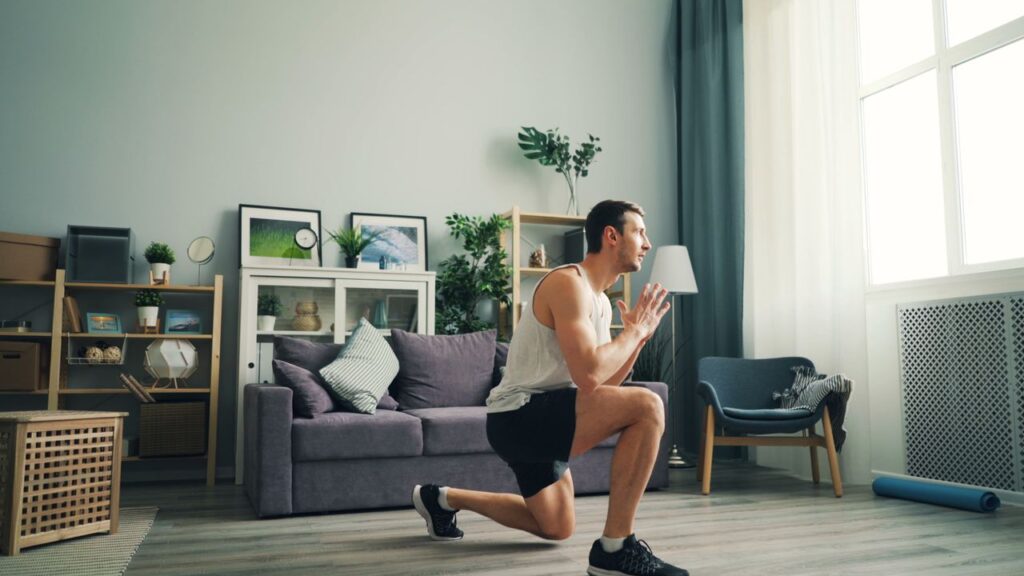
For years, mainstream fitness culture convinced us that building serious muscle and raw physical power requires expensive gym memberships, massive dumbbell racks, and complex weight machines. However, walking into a crowded commercial gym often introduces hidden progress killers like waiting around for equipment, dealing with noisy distractions, and spending half your workout time adjusting weight plates rather than pushing your limits. The surprising truth that elite gymnasts and bodyweight athletes have known for decades is that your central nervous system cannot tell the difference between a iron barbell and your own body weight; it only responds to mechanical tension, progressive overload, and consistent mechanical effort. By learning how to manipulate leverage, tempo, and range of motion, you can build more functional strength, joint resilience, and lean muscle in your living room than you ever did on a gym floor.
The Science of Bodyweight Progressive Overload
Many people fail to build muscle at home because they treat bodyweight training as nothing more than endless, low-intensity reps of basic push-ups and jumping jacks. If you do 50 quick push-ups every morning, you are building localized muscular endurance rather than high-threshold muscle strength.
To trigger muscular hypertrophy and strength gains without heavy iron, you must apply the fundamental principle of progressive overload.
In a traditional gym setting, you achieve progressive overload simply by adding five pounds to a steel bar. At home, you achieve the exact same mechanical strain by systematically manipulating biomechanical leverage, increasing time under tension, expanding your active range of motion, and decreasing resting intervals between sets.
When you alter your body angle—such as elevating your feet during a push-up to place more load on your upper chest—you force your motor units to recruit high-threshold fast-twitch muscle fibers.
Mastering these progressive movement variations allows you to continuously challenge your muscular system without ever buying a single piece of exercise equipment.
“Your muscles do not possess eyes. They cannot read the numbers printed on a steel plate; they only recognize raw mechanical tension and metabolic stress.”
At a Glance: Gym Training vs. Living Room Strength
Comparing traditional weight training against advanced bodyweight progressions highlights why home workouts offer a high-yield, zero-friction path to raw physical fitness.
| Fitness Metric | Traditional Gym Training | Living Room Calisthenics |
| Primary Overload Driver | Adding external weight plates | Changing mechanical leverage & body angles |
| Joint Health Impact | Heavy axial loading on the spine | Closed-kinetic-chain stability & joint mobility |
| Core Activation | Often isolated or supported by bench pads | Continuous, mandatory core stabilization on every rep |
| Time Efficiency | High friction (commute, prep, waiting for machines) | Zero friction (start training instantly anywhere) |
| Financial Cost | High monthly membership fees | Completely free (zero equipment required) |
5 Principles to Build Real Strength Anywhere
1. Master Mechanical Leverage and Body Angles
The most effective way to make any bodyweight movement harder is by altering your mechanical advantage over gravity. When a movement becomes too easy to complete for 8 to 12 clean reps, changing your body angle immediately increases the load placed on your working muscles.
For example, a standard floor push-up requires you to press roughly 64 percent of your total body weight.
Elevating your feet onto a chair or sturdy couch frame—creating a decline push-up angle—shifts your center of gravity forward, forcing your arms and upper chest to press up to 75 percent or more of your total body weight.
Applying this leverage concept across different movement patterns keeps your workouts challenging:
- Incline Push-Ups to Decline Push-Ups: Adjusting foot height scales pushing resistance effortlessly.
- Two-Legged Bodyweight Squats to Shrimp Squats: Shifting load onto a single leg doubles the force output required by your quads and glutes.
- Wall-Assisted Handstand Push-Ups: Vertical pressing over inverted body angles builds massive shoulder strength without shoulder press machines.
2. Slow Down Your Tempo and Increase Time Under Tension
If you bounce through reps quickly using momentum, you strip away the beneficial mechanical tension that drives muscle growth. Slowing down your movement speed forces your muscle fibers to stay under continuous physical strain throughout the entire rep.
Try implementing a 4-1-1 tempo on your bodyweight exercises: lower your body down over four slow seconds, pause for one full second at the bottom stretch position, and explode up in one second.
That deliberate four-second eccentric (lowering) phase creates microscopic tears in your muscle tissue, triggering a powerful repair response that builds thick, dense muscle.
Furthermore, pausing at the bottom eliminates stored elastic energy in your tendons, ensuring your muscles do all the heavy lifting.
3. Master Single-Leg and Unilateral Progressions
Most people possess significant strength imbalances between their dominant and non-dominant sides from sitting, driving, and poor postural habits. Bilateral gym movements like traditional leg presses can allow your stronger leg to sneakily carry up to 70 percent of the load.
Unilateral (single-leg and single-arm) training forces each side of your body to carry its own load independently, correcting muscular asymmetries while doubling the relative weight your working limb must move.
Moving from basic two-legged squats to pistol squats, Bulgarian split squats using a living room chair, or single-leg Romanian deadlifts builds incredible lower-body power, balance, and hip stability while placing zero compression stress on your lower spine.
4. Harness the Power of Isometric Pauses
Isometric contractions occur when your muscle exerts force without changing length or moving a joint. Holding a muscle under maximal tension at its weakest point recruits high-threshold motor units that are often missed during fast reps.
Adding three-second isometric pauses at the hardest point of any exercise completely alters its difficulty.
Pausing at the bottom of a deep bodyweight squat, holding a decline push-up one inch off the floor, or holding a doorframe body row at full contraction floods your muscle tissue with metabolic waste products, driving an intense muscle-building pump.
5. Utilize Closed-Kinetic-Chain Movement Advantages
Exercise physiologists divide movements into open-kinetic-chain and closed-kinetic-chain categories. In open-chain exercises—like a machine leg extension or barbell bench press—your body remains fixed while your hand or foot moves the external object through space.
In closed-chain exercises—like push-ups, pull-ups, dips, and squats—your hands or feet stay fixed against a stable surface while your entire body moves through space.
Closed-kinetic-chain movements require significantly more neural drive, activate deep stabilizer muscles, and allow your shoulder blades and hips to move naturally, protecting your joints against long-term wear and tear.
A Complete Zero-Equipment Living Room Strength Routine
You can turn these science-backed principles into a powerful, full-body workout routine right in your living room. Perform this circuit three times a week, taking a rest day between sessions to allow your muscle tissue to repair and adapt:
- Decline Feet-Elevated Push-Ups: 3 sets of 8 to 12 reps (4-second lowering phase on every rep).
- Chair Bulgarian Split Squats: 3 sets of 10 to 12 reps per leg (hold a 2-second pause at the bottom).
- Tabletop or Doorframe Body Rows: 3 sets of 8 to 12 reps (focus on squeezing your shoulder blades together tightly at the top).
- Single-Leg Glute Bridges: 3 sets of 12 to 15 reps per leg (drive through your heel and hold the top contraction for two seconds).
- Plank to Push-Up Transitions: 3 sets of 45 seconds (keep your core rigid and prevent your hips from swaying side to side).
2 Common Myths About Home Bodyweight Training
Overcoming these common fitness myths helps you stay focused on making consistent physical progress at home:
Myth 1: Bodyweight Training Can Only Build Endurance, Not Muscle
Many people assume that high rep ranges only build cardio capacity. However, exercise science demonstrates that as long as you take your sets within two to three reps of muscular failure, rep ranges anywhere between 6 and 30 produce equal amounts of muscle hypertrophy.
Myth 2: You Need Heavy Weights to Keep Your Bones Strong
While heavy axial lifting builds bone density, high-impact bodyweight movements and intense single-leg exercises exert significant ground reaction forces that stimulate bone mineral retention just as effectively, protecting your skeletal system as you age.
Related Articles
- I’m a Strength Coach—90% of Gym-Goers Train Triceps Wrong (Here’s the Smarter Way to Actually Grow Them)
- Want Strong, Toned Arms? Try This Trainer’s 8-Exercise Routine Today
- 5 Low-Impact Exercises to Strengthen Your Whole Body—No Jumping Needed
- 15 Minutes, One Set of Dumbbells: Your Ultimate Full-Body Workout Solution
- Skip the Gym: 4 Kettlebell Exercises That Build Serious Strength at Home