FREE SHIPPING OVER $50

I Used Only a 5kg Dumbbell and These 5 Moves for 30 Days—My Biceps Grew More Than Expected

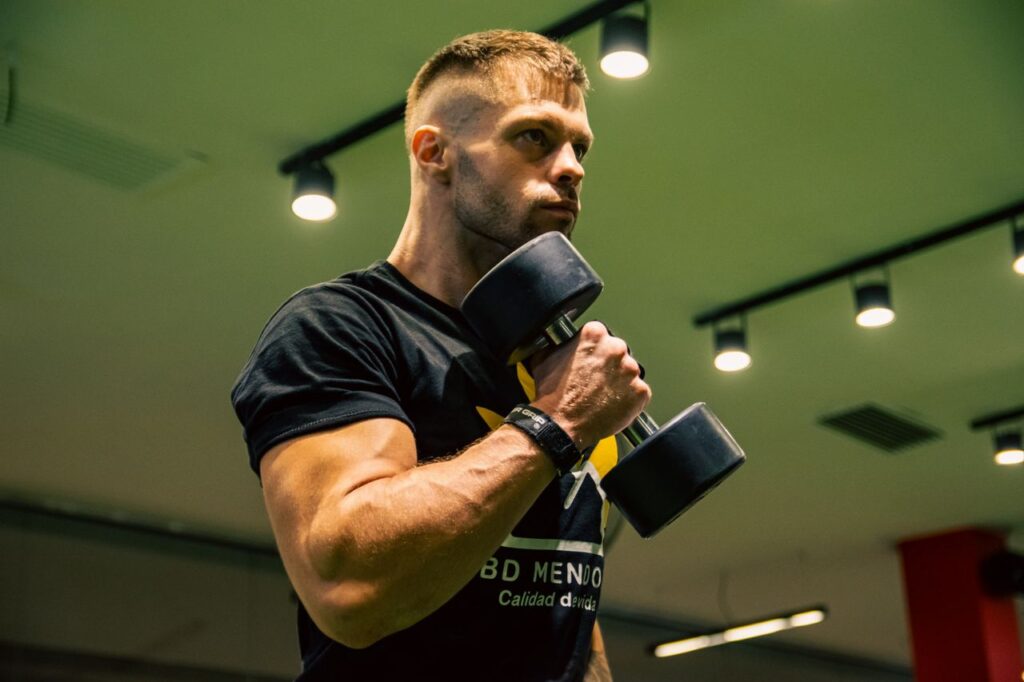
If you think you need heavy barbells and a room full of expensive gym equipment to build impressive upper arms, lifting a light 5kg (roughly 11lb) dumbbell for 30 days will completely shatter your perspective on muscle growth. Most lifters mistakenly equate lifting heavy weight with hyper-efficient muscle hypertrophy, yet your muscle fibers do not possess eyes to read the numbers stamped on an iron plate; they only recognize mechanical tension, metabolic stress, and cellular fatigue. By slowing down your movement speed, controlling the eccentric lowering phase, squeezing tightly at peak contraction, and utilizing high-volume rep ranges, a single light dumbbell can stimulate maximum muscle fiber recruitment and trigger surprising arm growth right in your living room.
The Physiology of Hypertrophy With Light Weights
To understand how a single 5kg dumbbell can trigger genuine muscle hypertrophy, you have to look at how muscle fibers are recruited under metabolic stress. The bicep muscle consists of two distinct heads: the long head (which forms the upper bicep peak) and the short head (which adds inner arm thickness).
Directly underneath your bicep lies the brachialis, a powerful elbow flexor that pushes your bicep upward as it grows, making your arms look visibly wider.
According to Henneman’s size principle, your central nervous system recruits smaller, slow-twitch motor units first when initiating a light movement.
As you push a light 5kg dumbbell past 15 to 20 continuous repetitions, those initial motor units become fatigued.
To keep lifting the weight, your brain is forced to recruit high-threshold, fast-twitch muscle fibers—the exact fibers responsible for explosive growth and muscle volume.
By maintaining high time under tension (TUT) and training close to technical muscular failure, light weights create intense metabolic fatigue and cell swelling, signaling your body to synthesize new muscle tissue.
“Your muscle fibers do not know the weight written on the side of a dumbbell. They only respond to mechanical tension, metabolic stress, and total time under fatigue.”
At a Glance: Heavy Weight vs. Light Dumbbell High-Tension Training
Comparing heavy ego lifting against controlled, high-tension light weight training demonstrates why light dumbbells produce exceptional growth with minimal joint strain.
| Training Parameter | Heavy Gym Weight (Low Reps, Fast Pace) | 5kg Light Dumbbell Routine (High Tension) |
| Primary Hypertrophy Driver | Peak Mechanical Tension | Metabolic Stress & High Time Under Tension (TUT) |
| Target Muscle Isolation | High risk of momentum & shoulder cheating | Strict isolation; zero momentum cheating |
| Joint & Tendon Stress | High stress on elbow joints & biceps tendons | Minimal joint wear; high safety profile |
| Repetition Range Per Set | 6 to 8 heavy reps | 15 to 25 slow, controlled reps |
| Ellicited Muscle Pump | Moderate metabolic pump | Maximum hyper-hydration & muscle cell swelling |
The 5-Move 5kg Dumbbell Bicep Routine
Executing these five targeted movements with strict tempo control ensures you hit every angle of your arm flexors for balanced growth:
1. The Slow-Tempo Standing Bicep Curl
The standard standing curl forms the bedrock of arm isolation, but execution speed determines its effectiveness. Stand tall with your feet shoulder-width apart, holding the 5kg dumbbell in one hand with your arm fully extended.
Keep your elbow pinned to your ribcage, curl the weight up over a 2-second count, and squeeze your bicep hard at the top lockout.
Lower the dumbbell down over a slow, 3-second eccentric phase to maximize muscle damage.
Complete 4 sets of 15 to 20 reps per arm.
2. The Hammer Curl to Target the Brachialis
Switching to a neutral grip (palms facing inward toward your torso) shifts the primary lifting load off the bicep brachii and straight onto the brachialis and brachioradialis muscles in your forearm.
Hold the dumbbell like a hammer, keep your wrist rigid, and curl the weight upward toward your front shoulder.
Building a thick brachialis pushes your main bicep muscle upward, creating the visual illusion of a much larger arm peak.
Perform 3 sets of 15 to 20 reps per arm.
3. The Concentrated Peak-Squeeze Curl
Concentration curls eliminate body momentum entirely, isolating the long head of your bicep for an intense muscular burn.
Sit on a sturdy chair, open your legs wide, and brace the back of your working elbow against the inside of your inner thigh.
Lower the dumbbell until your arm hangs completely straight, then curl the weight toward your chest while rotating your pinky finger outward at the top (supination).
Hold the peak contraction for two full seconds on every single rep, completing 3 sets of 12 to 15 reps per arm.
4. The Iso-Hold Waiter Curl
Holding a light dumbbell in a “waiter” position forces both hands to share the load while maintaining continuous tension throughout your entire muscle belly.
Cup the inner flat plate of the 5kg dumbbell with both palms facing upward toward the ceiling.
Keep your elbows tucked forward and curl the dumbbell from your thighs up to collarbone height, maintaining a tight squeeze throughout the movement.
Because both hands share 5kg, focus on slow, 30-second continuous burn sets, completing 4 total sets.
5. The Eccentric Drag Curl
Standard curls move the dumbbell in an arc around your elbow joint, but drag curls pull the weight straight up your torso, removing shoulder front-delt involvement entirely.
Stand straight, pull your shoulders back, and drive your elbows straight backward behind your body as you curl the weight up along your stomach and chest.
Lower the weight slowly along the same vertical path.
Perform 3 sets of 15 to 20 reps to burn out any remaining muscle fibers at the end of your session.
2 Crucial Rules for Making Light Weights Work
Adhering to these two training principles ensures your 5kg workout produces real physical changes instead of wasted effort:
Rule 1: Master the 3-Second Eccentric Lowering Phase
Muscles sustain more microscopic damage during the lowering phase of a lift than during the lifting phase. Never let gravity pull the light dumbbell down freely; resist the weight by lowering it over a full 3-second count on every rep.
Rule 2: Train Within 2 Reps of Muscular Failure
Because 5kg is light, stopping a set when you feel a mild burn will not trigger muscle growth. You must continue performing reps until your arm is shaking and you are within 1 to 2 reps of complete technical failure.
Related Articles
- New Research: A 15-Minute Wind-Down Walk Is the Missing Piece to Deeper, More Restful Sleep
- One Mile Nearly Broke Me—Then These 15 Proven Tricks Carried Me Across My First Marathon Finish Line
- Forget the Bench Press: These Forgotten Upper Chest Exercises Are the Real Key to a Full, Powerful Chest
- A Full-Body Workout in Just 30 Minutes? A Top Trainer Swears by These 6 Exercises
- The Kettlebell Secret That’s Making Fast Runners Even Faster