FREE SHIPPING OVER $50

Harvard Scientists Say This Many Pushups Predicts a Longer Life—Can You Pass the Test?

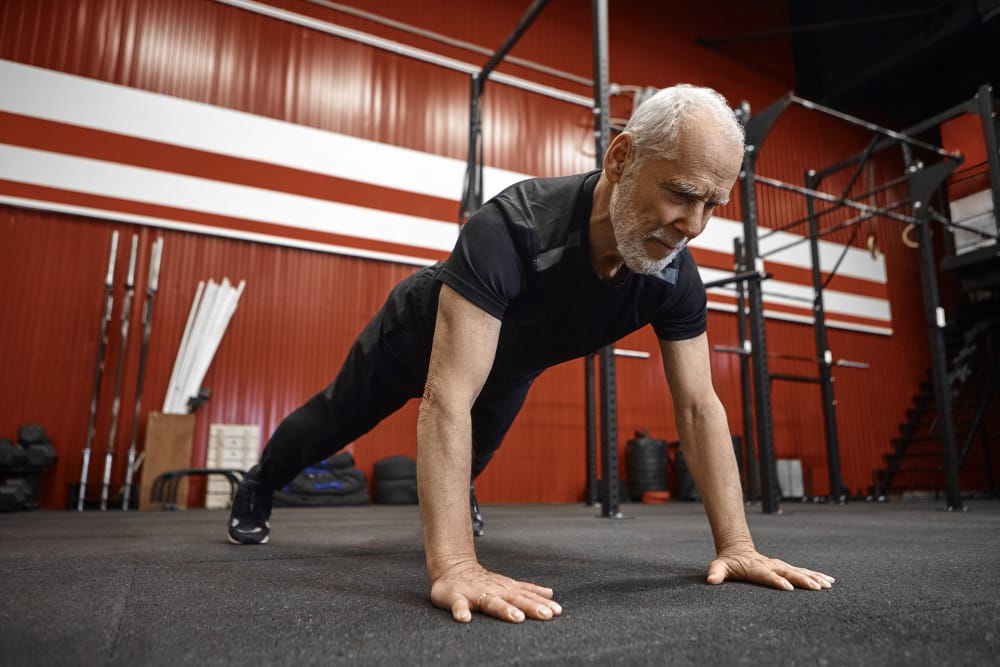
When doctors evaluate your overall cardiovascular risk, they typically check your blood pressure, measure your cholesterol levels, and assess your body mass index during annual checkups. However, landmark clinical research led by the Harvard T.H. Chan School of Public Health reveals that a simple, zero-equipment bodyweight exercise might serve as a far more accurate crystal ball for long-term heart health: your pushup capacity. In a ten-year study tracking adult men, researchers discovered a massive correlation between how many continuous pushups a participant could complete and their overall risk of experiencing a cardiovascular event like a heart attack or stroke. Passing this simple physical test does not require elite athletic conditioning, but hitting the target threshold proves that your body possesses the muscular endurance, vascular health, and functional stamina needed to support a long, vibrant life.
The Biological Magic Behind Pushups and Longevity
To understand why pushups reflect your internal health so accurately, you have to look beyond basic chest and arm strength. Executing a crisp, full-range pushup requires your nervous system and circulatory network to coordinate multiple physiological systems simultaneously.
First, your heart must rapidly dilate blood vessels to deliver oxygenated blood to your pectorals, triceps, shoulders, and core muscles.
Second, your abdominal wall, hip flexors, and lower back must contract dynamically to maintain a rigid plank position, demonstrating strong core stability.
Because pushups demand intense upper-body muscle activation, they tax your cardiovascular system in a way that reveals underlying arterial stiffness or reduced stroke volume.
If your microvascular circulation is compromised, your muscles fatigue rapidly due to inadequate oxygen delivery and slow metabolic waste removal.
“Pushup capacity acts as an immediate functional stress test. If your cardiovascular system cannot deliver oxygen to working upper-body muscles, muscular fatigue sets in long before your chest gives out.”
At a Glance: The Harvard Pushup Benchmarks
Comparing the cardiovascular outcome tiers established by Harvard researchers highlights why building pushup endurance protects long-term health.
| Pushup Capacity Tier | Relative Cardiovascular Event Risk | Functional Fitness Status | Long-Term Longevity Outlook |
|---|---|---|---|
| 40+ Pushups | 96% Lower Risk | Exceptional muscular & vascular endurance | Peak protection against cardiovascular disease |
| 21 to 35 Pushups | Moderate Risk Reduction | Solid baseline functional strength | Strong health foundation with room for improvement |
| 11 to 20 Pushups | Mild Risk Reduction | Average physical conditioning | Elevated long-term risk compared to high-performing tiers |
| Fewer Than 10 Pushups | Baseline (Highest Relative Risk) | Low muscular stamina & upper-body capacity | High priority for structured daily exercise intervention |
The Harvard Study Revealed: What the Numbers Mean
The landmark Harvard study monitored over 1,100 active adult men over a ten-year observation window, regularly assessing their physical performance alongside traditional treadmill stress tests.
The results were striking: participants who were capable of completing 40 or more continuous pushups during a baseline exam had a 96 percent lower risk of developing cardiovascular disease or experiencing heart events compared to men who could complete fewer than 10 pushups.
Intriguingly, pushup capacity proved to be a more accurate predictor of future heart problems than submaximal treadmill endurance tests.
While treadmill tests evaluate steady-state aerobic capacity, pushups measure functional muscular power, core stability, and upper-body stamina all at once.
Although the original study evaluated male firefighters, exercise physiologists emphasize that the core biological mechanism applies universally across adults of all ages and genders: higher functional strength directly correlates with lower metabolic and cardiovascular risk.
How to Test Yourself Accurately at Home
Before starting your self-test, taking a minute to master proper form ensures your score reflects real functional strength rather than momentum or short-range reps:
- Set Your Base: Start in a high plank position with your hands placed slightly wider than shoulder-width apart and your feet hip-width distance.
- Lock Your Spine: Engage your glutes and pull your stomach inward to create a straight line from the crown of your head down to your heels.
- Lower with Control: Inhale and lower your entire body together until your chest hovers roughly two inches above the floor, keeping your elbows tucked at a 45-degree angle.
- Drive Upward: Exhale and press firmly through your palms to return to the starting position without arching your lower back or dropping your hips.
Count only full, clean repetitions completed in a steady rhythm without taking extended rest breaks in the top plank position.
4 Simple Steps to Build Up Your Pushup Count
If your initial score landed below the target tier, implementing these simple, progressive training strategies will increase your rep count effortfully:
1. Master Incline Pushups First
Instead of dropping to your knees, elevate your hands onto a sturdy kitchen counter, bench, or sturdy table. Incline pushups preserve proper plank mechanics while reducing the percentage of your body weight you must lift, allowing you to build foundational shoulder and chest strength.
2. Practice “Greasing the Groove”
Rather than doing one exhausting set until failure, spread small, manageable sets throughout your day. Perform 5 to 10 easy pushups every few hours. This frequent, low-fatigue stimulus trains your nervous system to execute the movement pattern efficiently.
3. Strengthen Your Plank Hold
Pushup failure often stems from a collapsing core rather than weak chest muscles. Incorporate 30-to-60-second forearm planks into your morning routine to build isometric endurance in your abdominals and lower back.
4. Slow Down Your Eccentric Phase
Lowering your body slowly over three seconds during each rep forces your muscle fibers to adapt under longer periods of tension. Eccentric strength gains transfer rapidly into higher concentric rep totals.
2 Common Pushup Mistakes That Drain Your Strength
Avoiding these frequent form errors protects your shoulder joints and ensures every rep builds maximum functional muscle:
Mistake 1: Flaring Your Elbows Out at 90 Degrees
Pointing your elbows straight out to the sides places intense shear stress on the delicate rotator cuff tendons in your shoulders. Always angle your elbows backward like an arrowhead, maintaining a 45-degree angle relative to your torso.
Mistake 2: Sagging Your Hips or Pushing Your Butt Airward
Allowing your lower back to arch shifts your weight off your chest and strains your spine. Focus on squeezing your glutes tightly throughout every repetition to keep your pelvis aligned.
Related Articles
- Gynecologists Say These 9 Simple Habits Keep Your Ovaries Young and Healthy for Decades
- The 30-Second Biological Age Test That Predicts How Long You’ll Live—Most People Over 40 Fail It
- Taking Blood Sugar Medication? These 6 Supplements Could Be Canceling Out Your Dose Without You Knowing
- Scientists Just Discovered a Tea + Vitamin Pair That Rejuvenates Aging Brain Cells—Here’s What You Need to Know
- Before You Buy Another Supplement, Read This—5 Must-Know Facts That Could Save Your Health