FREE SHIPPING OVER $50

I’m 45, My Mum Is 66, and We Lift Together—Here’s the 30-Minute Routine That Keeps Us Strong

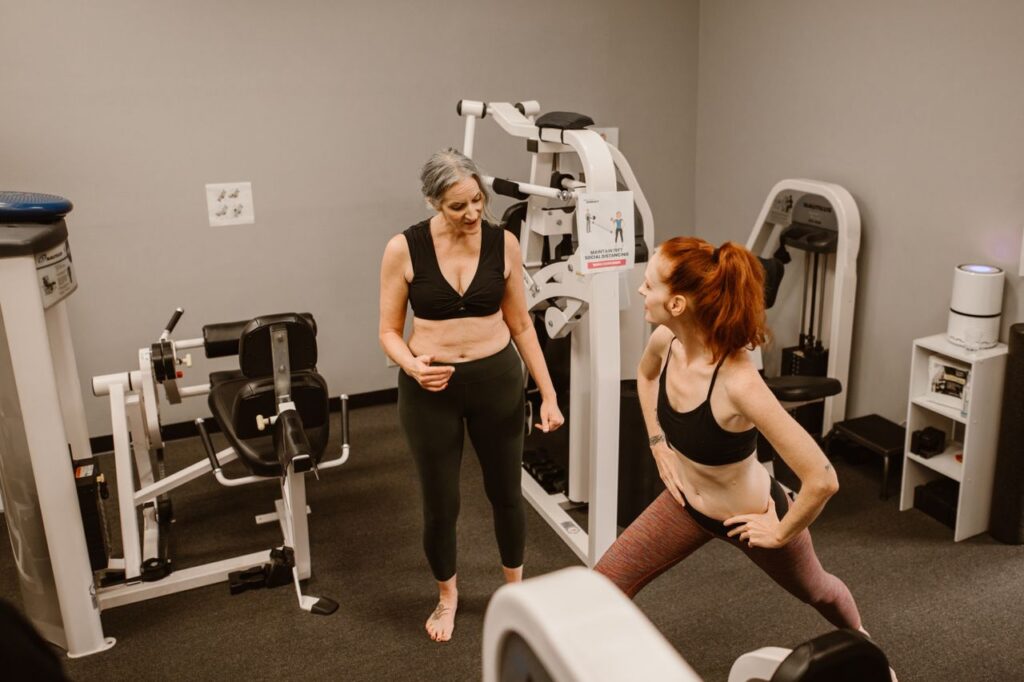
Walking into a weight room at 45 alongside a 66-year-old parent usually draws a few curious glances from younger gymgoers glued to their phones between sets. Most people assume that once you cross into your mid-40s—and certainly by your mid-60s—fitness should shrink down to gentle neighborhood walks, light water aerobics, or basic stretching routines. Yet, exercise physiologists and longevity researchers emphasize that skipping heavy resistance training during midlife and beyond is one of the fastest ways to lose hard-earned muscle mass, bone mineral density, and metabolic resilience. Instead of slowing down, my mum and I committed to training together three days a week using a focused, 30-minute functional strength blueprint. By scaling the exact same foundational movement patterns to match our individual fitness levels, we build real-world power, protect our joints, and keep our energy soaring without spending hours inside a gym.
Why Multi-Generation Strength Training Works at 45 and 66
To understand why lifting weights together works equally well at 45 and 66, you have to look at what happens to muscle and bone tissue during the second half of life.
Starting around age 30, adults naturally begin losing 3 to 8 percent of their muscle mass per decade—a progressive decline known as sarcopenia—and that rate accelerates sharply after age 60 if muscles are not challenged against external resistance.
At the same time, hormonal shifts during perimenopause and post-menopause reduce natural estrogen levels, which directly impacts bone mineral density and leaves women vulnerable to osteopenia or osteoporosis.
Cardio exercises like walking or cycling keep your heart healthy, yet they do not place enough mechanical tension on your skeleton to stimulate new bone growth or preserve fast-twitch muscle fibers.
Lifting weights solves both challenges simultaneously by triggering mechanotransduction, a cellular process where physical load signals bone-forming cells (osteoblasts) and muscle fibers to rebuild thicker, stronger, and more resilient tissue.
Even better, training with a partner across generations creates built-in accountability, boosts mood through social connection, and proves that strength has no expiration date.
“Muscle tissue is the true organ of longevity. Whether you are 45 or 66, progressive resistance training is the single most reliable way to protect your bones, stabilize blood sugar, and stay fiercely independent.”
At a Glance: How We Scale the Same Workout for Two Decades
Comparing how a 45-year-old and a 66-year-old execute the exact same training session shows how smart exercise variations keep both generations progressing safely.
| Training Parameter | 45-Year-Old Execution Strategy | 66-Year-Old Execution Strategy |
| Primary Goal | Build lean muscle, metabolic power, & hormone balance | Preserve bone density, joint stability, & balance |
| Resistance Load | Moderate-to-heavy dumbbells and kettlebells | Light-to-moderate dumbbells with strict tempo control |
| Squat Variation | Goblet squat holding a heavy kettlebell at chest | Box squat to a sturdy bench for safe depth & knee support |
| Push Variation | Floor dumbbell chest press or standard push-ups | Incline push-ups with hands elevated on a sturdy bench |
| Rest Between Sets | 45 to 60 seconds to keep heart rate elevated | 60 to 90 seconds to ensure full breathing recovery |
The Exact 30-Minute Strength Routine We Do Together
We perform this complete full-body workout three non-consecutive days per week (such as Monday, Wednesday, and Friday), spending five minutes warming up and 25 minutes moving through five compound exercises:
1. Goblet Squats to Box or Bench (3 Sets of 10 to 12 Reps)
Stand with your feet slightly wider than hip-width apart, holding a single dumbbell or kettlebell vertically against your chest with both hands.
Push your hips backward first, bend your knees, and lower your torso smoothly until your glutes lightly tap a sturdy weight bench behind you, keeping your chest proud and heels planted firmly on the floor.
Drive powerfully through your heels to stand back up to the starting position without rounding your lower back.
Using a bench as a target guarantees consistent squat depth, protects the knees, and builds the exact lower-body power needed to rise effortlessly from low chairs or car seats.
2. Single-Arm Supported Dumbbell Rows (3 Sets of 10 Reps Per Side)
Place your left hand and left knee on a flat workout bench so your torso sits parallel to the floor with a flat, neutral spine, while your right foot stays planted firmly on the ground.
Hold a dumbbell in your right hand with your arm extended straight toward the floor, then pull the weight upward toward your lower ribcage by squeezing your shoulder blade toward your spine.
Lower the weight slowly over a 3-second count until your arm is fully extended before starting the next repetition.
Strong upper-back muscles counteract forward shoulder rounding, improve upright posture, and protect the thoracic spine from age-related stiffness.
3. Dumbbell Romanian Deadlifts (3 Sets of 10 to 12 Reps)
Stand tall with your feet hip-width apart, holding a pair of dumbbells resting against the front of your thighs with a slight, soft bend in your knees.
Keep your shoulders pulled back and your core braced as you hinge forward at the hips, sliding the dumbbells smoothly down along your shins until you feel a deep stretch across your hamstrings.
Squeeze your glutes firmly to drive your hips forward and return to a tall standing posture.
The hip hinge is the single most important functional movement for longevity, strengthening the posterior chain and protecting your lower back whenever you lift groceries, luggage, or grandchildren.
4. Incline Bench Push-Ups or Dumbbell Floor Press (3 Sets of 8 to 12 Reps)
For an incline push-up, place your hands slightly wider than shoulder-width apart on the edge of a sturdy, anchored weight bench and step your feet back into a straight plank line.
Lower your chest slowly toward the bench until your elbows reach a 45-degree angle from your ribs, then press firmly through your palms to return to the top.
If wrist pressure feels uncomfortable, perform a dumbbell floor press instead by lying flat on your back with knees bent and pressing two dumbbells straight up over your chest.
Both variations build upper-body pushing strength and shoulder stability while keeping joint stress low.
5. Suitcase Carries (3 Rounds of 40 Seconds)
Pick up a moderately heavy dumbbell or kettlebell in one hand only, standing tall with your shoulders level, ribcage stacked over your pelvis, and core braced tight.
Walk slowly and steadily in a straight line for 20 seconds without letting the weight pull your torso sideways, then switch hands and walk back for 20 seconds.
Loaded carries challenge your grip strength—one of the strongest clinical predictors of human longevity—while training your deep obliques and hip stabilizers to protect your spine during everyday walking.
How We Structure Our 30 Minutes for Maximum Results
Keeping our workouts tight and focused ensures we never waste time or burn out:
- Minutes 0 to 5 (Dynamic Warm-Up): We start with arm circles, bodyweight hip hinges, and gentle torso twists to lubricate joints and raise muscle temperature before touching a single weight.
- Minutes 5 to 25 (Superset Strength Blocks): We pair non-competing exercises together—such as Goblet Squats followed immediately by Dumbbell Rows—so one muscle group rests while the other works, cutting workout time in half without sacrificing strength gains.
- Minutes 25 to 30 (Core Carry & Cooldown): We finish with three rounds of Suitcase Carries followed by two minutes of slow nasal breathing to shift our nervous systems straight into recovery mode.
Related Articles
- The Longevity Secret for Women: Why Strength Training in Your 30s, 40s, and 50s Changes Everything
- New Research Reveals the Strength Training Sweet Spot for a Longer Life—And the Point Where It Backfires
- Longevity Strength Standards: The Exact Numbers Men at 40, 50, and 60 Should Hit (And Why Most Fall Short)
- I’m a Longevity Doctor—This 30-Second Sit-and-Rise Test Predicts Early Death Better Than Most Blood Tests
- Loneliness After 60 Is Optional: 15 Apps That Build a Thriving Social Life (No Grandkids Needed)