FREE SHIPPING OVER $50

This 3-Move Routine Is Helping Seniors Walk Pain-Free and Add Healthy Years to Their Lives

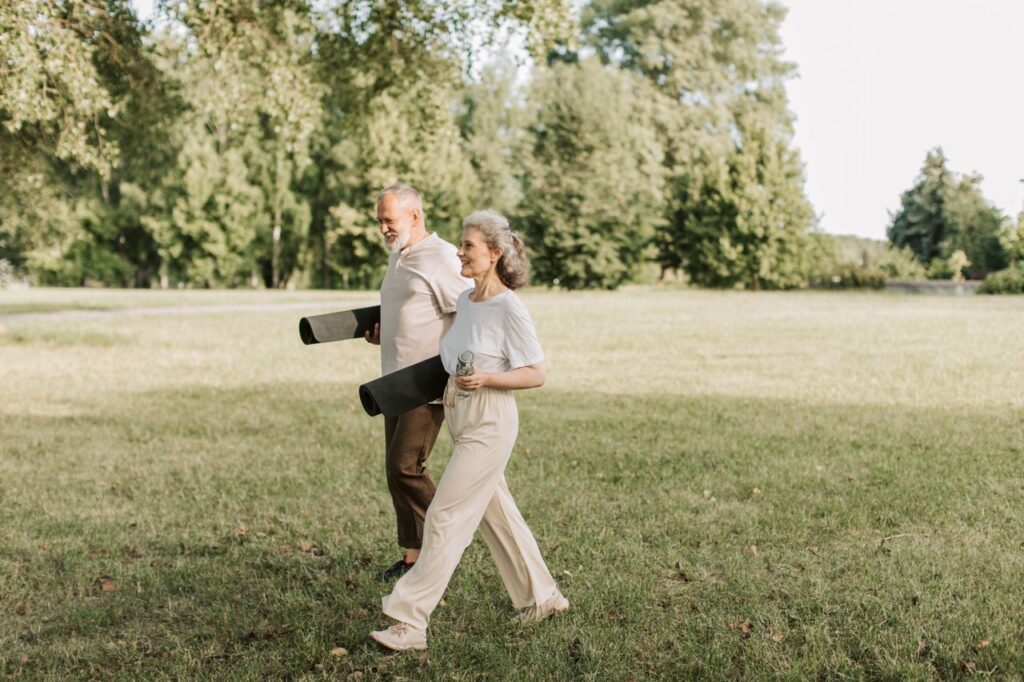
For millions of older adults, taking a simple neighborhood walk eventually shifts from an enjoyable daily habit into a nerve-wracking chore filled with stiff knees, aching hips, and persistent lower back tightness. As joint mobility naturally declines, many seniors assume that slowing down and sitting more is the safest way to preserve their joints, unaware that prolonged physical inactivity actually accelerates cartilage degeneration and weakens stabilizing muscles. Medical researchers and movement specialists emphasize that walking speed and joint stability act as powerful biological markers of overall longevity, meaning that keeping your lower body fluid and mobile directly impacts how long and how well you live. A targeted, 3-move mobility routine offers older adults a low-impact solution to unlock tight joints, eliminate walking discomfort, and protect their physical independence for years to come.
The Longevity Connection: Why Walking Pain-Free Dictates How Well You Age
To understand why walking comfort matters so much for healthy lifespan, you have to look at how your lower body joints interact during everyday movement.
When you take a step, your ankles, knees, and hips must work in seamless coordination to absorb shock and propel your body forward.
As years of sitting or past injuries accumulate, your hip flexors shorten, your ankle range of motion shrinks, and your glute muscles become inactive.
This mechanical breakdown forces your knee joints and lower spine to absorb forces they were never designed to handle, leading to chronic joint friction and localized pain.
Epidemiological studies consistently link comfortable walking speed and functional leg strength with lower rates of cardiovascular decline, reduced risk of cognitive impairment, and improved independence in older age.
Restoring fluid joint mechanics does not just relieve localized soreness; it removes the physical barrier to staying daily active, keeping your heart, lungs, and brain healthy over the long haul.
“Movement is medicine for aging joints. Resting a sore joint often stiffens it further, while targeted mobility lubricates cartilage and restores natural gait mechanics.”
At a Glance: Inactivity vs. Daily Joint Mobility for Seniors
Comparing the biological impact of resting stiff joints against executing a daily low-impact mobility routine reveals why targeted movement wins every time.
| Health & Functional Parameter | Sedentary Joint Management | 3-Move Daily Mobility Routine |
| Synovial Fluid Circulation | Low fluid flow; joints feel stiff and dry | Drives lubricating fluid directly into cartilage |
| Hip & Ankle Flexibility | Progressively shortens tissue; restricts stride | Opens tight hip flexors & restores ankle dorsiflexion |
| Glute & Core Engagement | Dormant glutes force lower back to overwork | Fires stabilizer muscles to protect the spine |
| Fall Risk & Balance | Higher risk due to shuffling gait and weak legs | Dramatically improves single-leg stability & confidence |
| Long-Term Longevity Outcome | Accelerates mobility loss and physical decline | Preserves gait speed, independence & vitality |
The 3-Move Pain-Free Walking Routine
Executing these three joint-friendly movements every morning lubricates your cartilage, opens tight hips, and activates the key stabilizing muscles required for a smooth, painless stride:
1. The Supported Seated Shin & Ankle Clock
Stiff ankles force your body to compensate by turning your feet outward, which twist your knees unnaturally during every single step.
Sit comfortably near the edge of a sturdy chair with your spine tall and shoulders relaxed.
Extend one leg forward slightly, keeping your heel lightly resting on the floor.
Slowly rotate your foot in smooth, controlled circular motions, tracing a wide clock face with your big toe for 10 clockwise rotations and 10 counterclockwise rotations per leg.
This simple movement pumps fresh synovial fluid into your ankle joint, restoring essential up-and-down flexibility so your foot clears the ground easily without shuffling.
2. The Chair-Assisted Standing Hip Opener
Tight hip flexors pull your pelvis forward into a tilted position, locking up your lower back and preventing your legs from swinging back naturally when walking.
Stand behind a sturdy chair or kitchen counter, holding the edge with both hands for total balance support.
Keep your torso upright, shift your weight onto your left leg, and slowly slide your right foot straight back behind you, pressing your right heel gently toward the floor until you feel a comfortable stretch along the front of your right hip and thigh.
Hold this gentle position for 20 to 30 seconds while taking deep, relaxing breaths, then switch to your left side.
Opening your hip flexors restores full hip extension, allowing your legs to stride backward smoothly without pinching your lower back.
3. The Supported Glute Bridge and Sit-to-Stand Activation
Weak glute muscles are a primary cause of knee instability, as your knee tends to collapse inward when your glutes fail to support your pelvis during a stride.
Sit on the front half of a sturdy chair with your feet flat on the floor, spaced hip-width apart.
Lean slightly forward from your hips, keep your chest open, and press firmly through your heels to squeeze your glutes as you stand up tall.
Pause for one second at the top, focusing on squeezing your buttocks, then slowly lower yourself back down over a controlled 3-second count until your seat touches the chair.
Complete 8 to 12 smooth repetitions.
Building responsive glute strength provides solid pelvic stability, absorbing foot-strike impact so your knees stay aligned and pain-free with every step.
How to Integrate This Routine into Your Daily Schedule
Achieving lasting joint freedom requires consistency rather than long, grueling workout sessions:
- Perform It First Thing in the Morning: Joints naturally feel stiffest after hours of sleep. Spending five minutes on these three moves right after waking up lubricates your cartilage before you start your daily activities.
- Use It as a Pre-Walk Warm-Up: Perform one quick round of these movements directly before heading out for a walk to prepare your ankles, hips, and glutes for impact.
- Keep Movement Gentle and Pain-Free: Never force a joint into sharp pain. Move slowly within your current comfortable range of motion, allowing your body to loosen up naturally over time.
2 Common Walking Mistakes Seniors Should Avoid
Steering clear of these frequent habits protects your joint cartilage and keeps your gait steady:
Mistake 1: Shuffling Feet to Avoid Falling
Many older adults shorten their stride and drag their feet when they feel uncertain on their legs. Shuffling actually increases your risk of tripping because your toes fail to clear small cracks or carpet edges. Focusing on ankle mobility allows your toes to lift naturally.
Mistake 2: Looking Straight Down at Your Feet While Walking
Walking with your head tilted down throws your center of gravity forward, placing excessive strain on your neck, upper back, and knees. Keep your chest up, eyes focused roughly 10 to 15 feet ahead, and let your peripheral vision monitor the ground.
Related Articles
- Nordic Walking Adds More Healthy Years to Your Life Than Regular Walking by Strengthening Your Heart—Here’s How It Works
- Scientists Just Found the Cure for Balding Hiding Inside Your Own Body—Here’s How They’re Unlocking It
- Forget Cardio—These 5 Longevity-Boosting Strength Exercises Are the Real Fountain of Youth After 50 (Add 10 Years, Feel 20)
- How One Woman Reversed 10 Years of Aging With These 2 Lifestyle Tweaks
- Revealed: The Supplement Helping People Over 40 Build Muscle Faster