FREE SHIPPING OVER $50

The Most Overlooked Pilates Exercise for Better Posture—Instructors Say It’s a Game-Changer

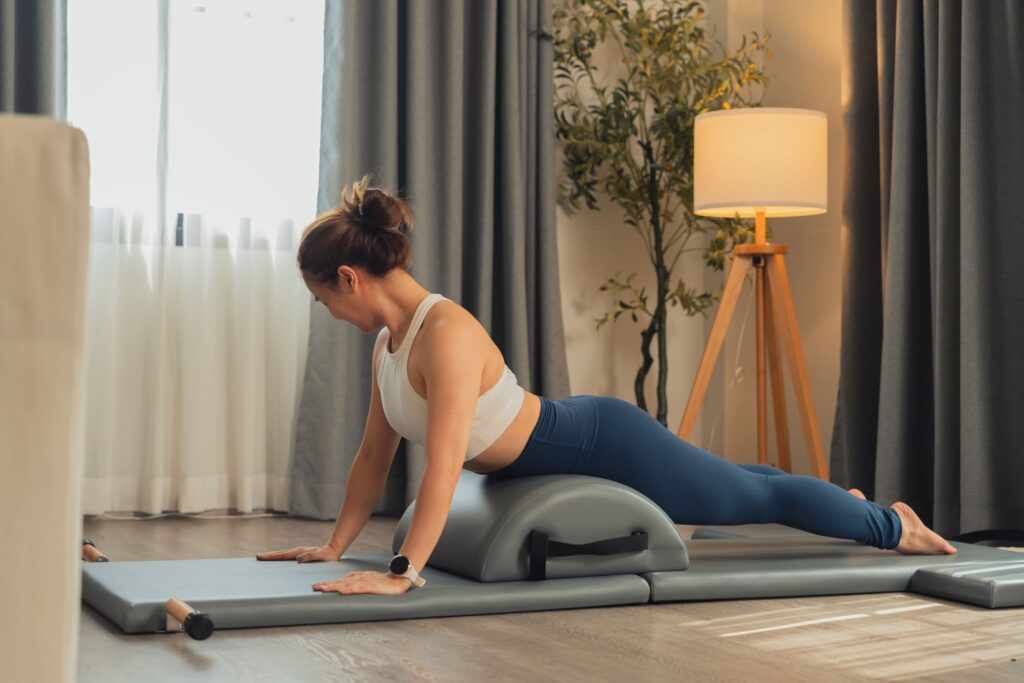
If you spend your workday slouched over a laptop, craning your neck toward a smartphone, or driving in heavy traffic, your upper body is likely locked in a state of forward flexion. Over time, this constant downward slump shortens your chest muscles, weakens your upper back extensors, and pulls your shoulders forward into an uncomfortable, rounded position. While most people instinctively turn to abdominal crunches or basic planks to build core strength, top Pilates instructors reveal that the single most effective exercise for reversing desk posture is actually an overlooked extension movement: the Pilates Swan Prep. By strengthening the deep extensor muscles of your thoracic spine while opening tight pectorals, the Swan Prep restores natural spinal alignment, lifts your chest, and eliminates posture-related upper back pain without requiring any studio equipment.
Why Flexion-Based Workouts Fail Your Posture
To understand why the Pilates Swan is such a powerful posture corrector, you have to look at how modern life impacts your musculoskeletal balance. Sitting at a desk forces your spine into continuous forward flexion, causing chronic muscle imbalances throughout your upper body.
When your chest muscles stay tight and contracted for hours, they pull your shoulder blades away from your spine.
This constant forward pull overstretches the erector spinae, rhomboids, and middle trapezius muscles in your upper back, leaving them weak and chronically fatigued.
Doing traditional ab crunches or sit-ups only compounds the problem by pulling your ribcage down and driving your upper body further into forward flexion.
To fix rounded shoulders and stand tall effortfully, you must train thoracic spinal extension—the exact mechanical motion performed during the Pilates Swan.
“Crunches strengthen the muscles that pull you forward. The Pilates Swan strengthens the muscles that pull you upright, opening your chest and decompressing your spinal discs.”
At a Glance: Front-Body Flexion vs. Back-Body Extension
Comparing standard ab exercises against back-extending Pilates movements demonstrates why targeted extension is vital for posture correction.
| Exercise Focus | Target Muscle Groups | Impact on Posture | Biomechanical Result |
| Traditional Crunches | Rectus Abdominis (Outer Abs) | Reinforces forward slouching | Pulls ribcage toward pelvis, tightening front body |
| Standard Planks | Full Core & Shoulder Girdle | Maintains static spinal position | Builds endurance but does not open a tight chest |
| Pilates Swan Prep | Thoracic Extensors, Rhomboids & Mid-Traps | Actively reverses rounded shoulders | Extends thoracic spine, opens chest, lowers shoulders |
| Pilates Chest Expansion | Rear Deltoids & Lats | Strengthens upper back alignment | Opens shoulder joints and stabilizes scapulae |
What Makes the Pilates Swan the Ultimate Posture Fix?
Unlike aggressive gym exercises like heavy barbell deadlifts or hyperextension benches that often strain the lower back, the Pilates Swan focuses on controlled, articulated extension of the mid and upper back (the thoracic spine).
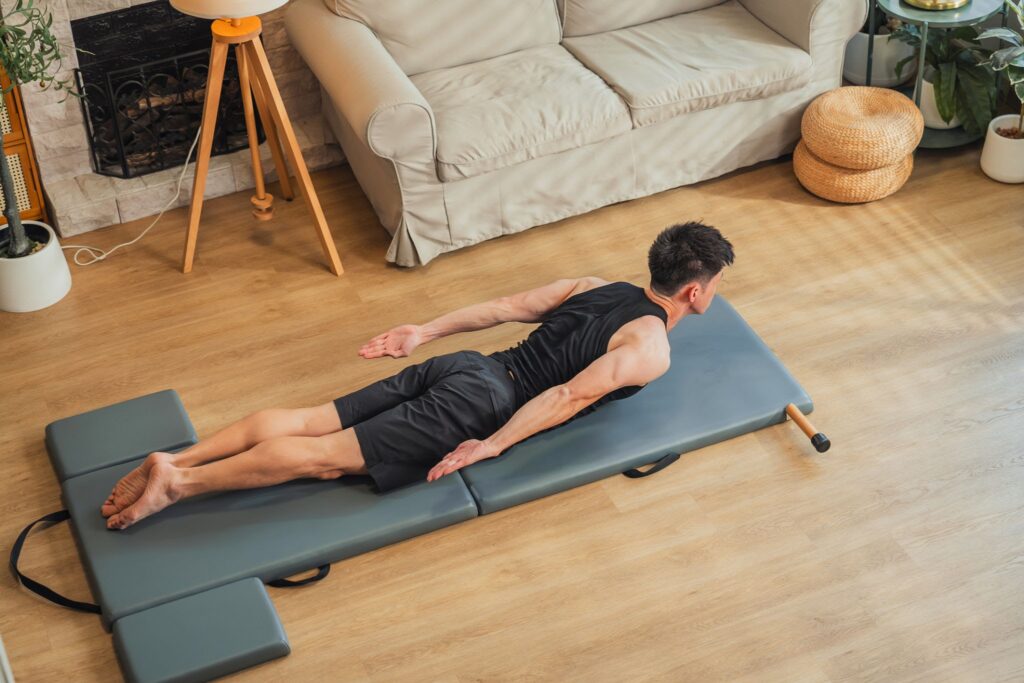
The movement begins lying face-down on a mat, engaging your deep abdominal wall to protect your lumbar spine before lifting your breastbone off the floor.
By keeping your lower stomach drawn inward and upward, you prevent hyper-archening in your lower back.
This forces your upper back extensors—the exact muscles responsible for keeping your shoulders pulled back—to do the heavy lifting.
Additionally, pressing your hands gently into the mat during the extension phase stretches tight pectoral muscles across your chest, opening your lungs and improving breathing capacity.
Step-by-Step: How to Execute the Pilates Swan Prep Perfectly
Performing the Swan Prep with proper form ensures you hit the upper back extensors while keeping your low back completely safe:
- Lie Prone on Your Mat: Start lying face down with your legs hip-width apart and your feet gently pressed into the floor.
- Position Your Hands: Place your palms flat on the mat directly alongside your shoulders, keeping your elbows tucked close to your ribcage.
- Engage Your Deep Core: Draw your navel gently away from the mat toward your spine to stabilize your lower back and pelvis.
- Inhale and Lengthen: As you inhale, reach the crown of your head forward and slowly lift your head, neck, and chest off the mat, focusing on extending through your mid-back rather than pushing with your arms.
- Hold and Exhale: Pause at the top of your range where your breastbone points forward, keeping your shoulders pulled down away from your ears, then slowly lower down on an exhale.
Repeat this movement for 6 to 8 slow, controlled repetitions once or twice daily to re-educate your nervous system and build upright posture endurance.
3 Additional Pilates Exercises to Pair with the Swan
Combining the Swan Prep with these complementary mat moves creates a complete 10-minute posture-restoration routine:
1. The Pilates Swimming Exercise
Lying on your stomach with arms and legs extended, flutter your opposite arm and leg up and down while maintaining a stable torso. This exercise builds long-duration endurance in your entire posterior muscle chain.
2. The Chest Expansion
Sitting upright or kneeling, reach your arms straight forward at shoulder height, then pull them back past your hips while pressing your shoulder blades together. This move opens the collarbones and strengthens the back of the shoulders.
3. The Saw
Sitting tall with legs wide and arms extended out to the sides, rotate your torso and reach toward your opposite foot. The Saw improves thoracic spine mobility and stretches tight hamstrings that pull your pelvis out of alignment.
2 Common Mistakes That Ruin Your Posture Progress
Avoiding these standard execution errors protects your spine and guarantees maximum muscle recruitment:
Mistake 1: Crank your Neck Upward
Throwing your head back to look at the ceiling compresses the cervical vertebrae in your neck. Always keep your gaze directed toward the top edge of your mat so your neck stays long and aligned with your upper back.
Mistake 2: Pushing High With Your Arms and Arching Your Low Back
Using arm strength to push up into a full cobra pose shifts the bending force directly into your flexible lower back. Focus on lifting your chest using only your upper back muscles, using your hands merely for light balance and support.
Related Articles
- Doctors Say Jumping Can Rebuild Bone Density Faster Than Calcium Supplements—Here’s Why It Works
- Your Bones Get Weaker After 40—Here’s How to Stop (and Reverse) It, According to Experts
- These 5 Physical Therapist-Approved Exercises Fixed 95% of My Aches—Now I Do Them Every Day
- Build Serious Muscle & Strength With Just 4 Lifts—This 3-Day Program Is All You Need
- Think You Don’t Have Time to Strength Train? You’ll Want to See This