FREE SHIPPING OVER $50

I Do These 10 Age-Defying Exercises Every Morning—Here’s How They Make Me Feel 20 Years Younger

Waking up in midlife with stiff joints, a dull lower back ache, and sluggish morning energy often feels like an inevitable part of getting older, but chronological aging and biological decline are two completely different things. Most morning stiffness comes from hours of physical inactivity overnight, which causes joint fluid to thicken and fascia to tighten around your muscles. By dedicating just fifteen minutes every morning to a series of dynamic, multi-planar mobility and strength exercises, you can wake up your central nervous system, lubricate joint capsules with fresh synovial fluid, and reverse cellular stiffness. Committing to these ten age-defying movements every morning completely restores full-body agility, protects your spine, and provides the energetic vitality of feeling two decades younger.
The Biological Science of Morning Anti-Aging Movement
To understand why a brief morning movement routine dramatically alters how young you feel throughout the day, you have to look at what happens inside your connective tissue while you sleep. Overnight, your body’s fascia—the continuous web of collagenous tissue surrounding every muscle fiber, organ, and bone—loses hydration and forms microscopic cross-links that create physical stiffness.
When you step out of bed and perform dynamic, multi-directional movements, you trigger a physiological process called thixotropy.
Thixotropy is the property of fascia and joint synovial fluid that causes them to transform from a thick, viscous gel state into a fluid, pliable liquid when warmed by movement.
Dynamic morning exercise also stimulates blood circulation, flooding oxygenated blood and metabolic nutrients directly into avascular joint cartilage.
Furthermore, moving your joints through their full range of motion stimulates mechanoreceptors—specialized nerve endings that send calming signals directly to your brain.
These neural signals instantly dial down baseline muscle tension, eliminate chronic aches, and improve spatial posture.
“Morning stiffness is not a permanent age sentence; it is simply dehydrated fascia and cold joint fluid. Dynamic morning movement lubricates your joints from the inside out.”
At a Glance: Static Stretching vs. Dynamic Age-Defying Movement
Comparing traditional static stretching against dynamic age-defying movement highlights why dynamic morning routines deliver far superior anti-aging benefits.
| Physical Metric | Traditional Static Stretching | Dynamic Morning Movement |
| Primary Physiological Focus | Passive tendon lengthening | Active joint lubrication & neural wake-up |
| Synovial Fluid Circulation | Minimal fluid stimulation | Maximum synovial fluid circulation |
| Core & Balance Activation | Low to non-existent | Continuous deep core & stabilizing engagement |
| Impact on Morning Stiffness | Temporary muscle relief | Lasting fascia hydration & posture correction |
| Time Needed | Long, slow holds (20+ minutes) | Fast, high-yield routine (10 to 15 minutes) |
The 10 Morning Exercises That Restore Youthful Vitality
1. The Cat-Cow Spine Lubricator
Your spine contains 33 individual vertebrae separated by gel-filled intervertebral discs. The Cat-Cow movement gently flexes and extends your entire spinal column, encouraging hydration inside those intervertebral discs.
Start on all fours on a yoga mat with your hands beneath your shoulders and knees under your hips.
Inhale deeply as you arch your back, dropping your belly toward the floor while lifting your chest and tailbone toward the ceiling.
Exhale fully as you round your spine toward the sky, tucking your chin into your chest and pulling your navel toward your spine.
Repeating this fluid movement for 10 slow breaths warms up your spinal column, eliminates lower back tightness, and prepares your back for the day.
2. World’s Greatest Stretch
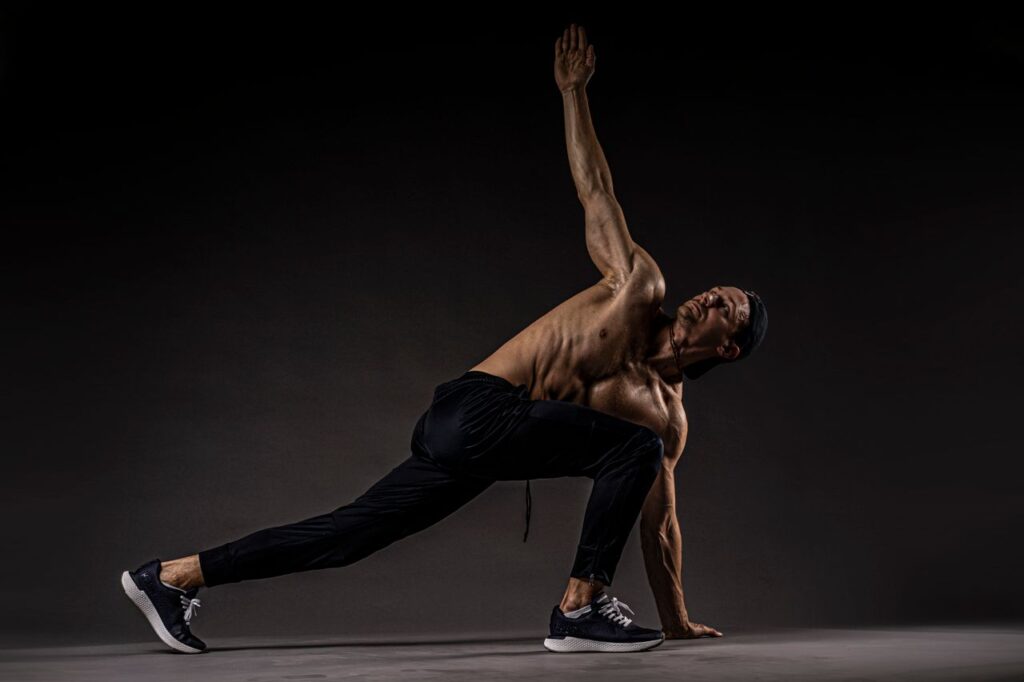
True to its name, this compound movement opens tight hip flexors, mobilizes the thoracic spine, and stretches tight hamstrings all in a single fluid sequence.
Step your right foot forward into a deep lunge, placing both hands flat on the floor inside your right foot while extending your left leg straight back.
Reach your right arm up toward the ceiling, twisting your upper torso while keeping your hips square and breathing deeply.
Lower your right arm back down, shift your weight backward to straighten your front right leg slightly for a brief hamstring stretch, and step back to switch sides.
Performing 5 reps per side opens tight hips from prolonged sitting and instantly restores youthful stride fluidness.
3. Thoracic Spine Windmills
A stiff upper back forces your lower back and neck to overcompensate, leading to poor posture and chronic joint strain. Thoracic windmills restore rotational mobility to your mid-back.
Lie on your side with your knees bent at a 90-degree angle and stacked on top of each other, extending both arms straight out in front of you at chest height.
Keep your knees pinned together as you sweep your top arm up and over your head in a large arc, opening your chest toward the ceiling until your hand rests on the opposite side.
Pause for a second at full expansion, and reverse the arc back to your starting position.
Completing 8 controlled rotations per side opens up your chest, improves lung capacity, and reverses forward-slumped posture.
4. Deep Squat to Overhead Reach
Deep squatting is a fundamental human movement pattern that keeps your hips, knees, and ankles fully mobile throughout life.
Stand with your feet slightly wider than shoulder-width apart, and sink your hips down into a deep, comfortable squat while keeping your heels firmly planted on the floor.
Press your elbows gently against the insides of your knees to open up tight hips and groins.
Keep your chest lifted as you reach your right hand straight up toward the ceiling, follow with your left hand, and drive through your heels to stand tall.
Performing 8 reps strengthens your legs, lubricates knee joints, and builds solid lower-body resilience.
5. Standing Arm Circles and Hugs
Restoring shoulder mobility prevents frozen shoulder, shoulder impingement, and upper back tightness.
Stand tall with your feet hip-width apart and extend your arms straight out to the sides at shoulder height.
Make 10 small forward circles, gradually expanding into large, sweeping circles that open your shoulder joints completely.
Reverse direction for 10 backward circles, and finish by swinging your arms open wide and wrapping them across your chest in a self-hug motion for 10 quick reps.
This simple exercise floods shoulder joints with warm blood and restores natural arm mobility.
6. Single-Leg Glute Bridges
Strong glutes act as the primary engine for human movement, protecting your lower back and knees from carrying excess physical strain.
Lie flat on your back with your knees bent and feet flat on the floor, hip-width apart.
Extend your left leg straight out in the air, brace your core, and drive through your right heel to lift your hips toward the ceiling until your body forms a straight line from your shoulders to your right knee.
Squeeze your right glute tightly at the top contraction for a full second, and lower back down under control.
Doing 10 reps per leg wakes up sleepy glute muscles after a night of sleep, stabilizing your pelvis and protecting your lower spine.
7. Standing Ankle Circles and Calf Raises
Ankle mobility directly dictates how well you walk, jump, and balance. Stiff ankles force your knees and lower back to absorb unnatural impact forces with every step you take.
Stand tall holding onto a wall or countertop for light balance support, and lift your right foot slightly off the floor.
Rotate your right ankle in 10 slow, smooth circles clockwise, followed by 10 circles counter-clockwise.
Set your foot down and rise up high onto the balls of both feet, holding the top calf contraction for a full second before lowering your heels slowly.
Performing 15 calf raises builds ankle strength, pumps pooled blood back up toward your heart, and improves balance.
8. The Standing Bow and Arrow Twister
Rotational core control is essential for maintaining dynamic balance and preventing accidental falls as you age.
Stand in a wide, athletic stance with a soft bend in your knees, holding both arms extended straight out in front of you at chest height with your hands together.
Pull your right elbow back toward your shoulder like drawing a heavy archer’s bow, twisting your upper torso while keeping your hips facing forward.
Extend your right arm fully behind you, look at your thumb, and sweep your arm back to the front.
Alternating sides for 10 reps per side strengthens your deep obliques and keeps your spine mobile and responsive.
9. High Knee Drives with Opposite Arm Reaches
This dynamic coordination exercise fires up your central nervous system, builds single-leg balance, and drives heart rate up safely.
Stand upright, drive your right knee up toward your chest, and reach your left arm straight up overhead in a synchronized, fluid march.
Lower your leg and arm under control, and immediately alternate to your left knee and right arm.
Focus on staying tall through your crown rather than leaning backward as your knee rises.
Completing 20 total marching reps warms up your heart, activates your core, and sharpens balance coordination.
10. Deep Diaphragmatic Breathing with Overhead Extension
Finishing your morning routine with deep diaphragmatic breathwork calms your nervous system, optimizes oxygen delivery, and sets a positive mental tone for the rest of your day.
Stand tall with your feet shoulder-width apart, letting your arms rest relaxed at your sides.
Take a deep, slow inhale through your nose over four seconds, reaching both arms up in a sweeping circle overhead as your belly and ribs expand completely.
Hold your breath gently at the top for two seconds, and exhale slowly through pursed lips over six seconds as your arms sweep back down to your sides.
Five deep breath cycles flood your cells with oxygen, lower stress hormones like cortisol, and leave you feeling energized, clear-headed, and ready to tackle your day.
3 Simple Rules to Stay Consistent Every Morning
Building a lasting morning movement habit comes down to keeping friction as low as possible:
- Move Right Away: Do not scroll on your phone or check emails first thing in the morning. Roll out of bed, drink a glass of water, and move directly into your routine while your body is still warm from sleep.
- Never Force Through Pain: Respect your body’s morning feedback. Move through a comfortable, pain-free range of motion, allowing your joints to loosen up naturally rather than forcing tight muscles.
- Keep It Brief: A quick, consistent 10-to-15-minute routine completed every single morning is far more powerful for cellular longevity than doing an hour-long workout once a week.
Related Articles
- Your Body’s 8 Loudest Warnings You’re Low on Magnesium—Ignoring #7 Can Land You in the ER
- Doctors Reveal: The 5 Powerhouse Vitamin Combos You Need for Optimal Health
- Tired All the Time? This Powerhouse Supplement Boosts Focus, Stamina & Overall Vitality
- This is It: The #1 Gut Health Supplement GI Doctors Swear By (Expert Revealed!)
- Creatine for Youth & Muscle? My 30-Day Experiment (The Shocking Truth!)