FREE SHIPPING OVER $50

Men: Strong Glutes Are the Missing Link to More Power, Less Back Pain, and Better Performance—Here Are 6 Exercises

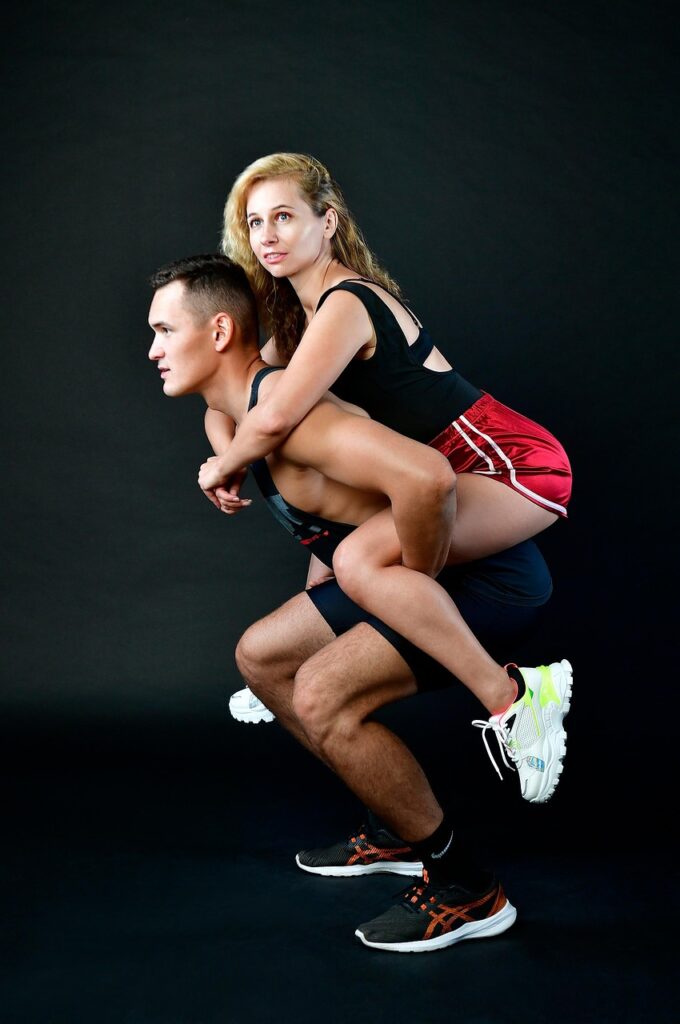
Walking into almost any weight room reveals a predictable pattern: men load up barbell bench presses, curl heavy dumbbells in front of the mirror, and crank out endless ab crunches while completely ignoring the largest muscle group in the human body. Most guys assume glute training is purely cosmetic or something they already cover with a few sets of standard squats, yet physical therapists and strength coaches warn that dormant, undertrained glutes are the primary culprit behind stubborn lower back stiffness, aching knees, and stalled athletic power. When you spend hours sitting at a desk or behind the wheel of a car, your hip flexors tighten up and your glutes essentially fall asleep—a biomechanical breakdown known as gluteal amnesia. Because your glutes act as the engine room connecting your upper and lower body, waking them up with targeted strength work takes crushing pressure off your lower spine, stabilizes your knees, and unlocks explosive power for every lift, swing, and sprint.
Why Men Need Strong Glutes for Power, Spine Health, and Longevity
To understand why training your glutes transforms how your entire body moves and feels, you have to look at the three muscles that make up your posterior hip complex: the gluteus maximus, gluteus medius, and gluteus minimus.
Together, these three muscles stabilize your pelvis, drive hip extension (pushing your hips forward when you stand, sprint, jump, or lift), and prevent your thigh bones from caving inward under heavy loads.
When your glutes are weak or inactive, your body still has to find a way to extend your hips and stabilize your torso every time you bend over, climb stairs, or swing a golf club.
To compensate, smaller neighboring muscles—specifically your lumbar spinal erectors (lower back) and hamstrings—step in to do a job they were never designed to handle alone.
Over time, that constant overload triggers chronic lower back tightness, irritated sciatic nerves, and premature wear and tear on your lumbar discs.
At the same time, weak gluteus medius muscles allow your knees to drift inward during walking, running, or squatting, placing painful shearing stress directly on your knee ligaments and meniscus.
Strengthening your glutes restores proper biomechanical alignment so your hips absorb heavy forces instead of your joints.
“Your glutes are the suspension system and powertrain of your entire skeleton. When they fire properly, your lower back stops hurting, your knees track cleanly, and every athletic movement generates dramatically more force.”
At a Glance: Weak Glutes vs. Strong, Active Glutes
Comparing how daily movement and gym performance change when you prioritize glute strength shows why this muscle group deserves prime real estate in your weekly routine.
| Performance & Health Factor | Weak, Underactive Glutes | Strong, Properly Trained Glutes |
| Lower Back Stress | High; lumbar muscles overwork to lift and stabilize | Low; hips absorb load and protect lumbar discs |
| Knee Alignment & Safety | Knees cave inward during squats, stairs, and runs | Knees track straight and stay protected under load |
| Rotational & Athletic Power | Weak hip drive limits golf, tennis, and sprint speed | Explosive hip extension multiplies force output |
| Pelvic Posture | Tight hip flexors pull pelvis into excessive forward tilt | Neutral pelvis relieves hip flexor and groin tension |
| Heavy Lifting Ceiling | Deadlifts and squats stall due to weak hip lockout | Stronger lockouts and higher total-body strength |
The 6 Best Glute Exercises Every Man Should Do
Building strong, functional glutes requires hitting the muscles from multiple angles—combining heavy horizontal hip extension, deep hip hinges, and single-leg stability. Add these six coach-approved movements into your weekly training schedule:
1. Barbell or Dumbbell Hip Thrusts (3 Sets of 8 to 12 Reps)
Sit on the floor with your upper back resting firmly against the edge of a sturdy flat workout bench, knees bent, and feet planted flat on the floor roughly shoulder-width apart.
Roll a padded barbell or place a heavy dumbbell across the crease of your hips, brace your core tight, and drive powerfully through your heels to lift your hips until your torso forms a straight tabletop parallel to the floor.
Squeeze your glutes hard for a full two-second count at the top without hyperextending your lower back, then lower your hips with control.
Unlike squats—where glute tension drops off near the top—hip thrusts place peak mechanical tension on the gluteus maximus right at full hip extension, making them the gold standard for pure glute strength.
2. Romanian Deadlifts (3 Sets of 8 to 10 Reps)
Stand tall with your feet hip-width apart, holding a pair of dumbbells or a barbell in front of your thighs with a slight, soft bend in your knees.
Pull your shoulder blades back, brace your abs, and push your hips straight backward as you lower the weights smoothly down along your shins until you feel a deep stretch across your hamstrings and glutes.
Drive your hips forward forcefully to return to a tall standing position, locking out with your glutes rather than leaning backward with your lower spine.
The Romanian deadlift (RDL) trains the glutes in their fully lengthened position, building resilient posterior-chain strength that carries over directly to picking up heavy objects safely in everyday life.
3. Bulgarian Split Squats (3 Sets of 8 to 10 Reps Per Leg)
Stand about two feet in front of a flat weight bench, reach one foot backward to rest the top of your laces on the bench pad, and hold a dumbbell in each hand at your sides.
Lean your torso slightly forward at a 15-degree angle to shift emphasis onto your front glute, then bend your front knee to lower your back knee smoothly toward the floor.
Press firmly through your entire front foot—especially the heel and mid-foot—to drive back up to the starting position.
Single-leg training exposes and corrects hidden left-to-right strength imbalances while forcing the gluteus medius to fire continuously to keep your pelvis level.
4. Kettlebell Swings (4 Sets of 15 to 20 Reps)
Stand with your feet slightly wider than shoulder-width apart, holding a kettlebell with both hands in front of your hips.
Hinge backward at the hips—not by squatting down with your knees—hiking the kettlebell high between your upper thighs like a football snap.
Snap your hips forward explosively by squeezing your glutes and bracing your abs, letting that hip momentum float the kettlebell up to chest height while your arms stay completely relaxed.
Kettlebell swings develop rapid fast-twitch power and cardiovascular conditioning simultaneously, teaching your glutes to fire quickly during sports and dynamic movement.
5. Weighted Step-Ups (3 Sets of 10 Reps Per Leg)
Stand facing a sturdy plyometric box or weight bench that puts your knee at roughly a 90-degree angle when you place one foot flat on top.
Hold dumbbells at your sides, lean your chest slightly forward over your front thigh, and drive straight up through your elevated heel to stand tall on top of the box without pushing off your trailing back toes.
Take a full three seconds to lower your back foot gently back down to the floor before starting the next repetition.
Controlled step-ups mimic real-world climbing mechanics and strengthen the exact stabilizer muscles that protect your knees during hikes, stairs, and uneven terrain.
6. Cable or Banded Pull-Throughs (3 Sets of 12 to 15 Reps)
Attach a rope handle to the lowest setting of a cable pulley machine (or anchor a heavy resistance band low behind you), step forward straddling the cable, and hold the rope between your legs with straight arms.
Hinge your hips backward until your torso sits nearly parallel to the floor and you feel a strong stretch through your glutes and hamstrings.
Drive your hips forward smoothly and squeeze your glutes hard at the top while keeping your ribcage stacked directly over your pelvis.
Pull-throughs deliver constant, smooth resistance throughout the entire range of motion without placing any axial load on your spine, making them ideal for high-rep glute hypertrophy and lower-back recovery.
How to Program Glute Training Into Your Weekly Workout
You do not need to overhaul your entire gym routine or add extra training days to build strong, responsive glutes:
- Train Glutes Twice Per Week: Split these six exercises across two lower-body or full-body sessions—for example, pairing Hip Thrusts, Bulgarian Split Squats, and Cable Pull-Throughs on Monday, and Romanian Deadlifts, Step-Ups, and Kettlebell Swings on Thursday.
- Wake Up Your Glutes Before Heavy Lifts: Spend three minutes doing bodyweight glute bridges and lateral band walks during your warm-up so your nervous system recruits your glutes immediately instead of letting your lower back take over.
- Prioritize Full Hip Lockout Over Ego Weight: Lifting weights that are too heavy forces your lower back to arch at the top of every rep. Choose a load that allows you to hold a rock-solid, two-second glute squeeze at full extension without pinching your spine.
Related Articles
- I Used Only a 5kg Dumbbell and These 5 Moves for 30 Days—My Biceps Grew More Than Expected
- New Research: A 15-Minute Wind-Down Walk Is the Missing Piece to Deeper, More Restful Sleep
- One Mile Nearly Broke Me—Then These 15 Proven Tricks Carried Me Across My First Marathon Finish Line
- Forget the Bench Press: These Forgotten Upper Chest Exercises Are the Real Key to a Full, Powerful Chest
- A Full-Body Workout in Just 30 Minutes? A Top Trainer Swears by These 6 Exercises