FREE SHIPPING OVER $50

I Lost 25 Pounds Exercising in VR for 6 Months—Sweaty Faceplates and All, It Was Worth It

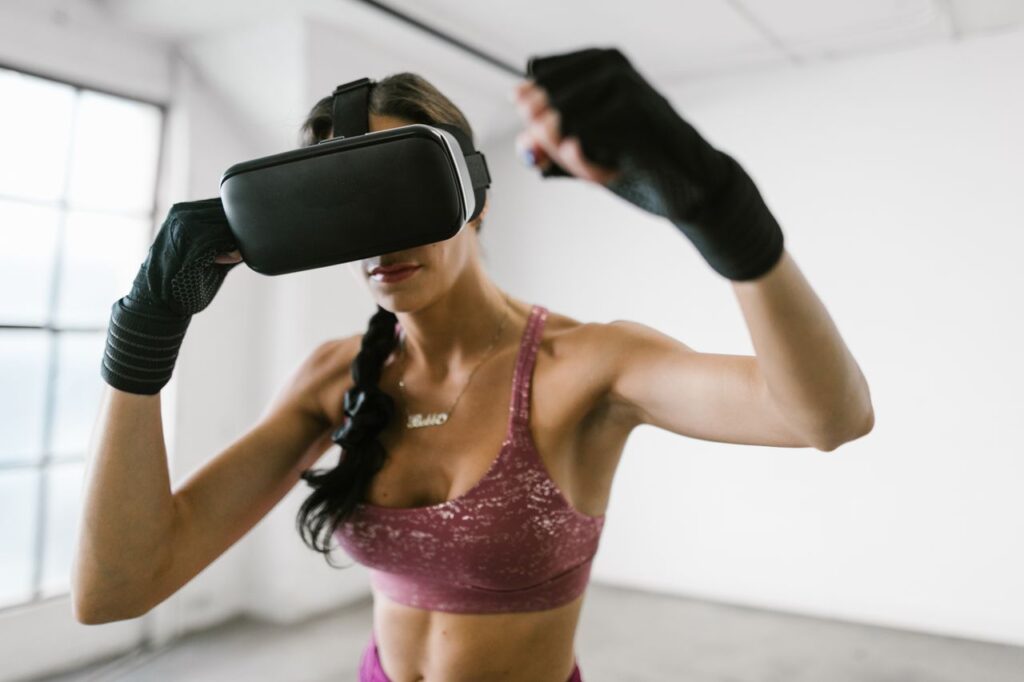
Staring at the red digital timer on a treadmill while counting down every agonizing second is enough to make anyone quit a weight-loss plan before the second week ends. Most traditional fitness routines fail not because people lack discipline, but because repetitive cardio inside a fluorescent-lit gym feels like a monotonous chore rather than something you genuinely look forward to doing. Six months ago, frustrated by stalled scale numbers and stiff joints from sitting at a desk all day, I decided to trade my unused gym membership for a standalone virtual reality headset and a few rhythm and boxing fitness apps. What followed was six months of drenched foam faceplates, surprisingly sore shoulders, and twenty-five pounds of steady, sustainable fat loss that never once felt like forced exercise. By tricking my brain into focusing on incoming targets, high-energy music, and real-time score streaks instead of physical fatigue, virtual reality completely rewired my relationship with daily movement.
Why Virtual Reality Workouts Burn Serious Calories Without Mental Burnout
To understand how swinging controllers inside your living room leads to significant weight loss, you have to look at how gamified exercise changes your brain’s perception of physical effort.
Exercise scientists refer to how hard a workout feels as your Rate of Perceived Exertion (RPE).
When you run on a treadmill or pedal a stationary bike, your brain has nothing to focus on except your burning lungs, heavy legs, and the slow-ticking clock, which drives your RPE up rapidly.
Inside a virtual reality fitness environment, however, your visual and auditory senses are completely immersed in fast-paced spatial targets, rhythmic beats, and immediate score feedback.
Neuroscience research on attentional distraction confirms that when your brain is busy tracking oncoming obstacles and timing punches, it blocks fatigue signals from reaching conscious awareness.
As a result, your heart rate climbs straight into the optimal fat-burning and cardiovascular conditioning zones (roughly 65 to 85 percent of your maximum heart rate) while you feel like you are simply playing an arcade game.
Furthermore, because VR fitness requires zero driving, zero locker-room prep, and zero weather excuses, consistency skyrockets—and consistency is the true engine behind losing 25 pounds.
“The best workout program on earth is the one you actually show up for five days a week. Virtual reality removes the mental friction of exercise by turning sweat into pure play.”
At a Glance: Traditional Gym Cardio vs. 6 Months of VR Fitness
Comparing standard gym routines against daily virtual reality training shows why immersive movement makes long-term calorie deficits far easier to sustain.
| Fitness & Weight-Loss Factor | Traditional Treadmill or Gym Routine | Virtual Reality (VR) Fitness Routine |
| Perceived Effort (RPE) | High; staring at a clock makes 30 minutes feel endless | Low; 45 minutes passes before you notice the sweat |
| Average Calorie Burn | 250 to 400 calories per 45-minute moderate session | 350 to 550 calories per 45-minute high-tempo session |
| Muscles Engaged | Primarily lower body in repetitive forward motion | Full body: shoulders, core rotation, quads, & glutes |
| Setup & Commute Friction | 30 to 45 minutes of driving, parking, and changing | Zero commute; headset goes on in 30 seconds at home |
| Long-Term Adherence | Often drops off after 3 to 4 weeks due to boredom | High; daily leaderboards and new tracks keep it fresh |
The Exact 6-Month VR Routine That Delivered 25 Pounds of Fat Loss
Losing 25 pounds over 26 weeks averages out to roughly one pound of fat loss per week—the exact sustainable pace recommended by sports nutritionists to preserve lean muscle mass.
Instead of doing random games sporadically, I structured my week around three specific movement styles alongside basic nutritional awareness:
1. High-Tempo Rhythm Boxing and Combat (3 Days Per Week)
Boxing-style VR workouts became the absolute cornerstone of my calorie burn, turning my living room rug into a virtual ring for 40 to 45 minutes per session.
Throwing continuous jabs, crosses, hooks, and uppercuts against virtual targets fires up your deltoids, upper back, triceps, and core obliques far more intensely than most people expect.
Even better, dodging incoming overhead barriers forces you to perform dozens of rapid bodyweight squats and lateral lunges every single song, driving your heart rate up while sculpting lower-body endurance.
2. Full-Body Rhythm Saber and Flow Workouts (2 Days Per Week)
On days when my shoulders felt fatigued from heavy punching, I switched to fast-paced rhythm slicing and full-body choreography apps for 30 to 40 minutes.
Sweeping both arms across wide angles to hit directional targets at high speeds builds shoulder mobility, hand-eye coordination, and steady Zone 2 aerobic endurance.
Because these sessions rely on smooth, continuous flow rather than explosive impacts, they kept my daily calorie burn high without overtaxing my joints or nervous system.
3. Active Recovery and Mobility Stretching (2 Days Per Week)
Once or twice a week, I traded intense cardio sessions for gentle VR meditation, virtual scenic walks, or 20 minutes of guided floor stretching outside the headset.
Giving tendons and joints structured recovery time prevented repetitive-strain soreness in my elbows and kept my energy high for the next week’s sessions.
4. Simple Nutrition Adjustments Without Extreme Dieting
Exercise alone rarely overcomes a heavy calorie surplus, so I paired my daily VR sessions with two straightforward dietary habits:
- Prioritizing Protein at Every Meal: Aiming for 25 to 35 grams of lean protein at breakfast, lunch, and dinner kept hunger hormones quiet and protected lean muscle while body fat dropped.
- Eliminating Liquid Calories: Swapping sugary coffee drinks and evening sodas for sparkling water and electrolytes saved roughly 300 empty calories every day without leaving me feeling deprived.
The Honest Truth About Sweaty Faceplates and Comfort Upgrades
Anyone who exercises seriously in a VR headset quickly discovers the biggest physical drawback: standard foam facial interfaces absorb sweat like a sponge.
After three days of intense cardio, an unwashed stock foam pad feels damp, uncomfortable, and prone to irritating your skin.
Fortunately, spending less than thirty dollars on two simple accessories completely solved the hygiene and comfort issue:
- Wipeable Silicone or PU Leather Facial Interfaces: Replacing the porous factory foam with a smooth, medical-grade silicone cover allowed me to wipe the headset completely dry with an antibacterial wipe in five seconds after every workout.
- Breathable Moisture-Wicking Headbands: Wearing a thin athletic sweatband across my forehead caught perspiration before it ever dripped onto the lenses or into my eyes during intense rounds.
- Balanced Battery Head Straps: Upgrading from the basic elastic strap to a rigid, weight-balanced halo strap took pressure off my cheekbones and kept the headset locked firmly in place during fast squats and ducks.
Common VR Fitness Mistakes Beginners Should Avoid
Jumping straight into high-intensity virtual reality workouts without preparation can leave you overly sore or frustrated during your first week:
Mistake 1: Skipping a 5-Minute Physical Warm-Up
Because VR feels like a video game, many beginners strap on the headset and immediately launch into expert-level punching tracks with cold shoulders. Always spend five minutes doing arm circles, torso twists, and bodyweight squats before starting your first song to lubricate your joints and prevent rotator cuff strain.
Mistake 2: Locking Your Elbows When Throwing Virtual Punches
Without a physical heavy bag to absorb your momentum, snapping your punches all the way to full elbow extension places sharp stress on your elbow joints. Keep a slight, controlled bend in your elbows at the end of every punch and focus on rotating your hips and core rather than hyperextending your arms.
Mistake 3: Forgetting to Clear a Safe Play Boundary
Getting lost inside a virtual arena makes it easy to drift across your living room without realizing how close you are to a coffee table or television. Always trace a conservative Guardian boundary at least two feet away from furniture and place a small, textured yoga mat in the exact center of your floor so your feet immediately feel if you step off-center.
Related Articles
- I Used Only a 5kg Dumbbell and These 5 Moves for 30 Days—My Biceps Grew More Than Expected
- New Research: A 15-Minute Wind-Down Walk Is the Missing Piece to Deeper, More Restful Sleep
- One Mile Nearly Broke Me—Then These 15 Proven Tricks Carried Me Across My First Marathon Finish Line
- Forget the Bench Press: These Forgotten Upper Chest Exercises Are the Real Key to a Full, Powerful Chest
- A Full-Body Workout in Just 30 Minutes? A Top Trainer Swears by These 6 Exercises