FREE SHIPPING OVER $50
4 Low-Impact Exercises That Flatten Your Lower Belly and Improve Mobility After 40—Dead Bugs Are Just the Start

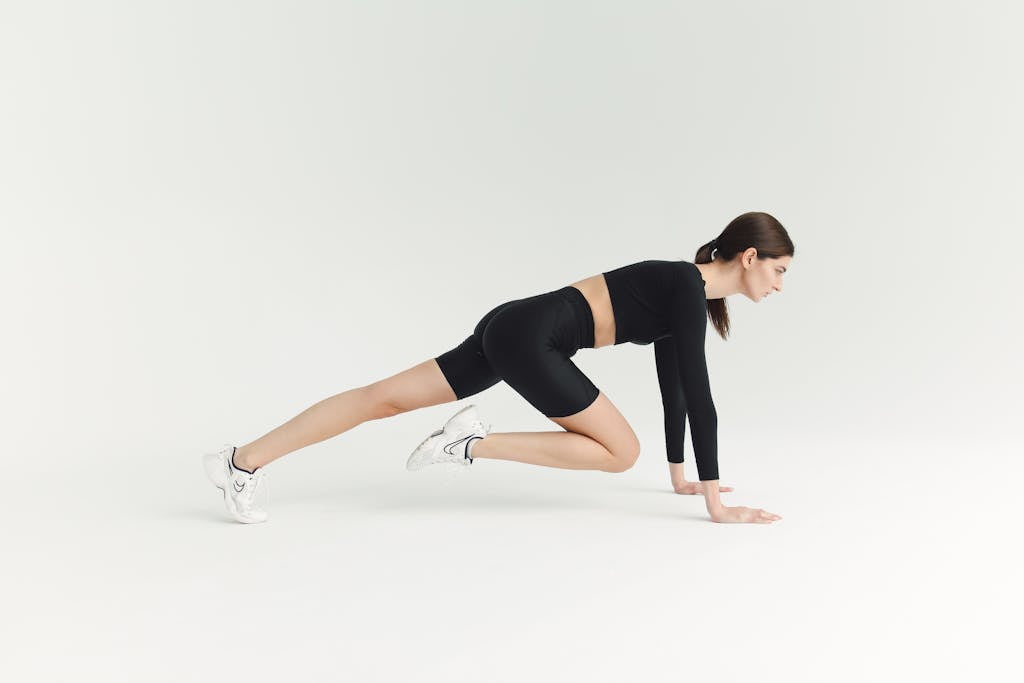
If you have noticed that traditional core workouts like sit-ups and bicycles leave your lower back throbbing without making a dent in midlife lower belly softness, you are not alone. After age 40, natural hormonal shifts, changes in muscle elasticity, and chronic desk sitting often lead to tight hip flexors and a forward pelvic tilt, making the lower abdomen protrude regardless of your body weight. Forcing your body through aggressive, high-impact crunches only strains vulnerable spinal discs while failing to activate the deep inner core muscles that actually pull your belly inward. By shifting your focus toward low-impact, joint-friendly movements that stabilize your pelvis while extending your hip mobility, you can flatten your lower stomach, eliminate lower back tension, and move with fluid agility every single day.
Why High-Impact Crunches Backfire After 40
To understand why traditional abdominal exercises fail to deliver a flatter stomach after 40, you have to look at the underlying functional anatomy of your midsection. Traditional sit-ups and crunches primarily target the rectus abdominis—the outer “six-pack” muscle layer that runs vertically down your front.
When you perform repetitive forward flexion movements like crunches, you pull your ribcage toward your hips and shorten your front body.
This movement pattern pulls your shoulders forward and compresses your lumbar spine without engaging your internal corseting muscles.
Furthermore, tight hip flexors resulting from hours of continuous sitting tilt your pelvis forward into an anterior pelvic tilt.
This pelvic tilt tilts your abdominal organs forward against your abdominal wall, creating the illusion of a lower belly pouch even if your body fat is relatively low.
To flatten your lower stomach and protect your joints, you must activate your deep transverse abdominis (TVA)—your body’s internal weight belt—while opening your hip flexors to restore natural pelvic alignment.
“Crunches shorten your front body and compress your lower back. Low-impact stability training pulls your belly inward while opening your hips for lasting mobility.”
At a Glance: High-Impact Crunches vs. Low-Impact Stability Training
Comparing traditional ab workouts against low-impact core stability moves reveals why targeted low-impact training protects aging joints while flattening your midsection.
| Workout Focus | Target Muscle Activation | Impact on Lower Back & Joints | Pelvic Alignment Result |
| Traditional Crunches | Rectus Abdominis (Outer Abs) | High lumbar compression & neck strain | Reinforces forward slouching & anterior pelvic tilt |
| High-Impact Mountain Climbers | Hip Flexors & Superficial Abs | Jarring joint impact & spinal shearing | Tightens hip flexors, pulling lower belly outward |
| Dead Bug Variations | Transverse Abdominis & Deep Stabilizers | Zero spinal load; safe for all levels | Stabilizes pelvis in neutral alignment |
| Bird-Dog & Glute Bridges | Posterior Chain & Glutes | Decompresses lumbar spine & restores hips | Reverses anterior tilt & opens tight hip flexors |
4 Low-Impact Exercises That Flatten Your Lower Belly and Restore Mobility
These four exercise routines isolate your deep transverse abs, strengthen your glutes, and stretch your hip flexors without putting stress on your knees or lower back:
1. The Dead Bug (The Gold Standard Deep Core Builder)
The Dead Bug is the ultimate low-impact exercise for building deep core strength while keeping your lower back supported flat on the floor.
Lying face-up on your mat, raise your knees to a 90-degree tabletop position directly above your hips and extend your arms straight toward the ceiling.
Exhale deeply, drawing your belly button toward your spine to press your lower back firmly into the floor, then slowly extend your right arm backward over your head while reaching your left leg straight out until it hovers two inches above the ground.
Inhale as you slowly return to the center tabletop position, then repeat the motion on the opposite side.
Performing 10 to 12 controlled repetitions per side trains your transverse abdominis to hold your stomach flat while keeping your pelvis locked in neutral alignment.
2. The Bird-Dog (The Posterior Chain & Balance Transformer)
While the Dead Bug strengthens your front core on your back, the Bird-Dog works your deep abdominal wall, glutes, and upper back from a quadruped all-fours position.
Start on your hands and knees with your wrists aligned directly under your shoulders and your knees directly beneath your hips.
Contract your core tightly to keep your back flat like a tabletop, then reach your right arm straight forward while extending your left leg straight back behind you until both limbs are parallel to the floor.
Pause for two full seconds at the top while squeezing your left glute, then return to the starting position with control before switching sides.
Executing 10 reps per side strengthens your back extensors, lifts your lower abs, and fixes posture-destroying muscle imbalances.
3. The Glute Bridge with Abdominal Brace (The Pelvic Tilt Corrector)
Weak, underactive glute muscles allow your pelvis to tilt forward, pushing your lower belly outward. The Glute Bridge corrects this pelvic tilt by strengthening your hamstrings and glutes while opening tight hip flexors across the front of your thighs.
Lie on your back with your knees bent and your feet flat on the floor, hip-width apart.
Press your palms into the mat alongside your hips, draw your navel inward to brace your core, and drive through your heels to lift your hips toward the ceiling until your body forms a straight line from your shoulders to your knees.
Hold the bridge position for three seconds at the top while squeezing your glutes tightly, then slowly lower your hips back down to the floor.
Complete 12 to 15 slow repetitions to re-awaken your glutes and pull your lower midsection into proper structural alignment.
4. The Side Plank with Hip Lift (The Oblique & Waistline Sculptor)
Your internal and external obliques act like a biological corset, wrapping around your sides to pull your lower belly inward and support your lateral spinal mobility.
Lie on your side with your forearm resting flat on the floor directly beneath your shoulder, stacking your knees and feet neatly.
Engage your core and press into your forearm to lift your hips off the mat until your body forms a straight diagonal line from your head to your feet.
For an extra mobility challenge, slowly lower your bottom hip toward the floor by two inches, then drive back up into full plank position.
Hold the side plank for 20 to 30 seconds per side to strengthen your lateral core, narrow your waistline, and stabilize your lower spine.
2 Common Form Mistakes to Avoid After 40
Steering clear of these everyday workout errors protects your spinal discs and ensures maximum muscle recruitment during every rep:
Mistake 1: Letting Your Lower Back Arch Off the Mat
During floor-based exercises like the Dead Bug, allowing your lower back to arch away from the floor transfers the entire workload onto your lumbar spine and hip flexors. Always press your lower back firmly into the mat before extending your arms or legs.
Mistake 2: Holding Your Breath During Core Contractions
Holding your breath increases intra-abdominal pressure and pushes your abdominal wall outward rather than drawing it inward. Focus on exhaling forcefully through your mouth during the hardest phase of each rep to engage your deepest core fibers.
Related Articles
- The Music You Exercise to Could Boost Endurance, Strength, and Motivation During Workouts, New Study Finds
- 8 Stability Ball Exercises That Build More Core Strength Than 500 Crunches
- Forget Hour-Long Workouts: This 30-Minute, 6-Exercise Routine Is All You Need for Full-Body Results, Says a Top Trainer
- The Kettlebell Secret That’s Making Fast Runners Even Faster
- Out of Shape and Overwhelmed? This Simple Workout Plan Will Change Everything