FREE SHIPPING OVER $50

Why Lifters Over 50 Are Switching to the Trap Bar Deadlift—All the Gains, Half the Risk

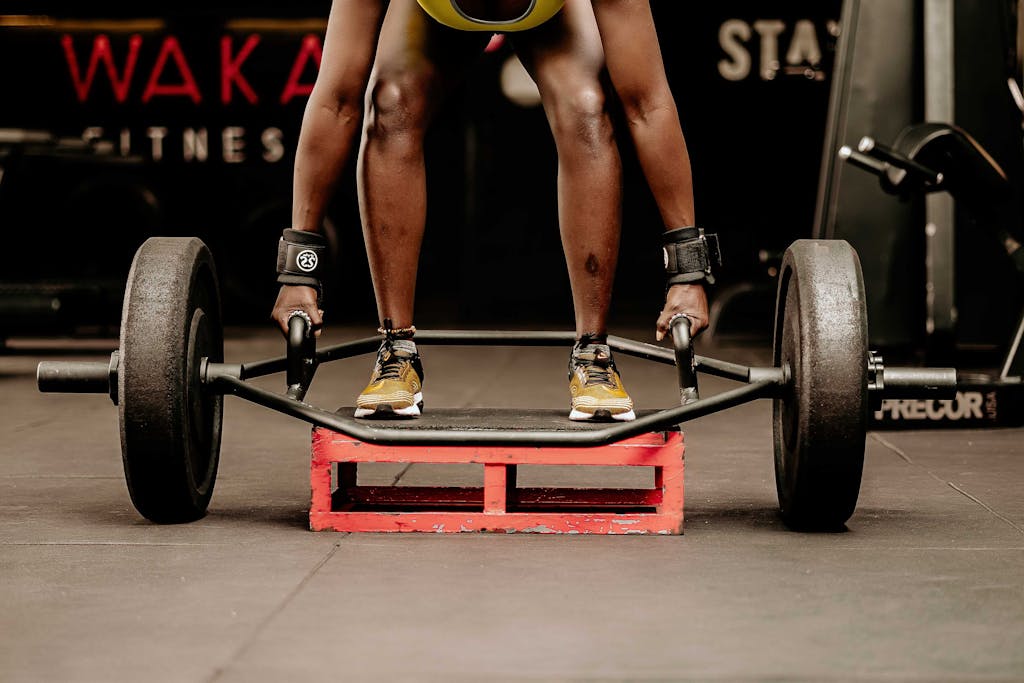
If you are over fifty and still grinding through conventional barbell deadlifts, you have probably noticed that your lower back takes days longer to recover than it used to. While heavy resistance training remains the ultimate fountain of youth for preserving muscle mass, bone density, and metabolic health as you age, forcing your spine into awkward mechanical leverage often leads to nagging joint pain rather than clean strength gains. Fortunately, a growing community of mature lifters and top strength coaches are ditching traditional straight bars in favor of the trap bar—a specialized hex-shaped tool that delivers every single muscle-building benefit of the deadlift with only a fraction of the lumbar stress.
The Biomechanical Shift: Why Your Lower Back Will Thank You
To understand why the trap bar deadlift is taking over weight rooms, you need to look at basic physics and human anatomy. When you pull a standard straight barbell off the floor, the bar must remain in front of your shins and knees. Because the load sits anterior to your center of mass, it creates a long resistance arm between the weight and your lower spine.
As a result, your erector spinae muscles and lumbar vertebrae must endure immense shear force just to keep you from rounding your back. For a twenty-year-old athlete with pristine spinal discs, that shear stress is manageable. However, for a lifter over fifty whose spine has accumulated decades of wear and tear, that forward leverage is often a recipe for back spasms and disc herniations.
The trap bar completely solves this structural flaw through clever design. Because you stand directly inside the hexagonal frame, the weight plates align perfectly with your ankles and center of gravity rather than sitting out in front of you.
Consequently, the lifting path moves straight up and down in a natural vertical line. This subtle shift significantly reduces spinal shear forces and allows your legs and hips to drive the movement safely.
| Exercise Feature | Conventional Barbell Deadlift | Trap Bar Deadlift (High Handles) |
| Weight Position | In front of shins and knees | Directly inline with ankle joints |
| Lumbar Shear Stress | Exceptionally high | Significantly lower |
| Grip Position | Pronated or mixed grip | Neutral grip (palms facing inward) |
| Quad Engagement | Moderate | High |
| Learning Curve | Steep with high technical risk | Quick and intuitive |
| Spinal Loading | Forward-pulling vector | Balanced, vertical alignment |
The Best of Both Worlds: Squat Power Meets Deadlift Muscle
Strength coaches often describe the trap bar deadlift as a hybrid exercise that sits right in the sweet spot between a traditional squat and a conventional hip hinge.
Because the bar geometry does not block your knees from moving forward, you can sit your hips slightly lower than you would during a conventional deadlift. This movement pattern recruits your quadriceps far more effectively while maintaining heavy tension across your glutes, hamstrings, upper back, and core.
Furthermore, because the load moves along a centered vertical axis, most lifters find they can comfortably handle heavier working loads on the trap bar than on a straight bar. Lifting heavier weight with safer leverage generates maximum mechanical tension across your entire posterior chain, sparking fast muscle hypertrophy without beating up your knees or hips.
4 Reasons the Trap Bar Is Superior for Lifters Over 50
Transitioning from traditional barbells to the trap bar offers distinct physical advantages that become increasingly valuable as joint mobility naturally changes over time.
1. High Handles Accommodate Tighter Hips
Most quality trap bars feature dual handles: a low handle set at standard bar height and a elevated high handle set three to four inches higher. Utilizing the high handles reduces the required range of motion just enough to accommodate tight hamstrings or reduced hip flexibility. This allows you to pull from a clean, flat-backed position without excessively rounding your spine at the bottom of the movement.
2. Neutral Grip Shields Your Shoulders and Biceps
A conventional deadlift requires you to hold the bar with palms facing your body (pronated) or with an alternating mixed grip (one palm up, one palm down). A mixed grip places asymmetrical torque on your spine and puts the supinated arm at risk of a biceps tendon tear under heavy loads. In contrast, the trap bar features parallel handles that allow a comfortable neutral grip, keeping your shoulders neutrally rotated and your biceps completely out of harm’s way.
3. Reduced Danger During Technical Fatigue
As you push through challenging sets, physical fatigue inevitably degrades your lifting technique. When form breaks down during a conventional deadlift, the bar drifts away from your body, dramatically increasing the risk of a acute back injury. On a trap bar, even if your technique slips slightly on the final rep, the weight remains safely aligned with your center of mass, preventing dangerous spinal overload.
4. Direct Carryover to Real-World Longevity
The movement pattern of a trap bar deadlift perfectly mimics everyday real-world tasks, such as lifting heavy groceries, carrying suitcases, or picking up grandchildren from the floor. Developing strength in a neutral-grip, centered position builds practical functional capacity that translates directly into everyday independence and stamina.
How to Perform the Trap Bar Deadlift with Flawless Form
Mastering the trap bar deadlift takes only a few minutes thanks to its intuitive alignment. Follow this step-by-step setup to maximize muscle recruitment and protect your joints during every rep.
- Position Your Stance: Step inside the center of the hex bar and space your feet shoulder-width apart, keeping your toes pointing straight ahead or flared slightly outward.
- Hinge at the Hips: Push your hips backward while bending your knees until your hands naturally reach the center of the handles.
- Set Your Grip and Spine: Grab the handles firmly in the middle to keep the bar balanced. Pull your shoulders down and back, squeeze your armpits tight to engage your lats, and flatten your lower back.
- Brace Your Core: Take a deep breath into your belly and brace your abdominal wall as if preparing to take a punch.
- Push the Floor Away: Instead of pulling upward with your lower back, think about violently driving your feet straight down through the floor. Keep the weight balanced across your mid-foot and heels as your hips and chest rise at the exact same rate.
- Lock Out and Lower: Stand up tall at the top by squeezing your glutes, avoiding any backward leaning at the spine. Slowly reverse the movement by pushing your hips back and lowering the bar under complete control until the plates rest on the floor.
Smart Programming for Optimal Longevity
To build consistent strength without overtaxing your nervous system or recovery capacity, incorporate the trap bar deadlift into your routine once or twice per week as your primary lower-body movement.
- For Pure Hypertrophy: Perform 3 to 4 sets of 6 to 10 repetitions using moderate weights, focusing on a slow three-second eccentric (lowering) phase on every rep to maximize muscle tension.
- For Joint-Friendly Strength: Perform 3 to 5 sets of 3 to 5 repetitions using heavier loads with the elevated high handles, resting two to three minutes between sets to ensure complete recovery.
- Warm-Up Protocol: Always perform two or three lighter warm-up sets using higher reps before loading your target working weight.
Related Articles
- The Kettlebell Secret That’s Making Fast Runners Even Faster
- Out of Shape and Overwhelmed? This Simple Workout Plan Will Change Everything
- 5 Daily Exercises That Double Grip Strength and Reverse Aging
- Your Chest Day Is Broken: 5 Exercises Experts Beg You to Stop Doing Immediately
- Back Day Breakthrough: Why Trainers Are Begging You to Add This Game-Changing Move