FREE SHIPPING OVER $50
Stop Squatting for Glute Growth: The Pilates Protocol That Targets “Sleepy” Muscles and Erases Back Aches

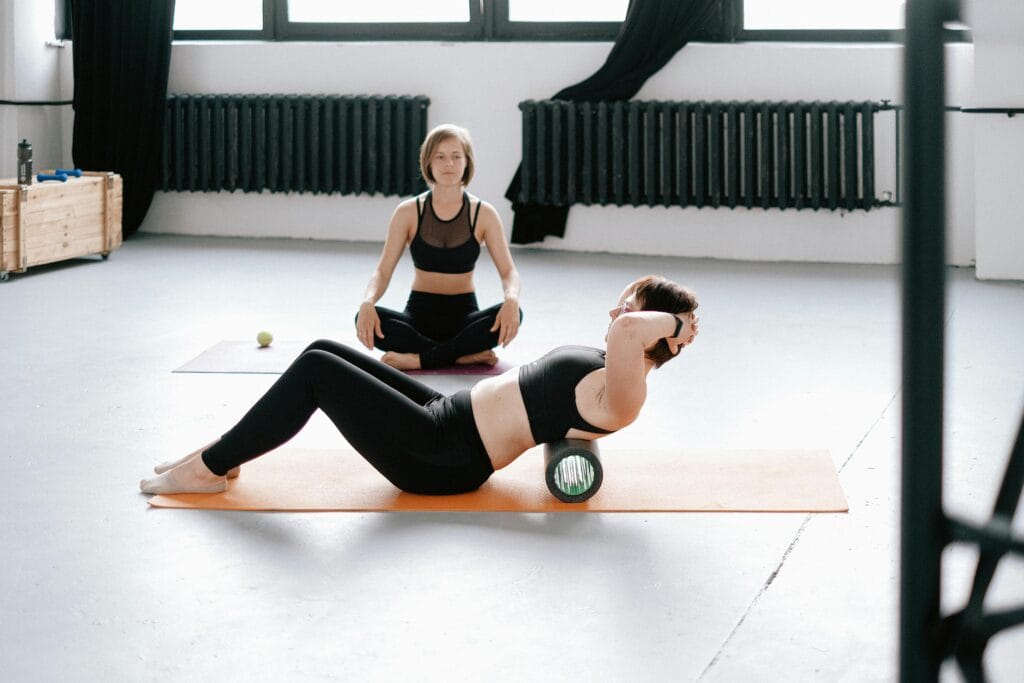
If you have been religiously performing heavy squats and lunges but still find yourself staring at “flat” glutes and a nagging lower back ache, you are likely a victim of “Gluteal Amnesia.” In our modern, chair-bound society, our brains often lose the ability to effectively communicate with our posterior chain, leading to a phenomenon where the lower back and hamstrings take over the heavy lifting while the glutes remain “sleepy” and inactive. Squatting with inactive glutes doesn’t just stall your physique progress—it creates a mechanical “shear force” on your lumbar spine that eventually leads to chronic pain. To break this cycle, you need to step away from the squat rack and embrace a specific Pilates-based Lumbopelvic Reset. By focusing on deep, transverse abdominis engagement and isolated pelvic stability, you can “re-map” your neural pathways to wake up those dormant muscle fibers, allowing you to build a stronger foundation that supports your spine instead of stressing it.
The Science of “Sleepy Glutes” and Back Pain
The connection between inactive glutes and lower back pain is a well-documented medical reality known as Lower Crossed Syndrome. When your glutes aren’t firing, your pelvis tips forward into an exaggerated arch—a position called Anterior Pelvic Tilt. Consequently, your hip flexors become tight and shortened, while your deep core muscles become overstretched and weak.
Getty Images
In this compromised position, every squat you perform actually compresses the discs in your lower back. Your body compensates for the lack of glute power by using the erector spinae (the muscles running along your spine) to move the weight. This “compensation pattern” is why so many fitness enthusiasts complain of “tightness” in their back after a leg day. The Pilates protocol works by neutralizing this tilt, restoring what therapists call “Lumbopelvic Rhythm.”
Why Pilates Outperforms Squats for Glute Isolation
Traditional squats are “compound movements,” meaning they involve multiple joints and muscle groups. While this is great for burning calories, it is terrible for correcting an imbalance. If your hamstrings are stronger than your glutes, your hamstrings will always “win” the race to move the weight during a squat.
Pilates, however, utilizes unilateral and isolated tension. By removing the heavy external load of a barbell, you can focus on the “Mind-Muscle Connection.” Researchers have found that low-load, high-precision movements often trigger higher levels of gluteus medius and maximus activation in individuals with back pain than high-load exercises do. This is because the brain doesn’t feel “threatened” by the heavy weight and allows the correct muscles to engage.
The 3-Step Pilates Protocol for Deep Stability
This protocol isn’t about doing a hundred reps; it is about the Quality of the Contraction. You should perform this routine three times a week to effectively “re-program” your nervous system.
1. The Pelvic Tilt to Bridge (The Awakening)
Lie on your back with your knees bent and feet flat. Firstly, focus on your breath. As you exhale, pull your belly button toward your spine to flatten your back against the floor. Once your back is flat, slowly peel your spine off the mat one vertebra at a time until you are in a bridge. The key here is to keep your ribs “knitted” together to avoid arching your back.
2. The Single-Leg Marches (Deep Core Stability)
While holding the bridge position, lift one foot two inches off the ground without letting your hips dip or sway. This forces the opposite glute to work overtime to stabilize your entire pelvis. If you feel this in your back, your hips have likely dropped. Keep your glutes squeezed tight to maintain a “Straight-Line” from your knees to your shoulders.
3. The Side-Lying Clamshell (The Medius Reset)
Lie on your side with your hips stacked and knees bent at a 45-degree angle. Lift your top knee while keeping your feet together. This targets the Gluteus Medius, the muscle responsible for stabilizing your hip joint. Strengthening this specific muscle is the “secret sauce” for erasing back pain, as it prevents the femur from “collapsing” inward during daily movements.
Anatomy of the Gluteals: Functions and Impact
| Muscle | Function | Impact on Back Pain |
| Gluteus Maximus | Hip Extension | Reduces pressure on the lumbar discs. |
| Gluteus Medius | Pelvic Stabilization | Prevents hip hiking and side-to-side swaying. |
| Gluteus Minimus | Hip Abduction | Provides deep structural support to the hip socket. |
| Transverse Abdominis | Core Compression | Acts as a natural “back brace” for the spine. |
Decompressing the Spine: The “Invisible” Benefit
One of the most profound effects of this Pilates protocol is Spinal Decompression. When you engage your deep core (the transverse abdominis) while isolating the glutes, you create “intra-abdominal pressure.” This pressure acts like an internal airbag, pushing the vertebrae slightly apart and relieving pressure on the spinal nerves.
Most people try to “stretch” their back pain away, but that often provides only temporary relief. By building “Deep Stability,” you are creating a permanent solution. You are essentially training your glutes to take the “load” of your body weight, which allows your lower back muscles to finally relax. This is why many practitioners report feeling “taller” and more “aligned” after just a few weeks of this protocol.
Transitioning Back to the Gym
The goal of this Pilates protocol isn’t to make you stop squatting forever. Rather, it is to prepare your body to squat correctly. Once you have “reset” your lumbopelvic rhythm and woken up your “sleepy” muscles, you can return to the squat rack with a completely different mechanical profile.
You will find that you can lift heavier weights with less effort because your primary movers—the glutes—are finally doing their job. Furthermore, your back will feel “quiet” during and after your session. This is the difference between “Bodybuilding” and “Body Engineering.” You are no longer just moving weight; you are moving with precision.
Common Pitfalls: Are You Cheating Your Results?
Because these movements are “low-impact,” it is very easy to “go through the motions” without actually engaging the target muscles. To ensure you are actually flipping the switch on your glute growth, keep these cues in mind:
- The “Pelvic Bowl” Cue: Imagine your pelvis is a bowl of water. During the bridge or marches, don’t let a single drop of water spill out of the side or the front.
- No “Hamstring Takeover”: If you feel a cramp in the back of your leg during a bridge, your hamstrings are overworking. Move your feet closer to your glutes to “mechanically disadvantage” the hamstrings and force the glutes to take over.
- The “Velcro” Core: Imagine your abdominal wall is being “Velcroed” to your spine. If your belly pooches out during the movement, you have lost your deep core stability and are likely straining your back.
Related Articles
- I Started Lifting Weights at 50 With No Experience — Here’s the Full Routine That Built Genuine Strength by 60
- 75 Years Old, 30-Year-Old Joints: The “Anti-Rust” Protocol That Beats Weight Machines Every Time
- The 15-Minute Muscle Hack: Build Total Body Power and a “Bulletproof” Core with Just 2 Dumbbells
- 5 Kettlebell Exercises a Kinesiologist Swears Will Make You Move Better at Any Level
- Stop Wasting Reps: A Personal Trainer’s 10 Underrated Exercises for Faster Muscle Growth