FREE SHIPPING OVER $50

Sitting is “Shrinking” Your Hips: The 5-Minute Muscle Reset Every Desk Worker Needs

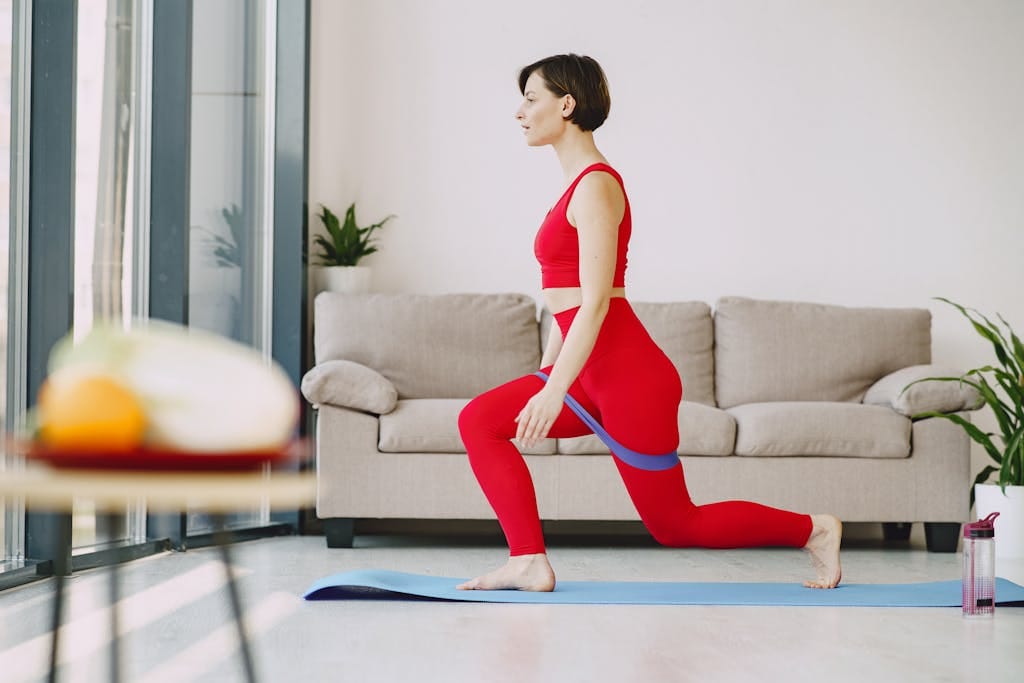
If you spend the majority of your day tethered to a desk, you have likely felt that unmistakable stiffness when you finally stand up after a long afternoon. Your lower back aches, your posture feels slightly hunched, and your hips feel like they have been locked in a rusty vice. While we often joke about “feeling old,” what you are actually experiencing is a biological phenomenon where your body adapts to the shape of your chair. When you sit for eight to ten hours a day, your hip flexors remain in a constant state of contraction, leading to what physical therapists call “adaptive shortening.” Your muscles aren’t literally disappearing, but they are becoming tighter, less pliable, and functionally shorter, which pulls your entire skeleton out of alignment.
This “shrinking” effect creates a cascading failure throughout your musculoskeletal system. Because your hip flexors are chronically tight, they pull on your pelvis, tilting it forward and putting immense pressure on your lumbar spine. Furthermore, this constant tension sends a neurological signal to your glutes to “shut down,” a condition colloquially known as “dead butt syndrome.” Consequently, the very muscles meant to support your movement become dormant, leaving your lower back to do all the heavy lifting. The good news is that you don’t need an hour at the gym to reverse this damage.
The Anatomy of the “Seated Body”
To fix the problem, you first have to understand the primary culprit: the Psoas. This deep muscle connects your lower spine to your upper leg, and it is the only muscle that links your upper body to your lower body. When you sit, the psoas is kept in a shortened position. Over months and years of desk work, the muscle fibers actually lose their elasticity. This isn’t just a “tight muscle” feeling; it is a change in the physical architecture of your soft tissue.
When the psoas “shrinks,” it creates a tug-of-war that you are destined to lose. It pulls on the vertebrae of your lower back, which is why so many desk workers suffer from chronic back pain that never seems to go away with traditional rest. Moreover, this tightness inhibits your ability to stand up fully straight. You might notice that even when standing, your knees remain slightly bent or your lower back has an exaggerated arch. This is the “Office Body” taking hold, and it saps your energy and athletic potential.
The Sedentary vs. Active Hip Profile
| Feature | The Sedentary Hip (The “Shrunken” State) | The Functional Hip (The Reset State) |
| Hip Flexor Length | Chronically shortened and tight. | Long, pliable, and elastic. |
| Glute Activation | Inhibited (“Dead Butt Syndrome”). | Strong, active, and supportive. |
| Pelvic Alignment | Anterior Pelvic Tilt (tilted forward). | Neutral and stable. |
| Lower Back Stress | High; takes the brunt of movement. | Low; protected by the hips and core. |
| Walking Gait | Short, choppy strides. | Full, powerful stride length. |
The 5-Minute Muscle Reset Protocol
This routine is designed to be performed daily—ideally right after your workday ends or even during a long lunch break. It targets the five most critical areas affected by prolonged sitting. You don’t need fancy equipment; a wall or a chair is more than enough.
1. The Half-Kneeling Hip Flexor Stretch (1 Minute per side)
This is the direct antidote to the “shrinking” hip. Kneel on your right knee with your left foot flat in front of you (like a proposal stance). Instead of just leaning forward, tuck your tailbone under and squeeze your right glute as hard as you can. This “reciprocal inhibition” forces the front of the hip to relax. You should feel a deep, intense stretch in the front of your thigh and up into your abdomen.
2. The Glute Bridge “Wake-Up” (1 Minute)
Since sitting turns your glutes off, you need to manually turn them back on. Lie on your back with your knees bent and feet flat on the floor. Lift your hips toward the ceiling while focusing entirely on squeezing your butt cheeks at the top. This “resets” the neurological connection between your brain and your glutes, providing an internal brace for your lower back.
3. The “Executive” Figure-Four (45 Seconds per side)
Sitting often tightens the piriformis and outer glutes, which can irritate the sciatic nerve. While sitting in your chair (or on the floor), cross your right ankle over your left knee. Keep your back flat and lean forward slightly from the hips. You will feel this deep in your glute. This release allows the hip joint to rotate freely again.
4. The Doorway Chest Stretch (30 Seconds)
Tight hips are usually accompanied by a “hunched” upper back. To fix your posture, you must open your chest. Stand in a doorway or against a wall, place your forearm against the surface with your elbow at shoulder height, and gently turn your body away. This opens the fascia that pulls your shoulders forward when you are typing.
Why “Just Standing Up” Isn’t Enough
Many people believe that using a standing desk is the ultimate solution to hip tightness. While standing is certainly better than sitting, it doesn’t actually “reset” the muscles that have already adapted to a shortened state. In fact, many people stand with a “hanging” posture, where they lock their knees and let their hips drift forward, which can actually worsen the tension in the psoas.
Transitioning to a movement-based approach is far more effective. You need to actively pull the muscle into a long position to tell the nervous system that the “seated shape” is no longer the default. Think of your muscles like a piece of plastic; if you leave them bent in one direction for long enough, they will stay that way unless you apply heat and tension in the opposite direction. This 5-minute reset provides that necessary counter-tension.
Lifestyle Hacks to Prevent the “Shrink”
While the 5-minute reset is your primary tool, you can make small adjustments throughout the day to prevent the “shrinking” from becoming permanent.
- The 30/2 Rule: For every 30 minutes of sitting, stand and move for 2 minutes. This “breaks” the adaptive shortening cycle before the muscle fibers can fully settle into their seated length.
- Check Your Chair Height: If your chair is too low, your hips are in an even deeper state of flexion, worsening the psoas tension. Ensure your hips are slightly higher than your knees.
- Hydrate Your Fascia: Muscles are made mostly of water. If you are dehydrated, your muscle fibers “stick” together more easily, making the adaptive shortening happen faster. Drink at least 80 ounces of water a day to keep your tissues “greased.”
Implementing the “Micro-Break” Strategy
If you find it difficult to carve out five consecutive minutes, you can break the protocol into “micro-snacks” throughout the day. Perform the half-kneeling stretch after your first block of emails. Do the figure-four stretch while you are on a conference call. These small “deposits” into your physical health bank account add up to a significant “withdrawal” of pain by the end of the week.
Furthermore, focus on your breathing during these stretches. Deep, diaphragmatic breathing helps down-regulate the nervous system, which is often in a “fight or flight” state due to work stress. When your nervous system relaxes, your muscles are much more willing to let go of their protective tension and return to their natural, elongated state.
Related Articles
- The ‘Minimum Effective Dose’: The 2-Day Workout Routine Researchers Say Matches Your 5-Day Grind
- Surgeon Reveals: The 5-Minute “Posture Hack” That Instantly Slims Your Waist and Boosts Metabolism After 40
- 1 Daily Stretch That Fixed My Forward Head Posture—and Even Changed My Face
- Over 45? These 4 Wall Exercises Rebuild Strength and Fight Muscle Loss Better Than Shakes
- Stop Wasting Time: The 3 Old Man Exercises That Build Muscle Faster Than Any Modern Machine