FREE SHIPPING OVER $50

Most Walkers Skip This Easy Pre-Walk Step That Prevents Knee and Hip Pain After 45

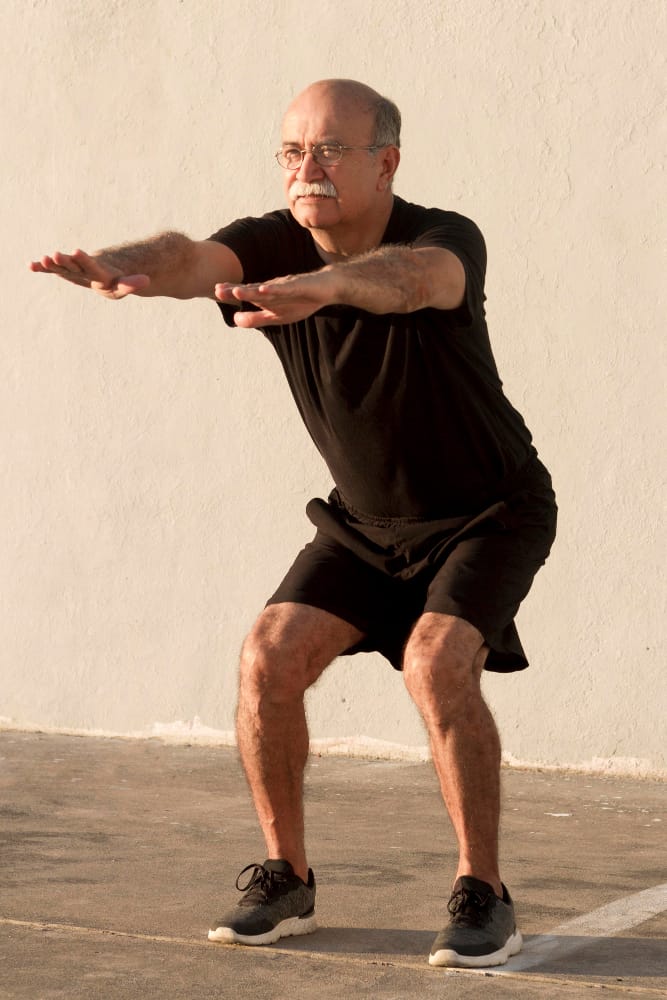
If you have ever stepped out for a brisk walk only to feel a nagging stiffness in your knees or a sharp “catch” in your hip, you aren’t alone. Most of us over 45 have been taught that walking is the warm-up, but that philosophy often leads to the very joint wear-and-tear we are trying to avoid. The reality is that as we age, our joints function less like a well-oiled machine and more like a rusty hinge that has been sitting in the rain. When you start walking “cold,” your cartilage is literally rubbing together with minimal protection, creating micro-inflammation that eventually manifests as chronic pain. The “missing link” isn’t more miles or better shoes; it is a 2-minute biological primer that most walkers completely skip.
The Science of “Synovial Sludge”: Why Your Joints Feel Stiff
To understand why a pre-walk step is non-negotiable, we have to look at Synovial Fluid. Think of this fluid as your body’s natural WD-40. It lives inside the capsules of your weight-bearing joints—specifically your knees and hips—to provide a frictionless cushion between your bones.
When you are sedentary, this fluid thickens into a gel-like consistency, often referred to as “synovial sludge.” As we cross the 45-year mark, our bodies produce less of this fluid, and it loses its “slipperiness” more quickly. If you head straight into a 3-mile walk without thinning out that sludge, you are asking your cartilage to bear the brunt of every step.
Warming up isn’t just about “getting the heart rate up”; it is about Mechanical Lubrication. Through specific, low-impact movements, you stimulate the synovial membrane to release a fresh, thin layer of fluid that coats the joint. This creates a “hydrodynamic lift” that protects your bones from rubbing together, effectively erasing the “startup pain” many of us feel in the first ten minutes of a walk.
The 2-Minute “Joint Primer” Protocol
The most effective way to prevent knee and hip pain isn’t a long, boring stretching routine. In fact, static stretching (holding a pose) before a walk can actually weaken the muscles and make your joints less stable. Instead, we use Dynamic Priming. These three moves are designed to wake up your nervous system and lubricate your joints in exactly 120 seconds.
The Pre-Walk Structural Audit
| Move | Primary Target | Biological Benefit | Duration |
| Heel-to-Toe Rockers | Ankles & Calves | Thins synovial fluid in the ankle; improves push-off. | 30 Seconds |
| Backward Step-Backs | Glutes & Hips | Activates the glutes to “take the load” off the knees. | 45 Seconds |
| Standing Hip Circles | Hip Sockets | Lubricates the “ball and socket” joint for better range. | 45 Seconds |
Habit 1: Heel-to-Toe Rockers (The Ankle Reset)
Most knee pain actually starts at the ankle. If your ankles are stiff, your knees have to twist and compensate to keep you moving forward. This creates lateral “shearing” forces that wear down the meniscus.
By performing heel-to-toe rockers, you are priming the pump. Simply stand with your feet hip-width apart and rock back onto your heels (lifting your toes), then roll forward onto the balls of your feet (lifting your heels). This movement pumps blood into the lower leg and ensures your ankle has the mobility required to handle uneven pavement without sending the shockwave straight up to your knee.
Habit 2: Backward Step-Backs (The Glute Ignition)
The most common reason for hip pain after 45 is “Gluteal Amnesia.” Because we spend so much of our lives sitting, our butt muscles literally “forget” how to fire. When your glutes are sleepy, your hip flexors overwork, and your hip joint sits slightly out of alignment in the socket.
Backward step-backs are the ultimate “ignition” switch.
- Stand tall and take a small step backward with your right leg.
- Tap your toe on the ground and feel your right glute squeeze.
- Alternate legs in a rhythmic, “marching” fashion.
This move tells your brain to use your glutes—the strongest muscles in your body—to power your walk. When your glutes are active, they act as shock absorbers for your hips and stabilize your pelvis, which prevents that “wobbling” motion that leads to hip bursitis.
Habit 3: Standing Hip Circles (The Ball-and-Socket Lubricant)
Your hip is a ball-and-socket joint that thrives on circular movement. Walking is a “linear” movement (forward and back), which means it only utilizes a small portion of the hip’s surface area. If you only move in one plane, the edges of the joint can become stiff and dry.
Standing hip circles—think of it like slow-motion hula hooping—force the synovial fluid to coat the entire surface of the hip socket. This prevents the “clicking” or “popping” sensation that many walkers experience. By doing this for 45 seconds, you are ensuring that no matter how you step or turn during your walk, the joint is fully protected.
Why “Walking It Off” Is a Dangerous Strategy
We have all been there: your hip feels a little tight, but you figure it will “loosen up” after the first mile. While the heat generated from walking does eventually thin out the synovial fluid, the damage done during that first mile is cumulative.
Think of it like starting a car in sub-zero temperatures. You can put it in gear and floor it immediately, and the engine will eventually warm up—but you are causing micro-damage to the pistons every second that they aren’t lubricated. Over years of walking “cold,” this leads to the thinning of cartilage that doctors call Osteoarthritis.
By performing a 2-minute primer, you are ensuring that your “engine” is fully lubricated before you put it under load. This isn’t just about feeling better today; it is about ensuring you are still walking 20 years from now.
The Role of “Neurological Awareness”
Beyond the physical lubrication, this pre-walk step serves as a “Neurological Wake-up Call.” It tells your brain to transition from “Sitting Mode” to “Locomotion Mode.” This improves your balance and proprioception (your body’s awareness of where it is in space), which significantly reduces the risk of trips and falls—the leading cause of orthopedic injuries in the US for adults over 50.
When you take those two minutes to focus on your ankles, glutes, and hips, you are creating a “Mind-Muscle Connection.” You’ll find that you walk with better posture, your stride becomes more efficient, and you naturally move with more “bounce” and less “thud.”
Related Articles
- The 5 Agility Tests Physical Therapists Use to Predict How Well You Will Function in Your 70s and 80s — Take Them Now
- The “Age Test” Experts Use: If You Struggle With These 5 Movements, You’re Aging Faster Than You Think
- A Top Pilates Instructor Calls These the Best Exercises for Undoing What a Desk Job Does to Your Body — and the Results Speak for Themselves
- I Quit Squats and Lunges for 30 Days and Did This One Pilates Move Instead — My Glutes, Core, and Lower Back Have Never Felt Better
- The Upper Chest Most Lifters Never Fully Develop — and the Bodybuilder Trick That Finally Fixes It