FREE SHIPPING OVER $50

Forget Retinol: The $2 Grocery Store Staple That Rebuilds Collagen Naturally

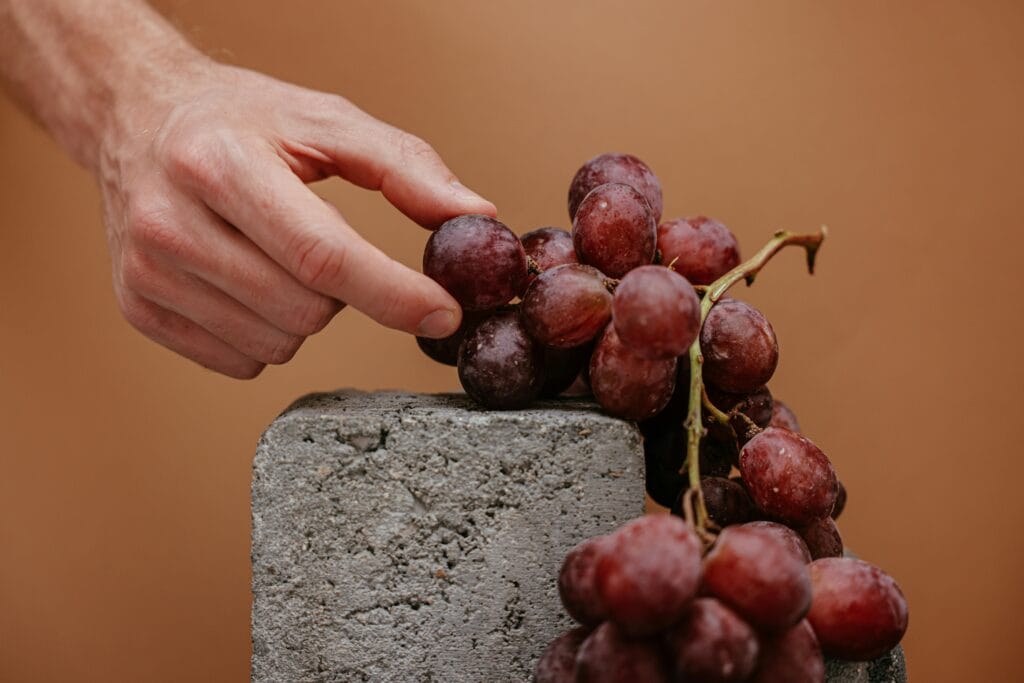
What if the answer to firm, bouncy, ageless skin wasn’t sitting in a high-end lab, but in the produce section of your local grocery store? Specifically, in the humble red grape.
For about $2 a bag, grapes offer a biological “reset button” for your skin. They contain a specific set of polyphenols and antioxidants that do what many expensive chemicals try to mimic: they protect your existing collagen and stimulate the production of new fibers. While the beauty industry wants you to believe that “natural” means “weak,” the science behind grapes tells a much more powerful story.
The Retinol Fatigue: Why We Are Looking for Alternatives
Retinol works by speeding up cell turnover. It forces your skin to regenerate faster, which eventually leads to a smoother surface. However, this process—often called “retinization”—comes with a heavy cost. It strips the skin’s natural barrier, makes you hyper-sensitive to the sun, and can cause chronic inflammation if not used perfectly.
Furthermore, Retinol is a synthetic derivative. While it is effective, it focuses primarily on the surface. To truly rebuild the “scaffolding” of your face, you need to address the deeper layers of the dermis where collagen lives. This is where the nutritional power of grapes takes the lead. By working with your body’s internal chemistry, grapes provide the raw materials needed for structural repair without the “burnt” look that often follows a retinol routine.
The Resveratrol Secret: The Longevity Molecule
The “magic” inside a grape is a compound called Resveratrol. Found primarily in the skins of red and purple grapes, Resveratrol is a potent antioxidant that has become a sensation in the longevity community. Scientists at Harvard have studied it for years, noting its ability to activate “sirtuins”—the genes responsible for cellular repair and aging.
When it comes to your skin, Resveratrol acts like a shield. It neutralizes free radicals from UV rays and pollution that would otherwise “snip” your collagen fibers like a pair of microscopic scissors.
| Benefit | How It Works | Result |
| Antioxidant Protection | Neutralizes environmental toxins. | Prevents fine lines and “crepey” skin. |
| Sirtuin Activation | Stimulates “survival” genes in cells. | Faster cellular repair and healing. |
| Anti-Glycation | Prevents sugar from hardening collagen. | Keeps skin soft and elastic (bouncy). |
How Grapes Actually “Rebuild” Your Collagen
Collagen doesn’t just disappear; it gets damaged. One of the biggest enemies of firm skin is a process called Glycation. This happens when sugar molecules attach to your collagen fibers, causing them to become stiff, brittle, and prone to snapping. This is why a high-sugar diet often leads to premature sagging.
Grapes contain powerful phytonutrients that inhibit this glycation process. By keeping your collagen “supple,” grapes ensure that your skin maintains its bounce. Moreover, grapes are rich in Manganese and Vitamin C. These aren’t just vitamins; they are the essential co-factors your body requires to physically build new collagen strands. Without these elements, your body simply cannot produce the structural proteins that keep you looking young.
The French Paradox for Your Face
You may have heard of the “French Paradox”—the observation that the French have lower rates of heart disease despite a diet rich in saturated fats. Much of this is attributed to their consumption of red wine, which is essentially concentrated grape power.
But you don’t need a wine cellar to reap the rewards. Eating the whole fruit provides the fiber and the full spectrum of flavonoids that are often lost during processing. When you consume grapes, you are performing a systemic “internal facelift.” You are flooding your bloodstream with OPCs (Oligomeric Proanthocyanidin Complexes), which are 20 times more powerful than Vitamin C at strengthening connective tissue.
Topical vs. Internal: Which Is Better?
There is a massive debate in the skincare world: should you eat your grapes or rub them on your face? The truth is that a dual-pronged approach yields the best results.
The Internal Approach
When you eat grapes, the nutrients are delivered through your blood to the deepest layers of the dermis—the layers that topical creams struggle to reach. This provides a long-term, foundational change in your skin’s health.
The Topical Approach
Grapes are also incredibly effective when used as a DIY treatment. Grape seed oil is a “dry” oil, meaning it sinks into the skin instantly without leaving a greasy residue. It is packed with linoleic acid, which is a game-changer for anyone dealing with “adult acne” or clogged pores. Because it is non-comedogenic, it hydrates while it firms, making it a perfect natural serum.
DIY: The 5-Minute “Grape Glow” Mask
If you want to see the “tightening” effect of grapes immediately, you can try this simple trick that costs pennies.
- Take 3-5 red grapes and slice them in half.
- Gently rub the cut side of the grape over your clean face and neck, focusing on areas with fine lines.
- Let the juice sit for 10 minutes. It will feel slightly tacky as it dries—that’s the polyphenols and natural acids working.
- Rinse with cool water.
The natural tartaric acid in the grapes acts as a gentle exfoliant, removing dead skin cells and allowing the Resveratrol to penetrate. It’s essentially a “fruit acid peel” that costs about 10 cents.
Choosing the Right Grapes for Maximum Impact
Not all grapes are created equal. If you are buying a bag for your skin, you need to be strategic.
- Go Red or Purple: Green grapes are delicious, but they contain significantly lower levels of Resveratrol. The darker the skin, the higher the antioxidant concentration.
- Organic Matters: Because you are after the skin (where the nutrients live), you want to avoid pesticides. Grapes are consistently on the “Dirty Dozen” list, so choose organic when possible.
- Don’t Fear the Seeds: If you can find seeded grapes, buy them. Grape seeds are the most concentrated source of OPCs. If you can’t stand the crunch, grape seed extract supplements are a viable alternative.
The Science Fact-Check: Does It Really Work?
Skeptics often argue that “food isn’t medicine,” but the peer-reviewed data says otherwise. A study published in the journal Archives of Dermatological Research found that Resveratrol could significantly protect against UVB-induced skin damage. Another study showed that grape-derived compounds could inhibit the enzymes (collagenase and elastase) that actively break down your skin’s structure as you age.
By inhibiting these “downward” enzymes and providing the “upward” building blocks like Vitamin C and Manganese, grapes create a net gain in your skin’s structural integrity.
Related Articles
- The 1 Food Surgeons Want You to Eat Every Morning To Lubricate Stiff Joints
- Nature’s “Longevity Pill”: Why Science Is Obsessed With Pomegranate Seeds For Anti-Aging
- Forget Pomegranate Seeds: The $2 Superfood with 5x More Antioxidants (Plus 9 Others You’re Missing)
- Never Do This After Eating Salty Foods—Doctors Say It Can Spike Heart Attack Risk
- David Bars for Rapid Fat Loss & Muscle? The Shocking Truth Revealed!