FREE SHIPPING OVER $50
Forget Back Braces: The “Wall Reset” That Fixes Your Posture in 2 Minutes a Day

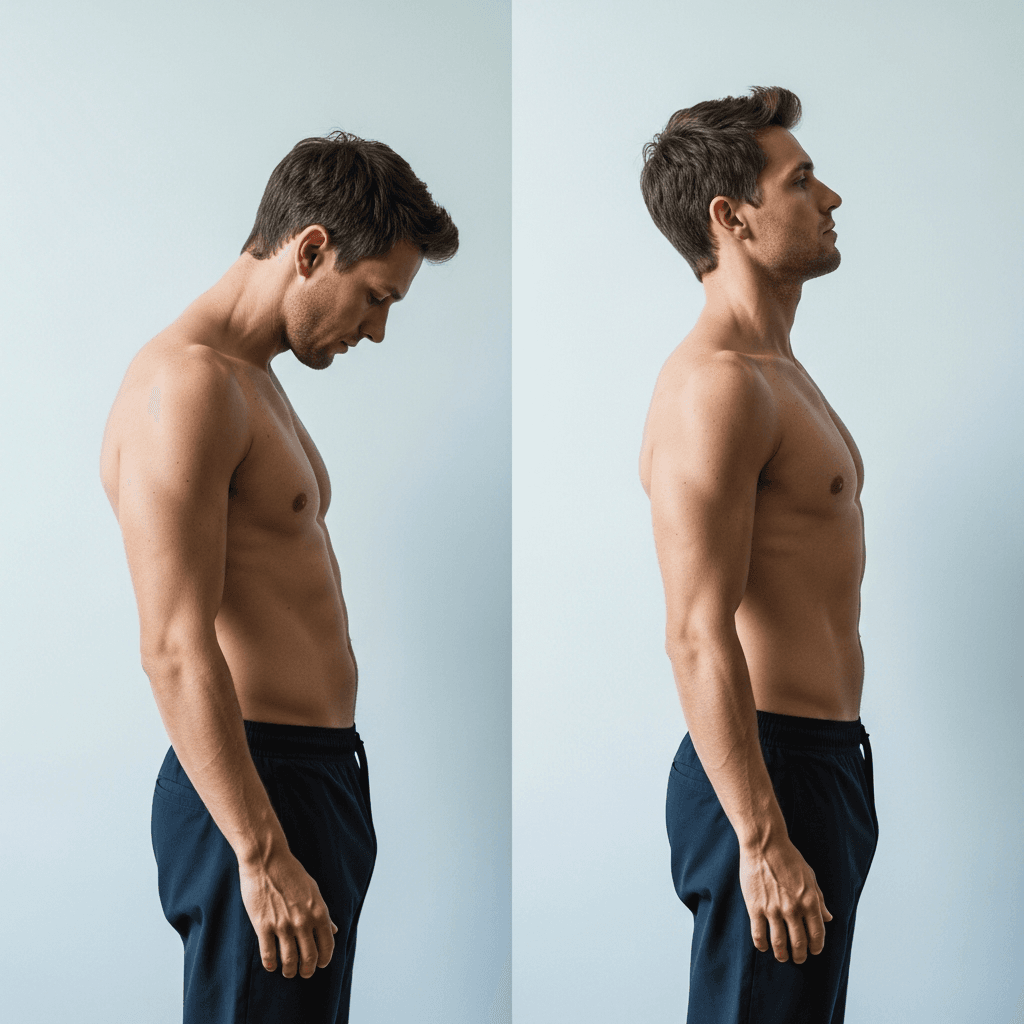
If you look around any coffee shop or office today, you will see a sea of people hunched over their devices in a position scientists are now calling “Tech Neck.” Our heads are tilted forward, our shoulders are rounded like a question mark, and our mid-backs are slowly molding into a permanent slump. For many, the immediate reaction to this discomfort is to buy a Velcro back brace or a vibrating gadget that chirps when you slouch.
However, back braces are often a “band-aid” fix that can actually make the problem worse. When you rely on an external strap to hold you up, your postural muscles—the deep stabilizers of your spine—get the message that they can go on vacation. Over time, these muscles atrophy, leaving you even more prone to slouching the moment the brace comes off.
The Anatomy of the Slump: Why Your Back Hurts
To fix your posture, you have to understand the “Upper Crossed Syndrome.” This is a predictable pattern where certain muscles become chronically tight while others become dangerously weak. When you spend hours leaning forward, your chest muscles (pectorals) and the muscles at the base of your skull (upper traps) shorten.
Simultaneously, the muscles that are supposed to hold your shoulder blades back—the rhomboids and lower trapezius—become stretched out and weak. This creates a physical “tug-of-war” that your back is currently losing.
| Muscle Group | Status in Poor Posture | Physical Result |
| Chest & Front Neck | Overactive / Tight | Pulls shoulders and head forward. |
| Mid-Back & Rear Shoulders | Underactive / Weak | Allows the spine to round forward. |
| Core & Diaphragm | Compressed | Leads to shallow breathing and lower back pain. |
Why the “Wall Reset” Outperforms Braces
The “Wall Reset” works through a process called proprioception. Your brain has a map of where your body is in space. After years of slouching, your brain has updated that map to believe that “slumping” is the neutral, safe position.
When you perform the Wall Reset, you are using the flat surface of the wall to “re-map” your alignment. It provides a tactile cue that tells your brain exactly where your head, shoulders, and hips should be in relation to one another. Within just two minutes, you are essentially resetting your posture to its factory settings.
How to Perform the 2-Minute Wall Reset
You don’t need gym clothes or equipment for this. You just need a flat wall and two minutes of focused movement. Follow these steps to perform the reset correctly.
1. The Three-Point Contact
Stand with your back against the wall. Your heels should be about two inches away from the baseboard. Ensure your tailbone, your shoulder blades, and the back of your head are all touching the wall.
2. The Chin Tuck
Most people will notice their chin is tilting up toward the ceiling to get their head back. Instead, tuck your chin slightly as if you are making a “double chin.” This elongates the cervical spine and stretches the tight muscles at the base of the skull.
3. The Wall Angels
Bend your elbows at 90 degrees and press your arms against the wall in a “goalpost” position. Slowly slide your arms up the wall as high as you can without letting your lower back arch away from the surface.
4. The Rib Down Cue
While sliding your arms, focus on keeping your ribcage tucked down toward your belly button. If your ribs flare out, you are using your lower back to compensate for tight shoulders.
The “Bruegger’s Relief” Position: The Desk-Worker’s Secret
While the Wall Reset is the primary tool, you can supplement it throughout the day with Bruegger’s Relief Position. This is a 30-second move you can do right in your office chair.
Sit at the edge of your chair with your feet flat on the floor. Spread your knees slightly and turn your feet out. Extend your arms out to your sides, rotate your palms toward the ceiling, and squeeze your shoulder blades together while tucking your chin. This move reverses every single “slouch” position your body takes during the workday. It opens the chest, activates the mid-back, and resets the neck.
The Hidden Benefits of Standing Tall
Fixing your posture isn’t just about looking better in a t-shirt or avoiding back pain. It has profound effects on your internal physiology and even your mental state.
1. Increased Lung Capacity
When you slouch, your ribcage collapses onto your diaphragm, making it impossible to take a full, deep breath. This leads to shallow “chest breathing,” which keeps your body in a state of low-level stress. Standing tall opens the thoracic cavity, allowing for better oxygen exchange and increased energy levels.
2. Lowered Cortisol Levels
Research from Harvard University suggests that “expansive” postures—standing tall with an open chest—can actually lower cortisol (the stress hormone) and increase testosterone. Good posture signals to your brain that you are safe and confident, whereas a slumped posture signals that you are in a “defeated” or defensive state.
3. Improved Digestive Health
Your digestive organs need space to function. If you are constantly “crunching” your torso, you are putting pressure on your stomach and intestines. This can contribute to acid reflux, bloating, and slow digestion. Proper alignment allows your organs to sit in their natural positions, facilitating smoother transit through the digestive tract.
Creating a Sustainable Posture Habit
The key to the Wall Reset isn’t intensity; it is frequency. Your body is a “molding” machine—it will mold into whatever shape you spend the most time in. If you spend 8 hours slouching and 2 minutes on the wall, the slouching will win.
To make this work, you must create “postural triggers.” For example, every time you finish a phone call, do 30 seconds of Bruegger’s Relief. Every time you walk past a specific wall in your hallway, do the 2-minute Wall Reset. By breaking it into small “movement snacks,” you provide the constant feedback your nervous system needs to make “standing tall” your new default.
Related Articles
- Is Couch-to-5K Too Hard? Try This Gentle 8‑Week Plan That Gets You to 5K in 2026
- Getting Weaker? 7 Hidden Signs Your Workout Is Doing More Harm Than Good
- The Strength Shortcut? This Odd “Static” Move Builds Muscle Without Lifting a Single Weight
- Too Tired to Exercise? These 3 Chair Yoga Poses Restore Strength & Calm (Perfect for Seniors)
- He’s 63, Ripped, and Defying Aging. What He Told Me About Muscles Blew My Mind—You Need to Hear This