FREE SHIPPING OVER $50

I Did 7 Japanese Samurai Leg Exercises Every Morning for 30 Days—My Leg Strength Doubled

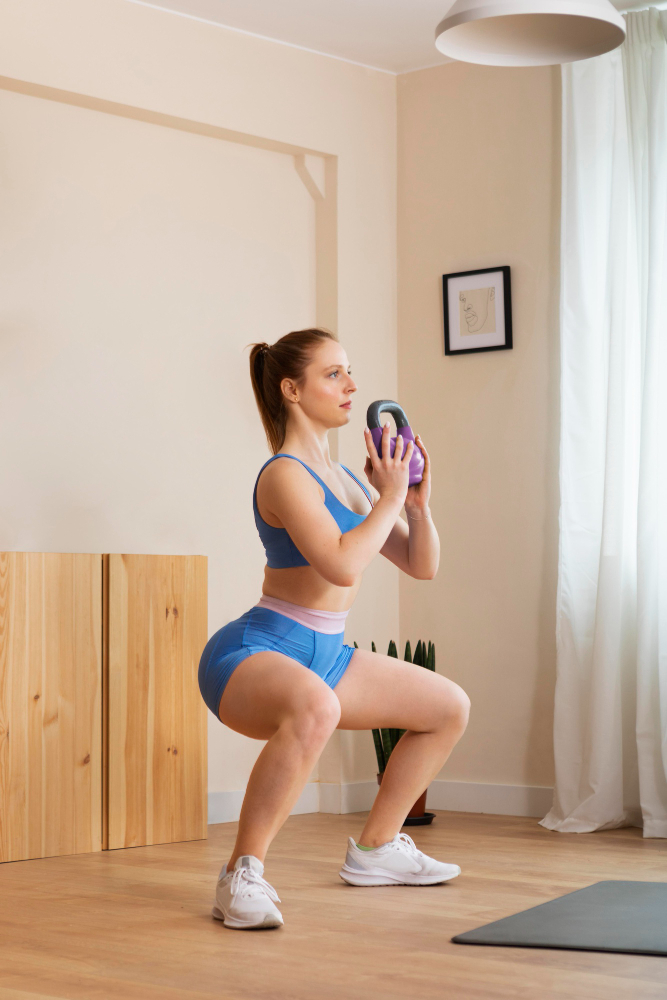
If you assume that building impressive lower-body strength requires grinding through heavy barbell squats on a crowded gym floor, you are missing out on an ancient, highly effective approach to functional physical conditioning. Traditional Japanese martial arts disciplines—including Kendo, Iaido, and traditional Jujutsu—developed specialized lower-body conditioning systems designed to build deep hip flexibility, unbreakable ankle stability, and explosive leg power without relying on external iron weights. These movement practices, historically used by samurai warriors to maintain balance and agility on unpredictable terrain, focus on deep static stances, full-range joint mobility, and controlled bodyweight transitions. After committing to seven traditional Japanese leg exercises for 30 straight mornings, my leg strength doubled, my chronic knee stiffness vanished, and my overall movement balance reached an all-time peak.
The Biomechanics of Traditional Japanese Leg Conditioning
To understand why traditional Japanese leg exercises build such deep physical resilience, you have to look at how bodyweight stance work impacts muscles, tendons, and joints. Modern gym workouts often focus exclusively on linear, up-and-down movements like leg presses and leg extensions, which isolate specific muscle groups while ignoring rotational and lateral hip stabilizers.
Conversely, traditional martial arts movement systems—frequently called Budo mobility—utilize multi-planar stance holds and full-range joint transitions.
Holding deep, isometric stances like the horse riding stance forces your hips, quadriceps, glutes, and adductors to sustain continuous mechanical tension.
This continuous isometric strain recruits high-threshold motor units and strengthens the deep connective tissue surrounding your hip and knee joints.
Furthermore, moving slowly through full-range ankle dorsiflexion and deep knee bends improves circulation, increases synovial fluid flow within joint capsules, and rebuilds elastic tendon power naturally.
“Barbell squats build raw lifting power, but traditional stance work builds bulletproof joints, deep hip mobility, and functional strength that carries over into real-world movement.”
At a Glance: 30-Day Samurai Leg Transformation
Comparing traditional gym leg isolation against 30 days of Japanese mobility work illustrates why bodyweight stance conditioning delivers incredible functional performance.
| Conditioning Metric | Machine-Based Gym Isolation | 30-Day Japanese Stance System |
| Primary Physical Focus | Isolated quadricep & hamstring hypertrophy | Full-chain hip, knee, & ankle stabilization |
| Joint Mobility Impact | Often restricted to linear, partial range | Expands deep hip flexor & ankle dorsiflexion |
| Core & Pelvic Activation | Low to moderate (supported by pads) | Continuous pelvic floor & deep core engagement |
| Tendon Resilience | High impact force on joint cartilage | Builds collagen elasticity via isometric strain |
| Equipment Needed | Expensive gym machines | Completely free (100% bodyweight anywhere) |
The 7 Japanese Samurai Leg Exercises That Transformed My Strength
1. Kiba-Dachi (Horse Riding Stance Hold)
Kiba-Dachi is a foundational stance used across martial arts to build mental fortitude and lower-body strength.
Stand with your feet spaced roughly twice your shoulder-width apart, keeping your feet parallel and pointing straight forward.
Sink your hips low until your thighs are nearly parallel to the floor, pushing your knees outward over your ankles while keeping your torso upright and long.
Hold this deep isometric position while breathing slowly through your nose.
Holding Kiba-Dachi for two continuous minutes floods your quadriceps and glutes with metabolic strain, strengthening deep hip stabilizers and building exceptional stamina.
2. Shikodachi (Sumo Squat with Heel Drives)
Shikodachi resembles the horse stance, but your feet turn outward at a 45-degree angle to place immense emphasis on your inner adductors and deep gluteal muscles.
Sink into a deep squat position with your knees tracking directly in line with your toes.
From the bottom stretch position, lift your right heel as high as possible while driving your toes into the ground, pause for two seconds, and drop your heel back down.
Repeat the heel lift on your left side before driving through both feet to stand back up.
Adding heel drives fortifies your Achilles tendons, builds powerful calves, and opens tight hips.
3. Anzen-Seiza (Active Toe Kneeling Transition)
Sitting in traditional kneeling positions is a staple of Japanese daily life and martial arts training, but adding active toe engagement turns it into a serious ankle and foot stabilizer.
Kneel on the floor with your toes tucked under, sitting your hips back onto your heels so your arches receive a deep, satisfying stretch.
Engage your core, squeeze your glutes, and drive through the balls of your feet to push your hips forward into a tall kneeling position without using your hands for support.
Slowly lower back down under control.
This movement strengthens your feet, ankles, and toes, eliminating foot stiffness and improving balance.
4. Shiko-Fumi (Traditional Sumo Leg Raises)
Shiko-Fumi is the iconic leg-raising ritual practiced by sumo wrestlers to build balance, pelvic stability, and explosive lower-body power.
Stand tall in a wide stance, shift your entire body weight over to your left leg, and lift your right leg high out to the side while keeping your core tight.
Pause for a full second at the top of the leg lift, and then stamp your right foot firmly back onto the floor, sinking smoothly into a deep squat.
Alternate sides for 10 controlled reps per leg.
Shiko-Fumi strengthens your gluteus medius, stabilizes your pelvis, and prevents lower back pain caused by weak hips.
5. Suri-Ashi (Gliding Footwork Squat Walks)
Suri-Ashi is a traditional gliding footwork method designed to keep a practitioner’s center of gravity low and stable during rapid movement.
Sink into a quarter-squat position, keeping your hips level and your spine upright.
Glide your right foot forward in a subtle arc, keeping your sole practically brushing the floor, and follow smoothly with your left foot without letting your hips rise or bob up and down.
Walk forward for 10 steps, then reverse the movement backward.
Maintaining a continuous quarter-squat forces your quadriceps to stay under non-stop tension, building muscular endurance fast.
6. Shito-Ryu Deep Lunge Stance (Zenkutsu-Dachi)
Zenkutsu-Dachi is a forward-leaning stance that places roughly 60 percent of your body weight onto your front leg while keeping your back leg completely straight with the heel anchored firmly to the ground.
Step forward into a long lunge position, bending your front knee until it sits directly above your front ankle.
Press your rear heel into the floor to drive a deep stretch through your rear calf and hip flexor while bracing your core.
Hold this stance for 45 seconds per side, focusing on keeping your hips square.
This deep hold improves ankle dorsiflexion, opens tight hip flexors, and builds strong knee alignment.
7. Mae-Geri Balance Pauses (Snap Kick Chambers)
The final exercise combines core stability, hip flexor strength, and single-leg balance through a martial arts kicking chamber.
Stand tall on your left leg, drive your right knee up to chest height, and pull your foot tightly toward your body.
Extend your right leg straight out in front of you in a slow, controlled snap, hold the fully extended position for two full seconds, pull the knee back to your chest, and set it down softly.
Performing 8 slow reps per leg strengthens your hip flexors and deep lower abs while building rock-solid single-leg balance.
3 Rules to Master Japanese Stance Training
To get the absolute best strength and mobility results from this 30-day routine, keep these simple guidelines in mind:
- Prioritize Posture Over Depth: Never sacrifice a long, straight spine just to drop deeper into a stance; keep your chest lifted and your head pulled back.
- Breathe Slowly Through Your Nose: Practice slow, deep belly breathing during intense stance holds to lower your heart rate and build mental focus.
- Stay Consistent Daily: Doing ten minutes of mobility stance work every single morning yields far greater biological gains than doing one long workout once a week.
Related Articles
- I’m a Strength Coach—This 60-Second Wrist Drill Adds Pounds to Your Bench and Ends Pressing Pain
- Forget Painkillers: These 10 Stretches Relieved My Lower Back Pain Faster Than Anything Else
- Bad Posture and Weak Knees? The Hamstring Secret Trainers Use to Protect Joints
- A Physical Therapist’s Top Resistance Band Exercises to Stop Joint Pain in Its Tracks
- Loosen Tight Hips Fast: A Personal Trainer’s Flexibility Secret Revealed