FREE SHIPPING OVER $50

I’m a Longevity Doctor—This One Neglected Exercise Predicts How Well You’ll Age Better Than Any Blood Test

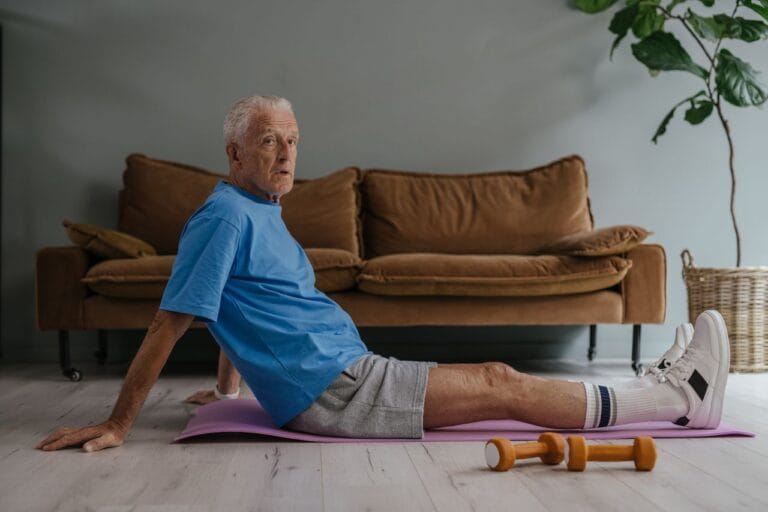
When patients sit down in my clinic, they almost always hand me detailed blood work while asking about their cholesterol, inflammatory markers, or fasting blood sugar. While those lab results certainly offer valuable biological data, they fail to measure the single most important indicator of long-term survival: your real-world functional physical capability. Decades of clinical research prove that a quick, non-invasive physical diagnostic—specifically the Sitting-Rising Test (SRT) combined with loaded carries—predicts your all-cause mortality risk far more accurately than standard blood panels. If you want to know how well your body will withstand the aging process over the next two decades, you do not need an expensive lab draw; you simply need to see how effortlessly you can lower yourself to the floor and stand back up without relying on your hands for support.
Why Blood Tests Miss the Big Picture of Longevity
Standard laboratory blood tests offer a snapshot of your chemistry, but they completely ignore how your bodily systems function together under stress. A person can present with flawless blood sugar readings and optimal cholesterol levels, yet still struggle with severe muscle loss, frail bones, and poor coordination.
When you perform a complex movement pattern, your brain, nervous system, muscles, joints, and cardiovascular system must instantly synchronize. If any part of that chain fails, your risk of accidental falls, lost independence, and premature mortality spikes dramatically.
Medical studies consistently highlight that physical frailty accelerates chronic disease far faster than elevated lipids alone. Consequently, longevity physicians increasingly view movement capacity as a vital sign—one that reflects your true biological age rather than your chronological age.
The Sitting-Rising Test: The Ultimate 10-Point Longevity Predictor
Developed by Brazilian physician Dr. Claudio Gil Araújo, the Sitting-Rising Test evaluates your musculoskeletal flexibility, core strength, motor coordination, and power-to-bodyweight ratio in under one minute. The test begins with a simple premise: sit cross-legged on the floor from a standing position, and then stand back up using as little physical assistance as possible.
You start with a perfect score of 10 points—5 points for the sitting phase and 5 points for the rising phase. Every time you use a hand, arm, knee, or the side of your leg for support, you subtract 1 point. If you lose your balance at any point, you subtract a half-point.
The scientific findings behind this quick test are staggering. In a landmark study published in the European Journal of Preventive Cardiology, researchers tracked over 2,000 adults aged 51 to 80 over a six-year period. The results revealed that participants with low scores (between 0 and 3) were five to six times more likely to die from all-cause mortality compared to those who scored between 8 and 10.
In fact, each single-point increase in a subject’s SRT score was associated with a remarkable 21 percent reduction in mortality risk.
The Missing Link: Grip Strength and Loaded Carries
While the Sitting-Rising Test diagnoses your underlying frailty, fixing a poor score requires targeted movement. That brings us to the most neglected exercise in modern fitness routines: The Farmer’s Carry (and dedicated grip strength work).
Many adults spend hours on elliptical machines or chest presses, yet completely ignore the fundamental skill of carrying heavy, awkward loads across a room. This oversight is a major mistake because hand grip strength correlates directly with total-body muscle mass, bone mineral density, and cardiovascular health.
The famous Prospective Urban Rural Epidemiology (PURE) study, which evaluated over 140,000 adults across 17 countries, discovered that grip strength was actually a stronger predictor of all-cause mortality and cardiovascular death than systolic blood pressure.
When you grab a pair of heavy dumbbells and walk upright, you force your body to build the exact physical attributes needed to score higher on the Sitting-Rising Test:
- Foot and Ankle Stability: Your feet constantly adjust to keep you balanced, reinforcing joint stability.
- Core Bracing Power: Carrying weights prevents spinal collapsing and builds rotational resilience.
- Shoulder and Grip Endurance: Holding heavy objects strengthens the connective tissue throughout your upper body.
- Postural Integrity: Walking under load combats the rounded-shoulder slouch caused by desk work.
Biomarkers vs. Physical Movement Markers: A Comparison
To see how standard medical markers compare directly against functional longevity tests, review the key differences below.
| Diagnostic Assessment | Primary Health Marker Measured | Longevity Predictive Value | How to Improve the Score |
| Standard Lipid Panel | Circulating cholesterol and triglycerides | Moderate (calculates cardiovascular risk) | Diet, aerobic exercise, medication |
| Sitting-Rising Test (SRT) | Total flexibility, lower-body power, balance | Exceptionally High (predicts 6-year mortality risk) | Deep squats, hip mobility drills, lunges |
| Grip Strength Test | Peripheral muscle mass, nervous system drive | Exceptionally High (outperforms blood pressure) | Dead hangs, farmer’s carries, wrist curls |
| Fasting Blood Glucose | Insulin sensitivity, metabolic health | High (identifies diabetes risk) | Resistance training, lean protein, low sugar |
| Farmer’s Carry Benchmark | Core stability, gait balance, posture under load | Very High (measures functional independence) | Loaded walks, trap-bar carries, core bracing |
How to Perform the Farmer’s Carry Correctly
Because loaded carries are so effective at rebuilding functional strength, incorporating them into your weekly routine yields immediate biological rewards. Follow these simple mechanics to protect your joints and maximize results.
- Pick Up the Weights Safely: Stand between two heavy dumbbells or kettlebells. Hinge at your hips, keep your back flat, and lift the weights using your legs rather than pulling with your lower back.
- Set Your Posture: Stand tall, pull your shoulders down and back away from your ears, and brace your abdominal muscles as if preparing for a punch.
- Take Controlled, Short Steps: Walk forward in a straight line taking smooth, deliberate steps. Avoid leaning forward, swaying side to side, or letting the weights bounce against your thighs.
- Target Weight and Distance: Aim to carry roughly 25 to 50 percent of your body weight total (split between both hands) for 30 to 60 seconds per set. Repeat for 3 to 4 total sets during your workouts.
A 4-Week Action Plan to Test and Upgrade Your Longevity Score
If your initial Sitting-Rising Test or grip strength feels rusty, you can rapidly improve your movement capabilities with consistent practice. Use this structured checklist to rebuild your baseline over the next month.
- Week 1 (Establish Your Baseline): Perform the Sitting-Rising Test safely on a padded floor or rug with a friend nearby. Take note of how many points you lose for using hands or knees.
- Week 2 (Build Ankle and Hip Mobility): Spend 5 minutes daily holding a deep bodyweight squat while holding onto a doorframe for support. Work on stretching your hamstrings, hips, and calves.
- Week 3 (Introduce Daily Dead Hangs): Hang from a pull-up bar for 30 to 45 seconds after your regular workouts. This builds raw grip endurance, decompresses your spine, and stabilizes your shoulders.
- Week 4 (Add Heavy Carries Twice Weekly): Finish two workouts per week with 4 sets of 50-yard farmer’s carries. Gradually increase the weight as your grip and core feel more stable.
Related Articles
- Forget Collagen and NAD+: This Cheap Supplement Is What Women Over 40 Should Actually Be Taking
- The Missing Link to Living Longer? New Research Says These 8 B Vitamins Quietly Repair Your DNA and Slash Disease Risk
- Before You Buy Another Supplement, Read This—5 Must-Know Facts That Could Save Your Health
- The 5 Supplements That Could Help You Beat High Cholesterol—No Prescription Needed
- Omega-3 Side Effects You’re Not Hearing About—Doctors Say Watch Out for These