FREE SHIPPING OVER $50
I Lost 5% of My Leg Strength Every Year After 40—Until I Did These 5 Lower-Body Exercises

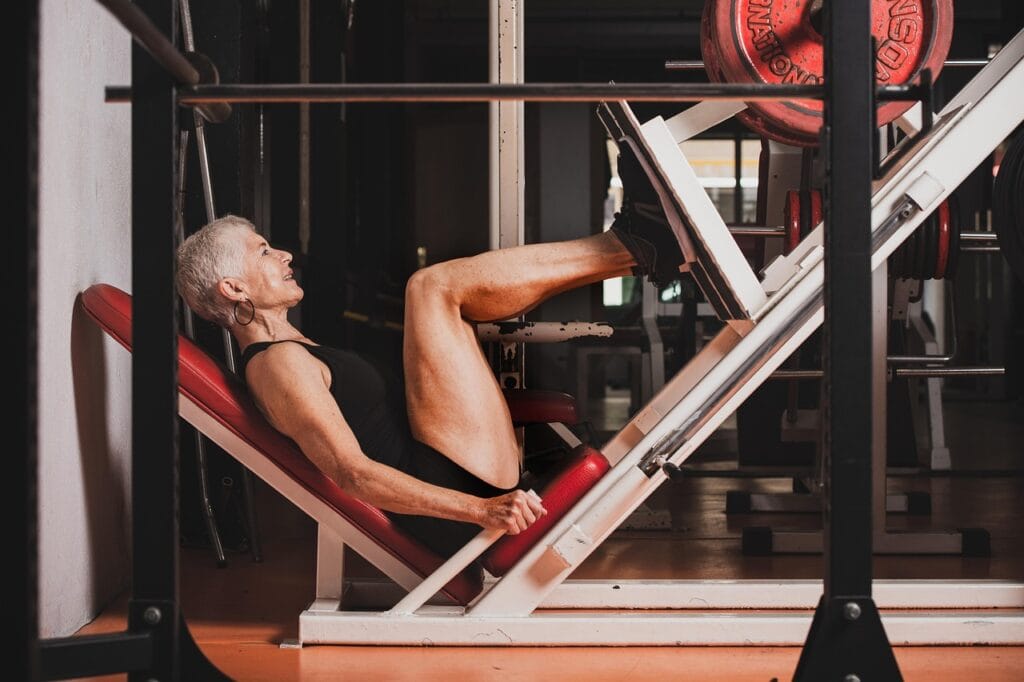
If you have noticed that getting out of a low chair feels a little heavier or that your “spring” in your step has turned into a shuffle, you aren’t just imagining things; you are likely losing leg strength. Scientists have found that after age 40, the average adult can lose up to 5% of their lower-body muscle mass every single year if they aren’t actively fighting back. This isn’t just about how you look in a pair of shorts; it is about your biological foundation. Your legs are the largest muscle group in your body, and they act as the engine for your metabolism and the shock absorbers for your joints. When that engine starts to shrink, your risk for back pain, metabolic slowdown, and general fatigue skyrockets. However, the good news is that muscle tissue is incredibly resilient. By switching from generic cardio to a targeted foundation protocol of 5 specific lower-body moves, I was able to plug the leak and reclaim the power I thought was gone for good.
How You Slowly Lose Leg Strength as You Age
To understand why our legs seem to give out first, we have to look at Type II Muscle Fibers. These are your “fast-twitch” fibers—the ones responsible for power, speed, and keeping you upright if you trip. Unfortunately, these are the exact fibers that the body decides are “expensive” to maintain as we age. Unless you give the body a reason to keep them, it will slowly dismantle them to save energy.
This process is known as sarcopenia, and it is the primary reason why “active” people still feel like they are getting weaker. You might be walking 10,000 steps a day, but walking primarily uses Type I (slow-twitch) fibers. To stop the 5% annual drain, you need Mechanical Tension. You need to send a signal to your nervous system that these high-power fibers are still essential for survival.
5 Lower-Body Exercises That Prevent Muscle Loss
1. The Goblet Squat (The Deep Foundation)
The squat is often called the “King of Exercises,” but after 40, many people find traditional barbell squats painful for their backs or shoulders. The Goblet Squat is the perfect alternative. By holding a single dumbbell or kettlebell against your chest, you create a counterbalance that allows you to sit deeper while keeping your spine perfectly upright.
This move targets the quads, glutes, and core simultaneously. Because the weight is in front of you, it forces your upper back to stay engaged, which improves your posture while you build leg strength. Most importantly, it mimics the “Sit-to-Stand” motion, which is the ultimate test of functional independence as we age.
2. The Romanian Deadlift (The “Posterior Shield”)
While squats focus on the front, the Romanian Deadlift (RDL) focuses on the “Power Strip” of the body: the hamstrings, glutes, and lower back. Instead of bending your knees deeply, you hinge at the hips, sending your glutes back until you feel a deep stretch in the back of your legs.
This exercise is vital for protecting your lower back. When your hamstrings are weak, your back has to do all the work whenever you bend over to pick something up. By building a posterior shield, you ensure that your strongest muscles are handling the heavy lifting of daily life, effectively reversing the structural aging that leads to chronic aches.
3. The Bulgarian Split Squat (The Balance Reset)
Muscle loss after 40 is rarely symmetrical. Most of us have one leg that is significantly stronger than the other, and over time, this imbalance leads to hip and knee issues. The Bulgarian Split Squat—where one foot is rested on a bench behind you—forces each leg to carry its own weight.
This move is incredibly high-leverage because it combines strength with Proprioception (balance). It forces the small stabilizer muscles around your knee and ankle to fire. By eliminating imbalances, you prevent the “compensatory injuries” that often sideline people just as they start getting back into a routine.
4. The Lateral Lunge (The “Side-to-Side” Guardrail)
Humans are designed to move in all directions, yet most of our daily life is “Linear”—walking, driving, or sitting at a desk. This causes the muscles on the outside of our hips (the glute medius) to atrophy. The Lateral Lunge fixes this by having you step out to the side and sit into your hip.
Strengthening your lateral stability acts as a shield for your joints. It prevents your knees from caving in and protects your hips from the “side-to-side” instability that often leads to falls or groin strains. It is the secret to maintaining an athletic, youthful gait.
5. The Weighted Calf Raise (The “Second Heart”)
Many people skip calf training, but your calves are actually known as the “Second Heart.” They are responsible for pumping blood back up from your lower extremities to your chest. As leg strength declines, circulation often follows.
By performing slow, controlled calf raises with a weight in your hands, you strengthen the “Achilles Complex.” This prevents the stiffening of the tendons that makes running or even fast walking painful. Strong calves provide the launch power you need to stay agile and responsive.
The Foundation Protocol: Weekly Tracking
| Exercise | Primary Target | Rep/Set Goal | Why It Stops the Leak |
| Goblet Squat | Quads & Core | 3 Sets of 10 | Rebuilds the “Sit-to-Stand” power. |
| Romanian Deadlift | Hamstrings & Glutes | 3 Sets of 12 | Protects the spine by strengthening the back chain. |
| Split Squat | Unilateral Strength | 3 Sets of 8 | Fixes imbalances that cause hip pain. |
| Lateral Lunge | Outer Hips | 3 Sets of 10 | Prevents the “side-to-side” instability. |
| Calf Raises | Lower Leg & Tendons | 4 Sets of 15 | Improves circulation and ankle resilience. |
Why “Heavy” is a Relative Term
A common misconception is that you need to lift massive weights to see results. In reality, your muscles only care about Relative Intensity. To stop the 5% decline, you need to use a weight that makes the last two repetitions of every set feel genuinely difficult.
If you can easily do 20 reps of an exercise, the weight is too light to trigger the biological reset you need. By increasing the weight slightly every two weeks—a process called Progressive Overload—you prove to your body that it cannot afford to let those Type II muscle fibers go. You are essentially voting for your strength every time you pick up a heavier dumbbell.
Recovery: The “Anabolic Window” After 40
When you are over 40, the workout is only half the battle. The other half is ensuring your body actually has the resources to repair the tissue you just challenged. This requires a focus on Leucine, an amino acid found in high-quality proteins like eggs, Greek yogurt, and whey.
Leucine acts as a trigger for muscle growth. After your leg session, aim for 30 grams of protein to ensure you are in a building state rather than a breaking-down state. Without this nutritional support, the exercise might actually contribute to the fatigue you are trying to avoid.
Managing Joint Integrity
“No pain, no gain” is a dangerous motto for the 40-plus athlete. The goal is to stress the muscle, not the joint. If a move like the Split Squat hurts your knees, try reducing the range of motion or doing it without weights until your tendons catch up to your muscles.
Focus on the “Eccentric” phase—the part where you lower the weight. Slowing down this phase (taking 3 seconds to go down) has been shown to strengthen tendons and ligaments more effectively than the lifting phase itself. This is longevity insurance for your joints.
Related Articles
- The 4-Move Daily Protocol That’s Quietly Transforming Out-of-Shape Dads Into the Fittest Version of Themselves
- Stop Squatting for Glute Growth: The Pilates Protocol That Targets “Sleepy” Muscles and Erases Back Aches
- I Started Lifting Weights at 50 With No Experience — Here’s the Full Routine That Built Genuine Strength by 60
- 75 Years Old, 30-Year-Old Joints: The “Anti-Rust” Protocol That Beats Weight Machines Every Time
- The 15-Minute Muscle Hack: Build Total Body Power and a “Bulletproof” Core with Just 2 Dumbbells