FREE SHIPPING OVER $50
5 Kettlebell Exercises a Kinesiologist Swears Will Make You Move Better at Any Level

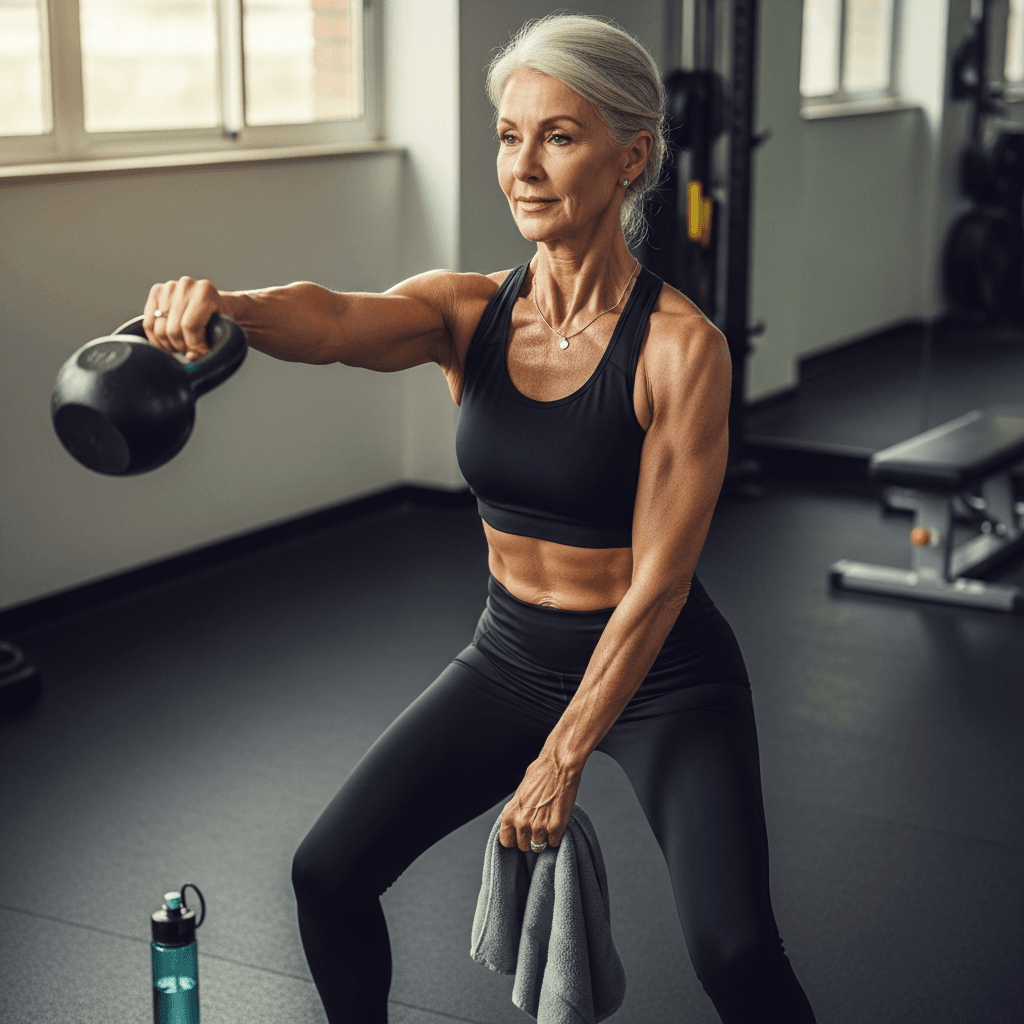
Most people walk into a gym and see a kettlebell as just another heavy object to hurl around for the sake of burning calories, but in the world of kinesiology, we see it as a high-precision tool for neurological recalibration. Unlike a dumbbell, which has a balanced center of mass, a kettlebell’s weight hangs below the handle, creating a “dynamic offset” that forces your stabilizer muscles to work overtime. This unique design doesn’t just build muscle; it teaches your joints how to “centrate”—or sit perfectly in their sockets—during movement. If you feel stiff, disconnected, or like your workouts are causing more aches than they are solving, you likely have a movement “leak.” By integrating these five kettlebell drills into your routine, you can plug those leaks, restore your natural athletic blueprint, and build a body that feels as good as it looks.
The Kinesiology Behind the Bell: Why “Moving Well” Matters
Movement quality is the foundation upon which all physical goals are built. If you add strength to a dysfunctional movement pattern, you are simply “strengthening a compensation,” which is the fastest way to end up in a physical therapist’s office. Kinesiologists focus on Bio-Mechanics, which is the study of how the body moves as an integrated system rather than a collection of isolated parts. The kettlebell is the ultimate bio-mechanic tool because it demands “Total Body Tension.”
When you hold a kettlebell, your brain has to coordinate your grip, your core, and your feet simultaneously to manage the shifting center of gravity. This creates Intra-Abdominal Pressure, which stabilizes your spine and allows your limbs to move with more power. By mastering these five moves, you are essentially “upgrading” your body’s operating system. You’ll find that as you move better with the bell, you’ll naturally move better in real-world scenarios—whether that’s carrying heavy groceries, hiking a steep trail, or picking up your grandkids without a second thought.
5 Kettlebell Exercises for Better Movement
1. The Goblet Squat: The Ultimate Posture Reset
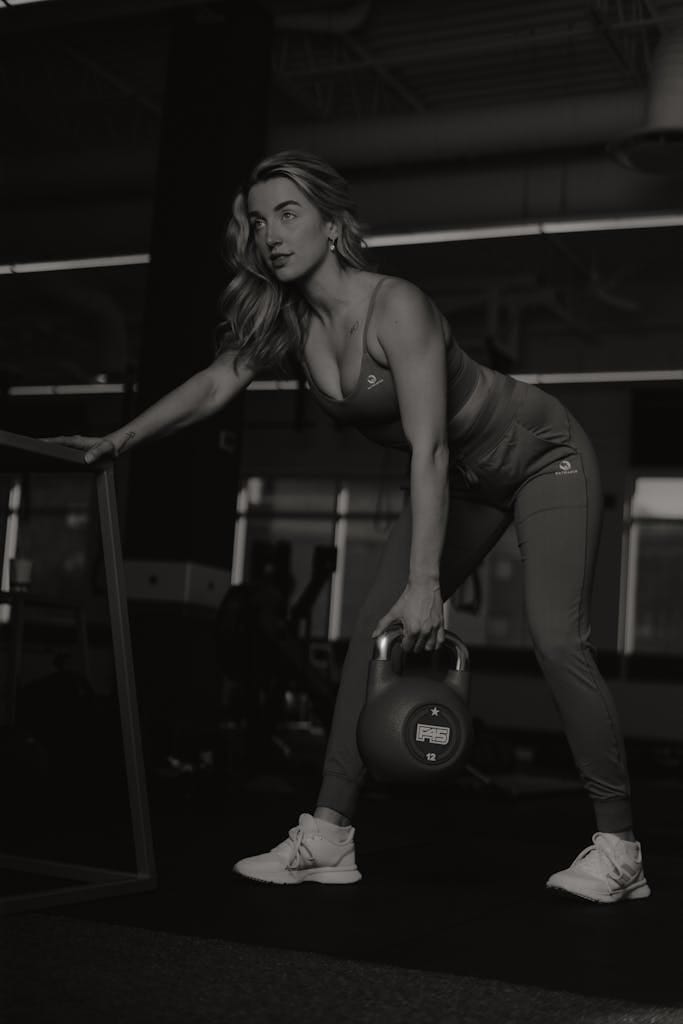
The Goblet Squat is arguably the single most important exercise for anyone living in the modern world. Because we spend so much time hunched over desks and steering wheels, our hip flexors tighten and our upper backs round. Holding a kettlebell at chest height—in the “goblet” position—acts as a counterweight that allows you to sit back into your hips while keeping your spine perfectly vertical.
This move teaches Hip Hinge mechanics while simultaneously activating the “Upper Back Shield” (the rhomboids and traps). By keeping the weight close to your sternum, you engage your anterior core, which pulls your pelvis into a neutral position. This isn’t just a leg exercise; it is a “Full Body Reset” that fixes the “Donald Duck” posture (anterior pelvic tilt) and teaches your knees how to track properly over your toes.
2. The Turkish Get-Up (Partial): Shoulder Stability 101
While the full Turkish Get-Up is a masterpiece of movement, the “Partial” or “Half Get-Up” is where the real magic happens for joint health. Holding a kettlebell locked out overhead while moving your body underneath it creates Proprioceptive Awareness in the shoulder capsule. Your rotator cuff muscles have to fire in micro-adjustments to keep that weight stable as you transition from lying down to a seated position.
The Stability Matrix: Why the Get-Up Wins
| Movement Phase | Primary Muscle Focus | Functional Benefit |
| The Roll to Press | Obliques and Serratus | Core-to-shoulder integration |
| The Elbow Prop | Latissimus Dorsi | T-spine mobility and support |
| The Tall Sit | Hip Flexors and Core | Improved seated posture |
| The Overhead Lock | Rotator Cuff | Injury-proof shoulders |
This move is a “gatekeeper” exercise. If you can move through these positions with a steady kettlebell, it proves your nervous system has control over your joints. It effectively “bulletproofs” the shoulder, which is the most mobile—and therefore the most vulnerable—joint in the human body.
3. The Kettlebell Halo: De-Stressing the Upper Body
If you suffer from “tech neck” or tight shoulders, the Halo is your new best friend. By holding the kettlebell upside down by the horns and circling it around your head, you are putting your shoulders through a full range of motion while maintaining a braced core. This creates a “dynamic stretch” for the shoulders and upper back.
The secret to a good Halo is “proximal stability for distal mobility.” Your ribcage must stay locked down while your arms move. This teaches your body how to separate shoulder movement from spinal movement. Most people “cheat” by arching their lower back when they reach overhead; the Halo forces you to stop cheating and start moving from the actual shoulder joint. It is a fantastic warm-up or a standalone “desk-break” move to keep your upper body fluid.
4. The Single-Arm Suitcase Carry: The Core’s Secret Weapon
We often think of core training as sit-ups and planks, but the core’s primary job is Anti-Rotation and Anti-Lateral Flexion. In other words, its job is to stop you from moving when an outside force tries to pull you out of alignment. The Suitcase Carry is the purest expression of this. By holding a heavy kettlebell in only one hand and walking with a “perfect” tall posture, you force the opposite side of your core to fire intensely to keep you upright.
This is a “functional” carry. Think about how you walk when you are carrying a heavy piece of luggage. If you lean to the side, you are leaking energy and putting pressure on your discs. By practicing the Suitcase Carry, you build “iron-clad” obliques and quadratus lumborum (the deep lower back muscles). It is a low-impact way to build massive core strength that translates directly to better gait and balance.
5. The Single-Leg Deadlift: Fixing the Foundational Gaps
Most of us have a “dominant” side, which leads to imbalances that eventually cause hip or lower back pain. The Single-Leg Deadlift (SLDL) with a kettlebell is the ultimate “BS detector” for your movement. It requires balance, hip stability, and foot strength. By hinging at the hip while standing on one leg, you are forcing the “Glute Medius” to stabilize your pelvis.
This move fixes the “sway” in your walk and ensures that both sides of your body are pulling their weight. It also strengthens the “posterior chain”—the hamstrings, glutes, and lower back—which are the muscles that actually drive you forward. If you want to stay mobile and independent as you age, the ability to balance and hinge on one leg is non-negotiable.
How to Build Your “Movement Blueprint”
You don’t need to do 100 reps of these moves to see results. Because these are “quality over quantity” exercises, the goal is “Greasing the Groove.” This means performing the moves frequently but never to the point of total exhaustion. When your form breaks down, the “movement lesson” ends.
- Frequency: 3 times per week as a standalone session or as a “movement prep” before your main workout.
- Volume: 2 to 3 sets of 8 to 10 controlled repetitions. For carries and holds, aim for 30 to 45 seconds of perfect tension.
- Selection: Don’t go for the heaviest bell in the gym immediately. Pick a weight that allows you to feel the “tension” without making you hold your breath or lose your alignment.
Related Articles
- Stop Wasting Reps: A Personal Trainer’s 10 Underrated Exercises for Faster Muscle Growth
- 8 Early Warning Signs You’re Overtraining — Fix Them Before Your Performance Crashes
- Muscle Loss Isn’t Inevitable: The 9 “Non-Negotiable” Exercises for Longevity After 50
- The V-Taper Illusion: 6 Moves That Sculpt a Narrow Waist and Broad Shoulders Fast
- Flabby Arms?: The 4 “Anti-Gravity” Moves That Tighten Bat Wings Faster After 45