FREE SHIPPING OVER $50
Unleash a Fuller Chest in 4 Weeks: The 5 Workouts Trainers Swear By

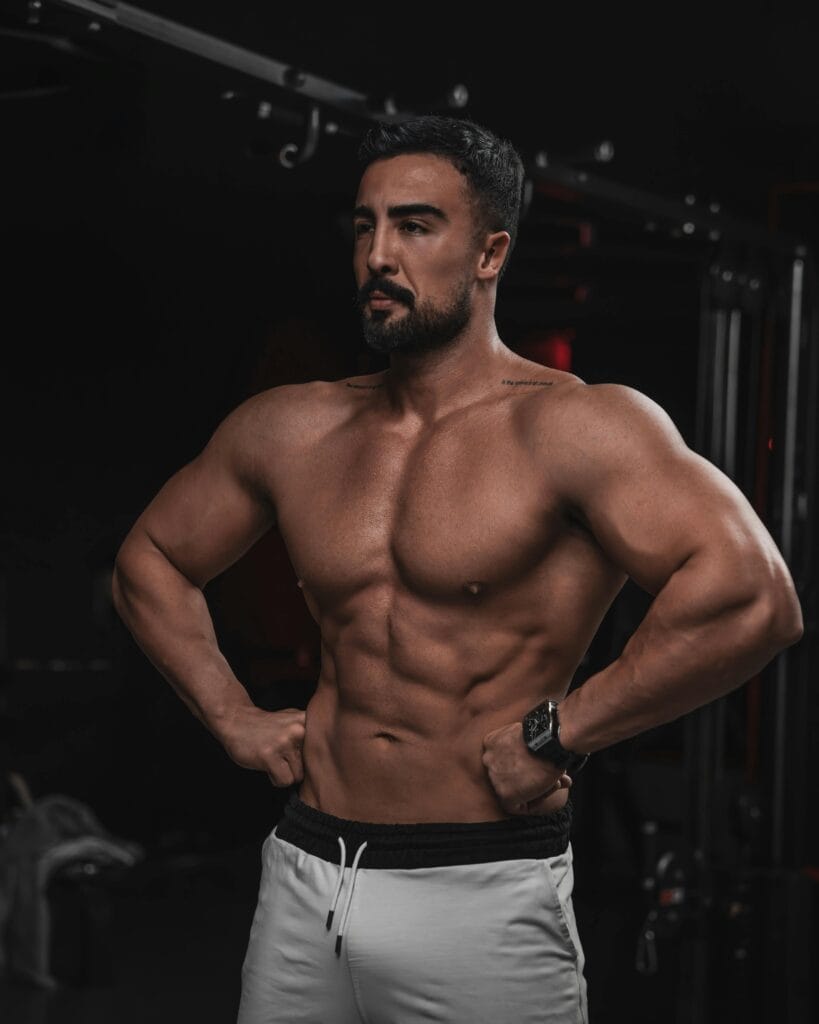
If you spend any time in a commercial gym on a Monday, you’ll see the same thing: every single flat bench press is occupied. Guys are grinding out rep after rep, hoping that the “king of exercises” will finally give them that thick, armor-plate look they’ve been chasing for years. Yet, for many, the results just don’t match the effort. Their shoulders are getting wider, their triceps are getting stronger, but their chest remains stubbornly flat.
The truth is that the flat barbell bench press is often a poor tool for targeted chest hypertrophy. Because of our biomechanics, the front deltoids and triceps frequently take over the movement, leaving the pectorals under-stimulated. If you want to build a fuller chest—specifically that elusive “upper shelf”—you need to stop thinking about moving weight from A to B and start thinking about mechanical tension and muscle fiber orientation.
The Anatomy of a “Full” Chest
To fill out your chest, you have to understand that the pectoralis major isn’t just one big slab of muscle. It is divided into two main heads: the clavicular head (upper chest) and the sternocostal head (middle and lower chest).
Most lifters have a well-developed lower chest but lack the upper “shelf” that creates a powerful, athletic silhouette. This is why our 4-week plan prioritizes the clavicular head. When the upper chest is thick, it fills in the hollow space beneath your collarbone, making your entire torso look significantly more massive.
| Muscle Part | Visual Impact | Key Movement Angle |
| Upper Chest | Fills the space under the collarbone. | 30 to 45-degree incline. |
| Mid Chest | Creates thickness and “pop.” | Flat or slight incline. |
| Lower Chest | Defines the “underline” of the pec. | Declines or dips. |
| Serratus | Adds “finger-like” detail to the ribs. | Overhead reaching/pressing. |
Why the “Mind-Muscle” Connection Matters
Before we dive into the moves, we have to talk about the “Pec Squeeze.” Because the chest is a “pushing” muscle, it is very easy to let the arms do the work. To unleash growth in four weeks, you must master the Adduction of the humerus. Your pecs’ primary job is to bring your upper arm across your body.
If you are just pushing the bar up, you are missing half the movement. Think about trying to touch your elbows together at the top of every rep. This mental cue shifts the load from the triceps to the chest’s muscle fibers.
5 Workouts for a Fuller Chest
Move 1: The 30-Degree Incline Dumbbell Press
If you could only do one move for a better chest, this is it. Most people set their incline bench to 45 degrees or higher. At that angle, the front deltoids (shoulders) take over about 60% of the work. By dropping the bench to a slight 30-degree incline, you perfectly align the resistance with the fibers of the upper chest.
Using dumbbells instead of a barbell allows for a deeper stretch at the bottom and a better squeeze at the top. Since dumbbells aren’t connected by a solid bar, your hands can move closer together at the peak of the movement, maximizing that adduction we talked about.
Training Tip: Keep your shoulder blades tucked back and down. If your shoulders “roll” forward at the top, you’ve lost the tension on the chest.
Move 2: Low-to-High Cable Flyes
Cable flyes are superior to dumbbell flyes for one simple reason: constant tension. When you use dumbbells for flyes, there is zero tension at the top of the move because gravity is pulling the weight straight down through your joints. With cables, the resistance pulls outward, forcing the pecs to work through every inch of the rep.
By setting the cables at the bottom and pulling upward and inward, you target the “inner” and upper portions of the pec. This is the move that creates the “line” down the middle of the chest.
Training Tip: Don’t think about “clapping” your hands together. Think about scooping your elbows toward your chin.
Move 3: Weighted Dips (Leaning Forward)
Dips are often called the “squat of the upper body.” They are an incredible mass builder, but most people do them with an upright torso, which targets the triceps. To turn the dip into a chest-sculpting powerhouse, you must lean your chest forward at a 45-degree angle and tuck your chin.
This position puts a massive stretch on the pectorals. Because you can typically move more weight on dips than on flyes, this is your primary tool for heavy mechanical tension.
Move 4: The “Svend” Press (The Isometric Killer)
This is a move most people ignore, but trainers swear by it for finishing a workout. You take two small plates (or one dumbbell) and press them together between your palms as hard as you can. Extend your arms out in front of you while maintaining that inward pressure.
This is a pure “squeeze” movement. It doesn’t look impressive, but the isometric contraction it creates will flood the chest with blood, triggering a massive pump and encouraging nutrient delivery to the muscle cells.
Move 5: Deficit Push-Ups
To finish the chest off, we go back to basics—with a twist. By placing your hands on blocks, handles, or weight plates, you create a “deficit.” This allows your chest to drop below the level of your hands, providing a deep stretch that a standard push-up can’t match.
Research shows that the “stretch-mediated hypertrophy” caused by this extra range of motion is a major driver of muscle growth. Doing these at the end of your workout, when the muscles are already fatigued, will recruit every last remaining muscle fiber.
The 4-Week Progression Strategy
You cannot just do these moves and expect magic; you need a progression. Muscle growth (hypertrophy) requires you to do more over time.
- Week 1: Focus on form and the “mind-muscle” connection. Find weights that challenge you in the 8-12 rep range.
- Week 2: Increase the weight slightly on your compound moves (Incline Press and Dips).
- Week 3: Increase the “Time Under Tension.” Take 3 full seconds to lower the weight on every rep.
- Week 4: High-intensity finishers. Add “drop sets” to your cable flyes and Svend presses to completely exhaust the tissue.
Nutrition for Chest Growth
You can’t build a house without bricks. To see a noticeable difference in four weeks, you must be in a slight caloric surplus and prioritize protein. Your chest muscles are large, and they require significant energy to repair and grow after a heavy session.
Aim for 1 gram of protein per pound of body weight. Additionally, ensure you are consuming enough carbohydrates around your workout window. Carbohydrates spike insulin, which is an anabolic hormone that helps “drive” those amino acids into the chest muscles you just worked.
Related Articles
- Crunches Hurt Your Back? 5 Gentle Bed Exercises That Flatten Your Belly After 60
- One Simple Exercise That Eases Knee Arthritis Pain Better Than Rest, Backed by Science
- No Time? 10 Genius Ways to Squeeze Workouts Into Your Busy Day
- Unwrap The Holiday Gift of Strength: How Training Adds Years to Your Life
- Doctors Said He’d Never Be Strong Again at 65—This Navy SEAL Proved Them Wrong with 5 Simple Exercises