FREE SHIPPING OVER $50

The Supplement Killer: I Ditched Protein Shakes for This Ancient Grain — My Muscles Have Never Looked Better

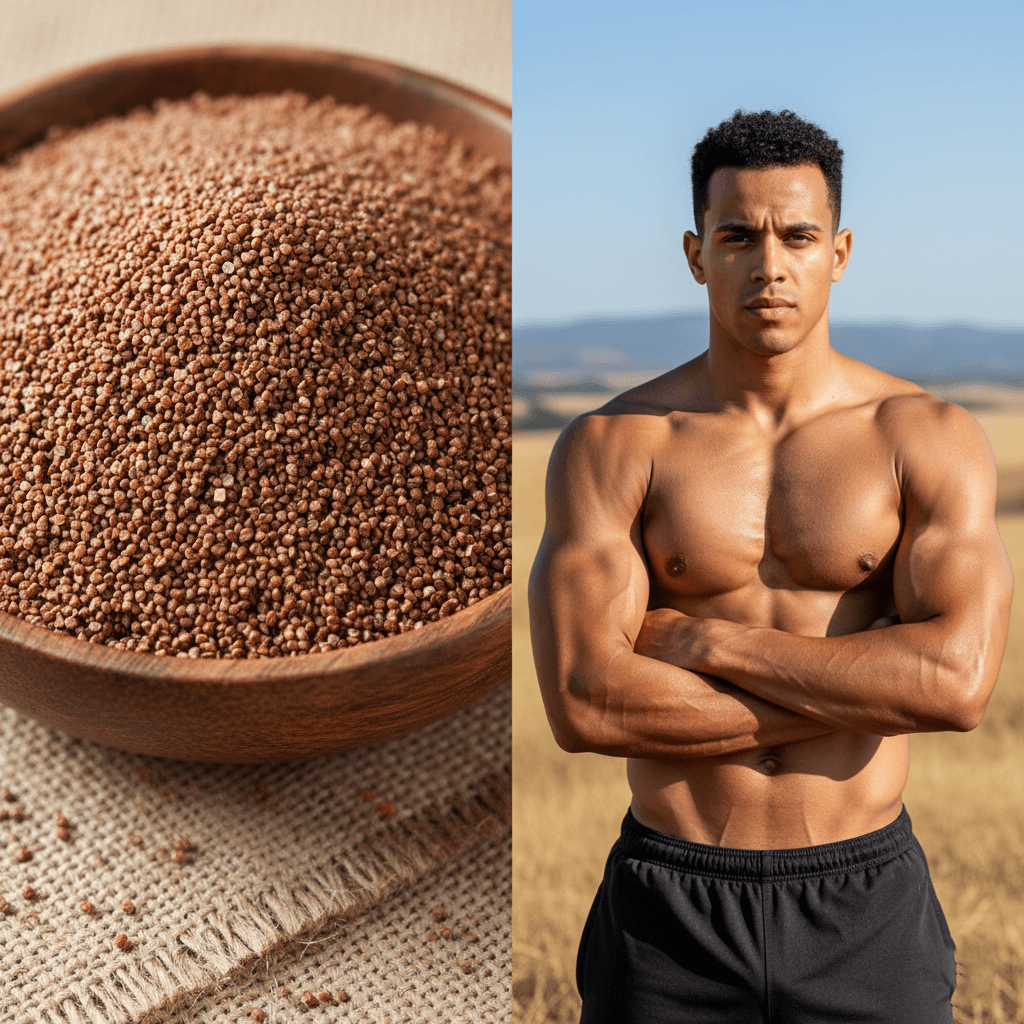
For years, I followed the “bro-science” blueprint religiously: if I wasn’t chugging a chalky, strawberry-flavored whey isolate within thirty minutes of my last set, I assumed my workout was a total waste. Like many fitness enthusiasts, I struggled with the bloating, the synthetic sweeteners, and the expensive monthly subscriptions that come with the “supplement lifestyle.” Everything changed when I discovered a tiny, 6,000-year-old ancient grain from Ethiopia that packs a nutritional punch most modern “superfoods” can’t touch. By swapping my processed shakes for this mineral-dense powerhouse, I didn’t just fix my digestion; I actually saw a noticeable increase in my lean muscle density and recovery speed.
The Biological Blueprint of the “Anabolic Grain”
Teff is often called the “miracle grain” for a reason. While most grains are high in carbohydrates and low in functional protein, Teff is a nutritional anomaly. It is one of the few plant-based foods that is a complete protein, meaning it contains all nine essential amino acids that the human body cannot produce on its own. For anyone looking to build muscle, the most important of these is Lysine.
Lysine is the amino acid responsible for muscle repair, collagen formation, and calcium absorption. Most grains, like wheat or corn, are notoriously low in Lysine, which is why “plant-based” athletes often struggle to see the same hypertrophy as meat-eaters. Teff, however, contains a Lysine ratio that rivals animal products. When you eat Teff, you aren’t just getting “fuel”; you are getting the literal building blocks required to stitch muscle fibers back together after a heavy lifting session.
Why Iron is the Secret to “Natural” Muscle Gains
One of the most overlooked aspects of muscle growth is oxygen transport. You can eat all the protein in the world, but if your muscles aren’t receiving enough oxygen during your sets, you will hit a plateau. This is where Teff truly becomes a “supplement killer.” It is exceptionally high in Iron, specifically a type that the body absorbs more efficiently than the iron found in many other vegetables.
Iron is the core component of hemoglobin, which carries oxygen to your working muscles. High iron levels mean better endurance, more explosive power, and a significantly higher “pump” during your workouts. By switching to Teff, I inadvertently corrected a mild iron deficiency that was holding back my strength gains. Suddenly, my “recovery days” felt shorter, and I had the aerobic capacity to push through those grueling fourth and fifth sets where the real muscle growth happens.
The Post-Workout Paradox: Whole Foods vs. Shakes
The supplement industry has spent billions of dollars convincing us that we need “fast-acting” protein immediately after a workout. However, recent sports nutrition research suggests that the “anabolic window” is much wider than we thought. More importantly, your body is designed to process whole food matrices, not isolated powders stripped of their fiber and enzymes.
When you drink a whey shake, your insulin spikes and then crashes. When you eat Teff, the protein is wrapped in Resistant Starch, a type of fiber that ferments slowly in the gut. This provides a steady, timed-release stream of amino acids into your bloodstream. This sustained delivery prevents muscle breakdown (catabolism) over several hours, which is far more beneficial for long-term growth than a thirty-minute spike of synthetic protein.
Nutritional Showdown: Teff vs. Whey Protein
| Feature | Teff (1 Cup Cooked) | Standard Whey Shake |
| Protein Source | Whole Grain (Complete) | Dairy Isolate (Processed) |
| Digestion Speed | Sustained / Slow Release | Rapid Spike |
| Micronutrients | Iron, Calcium, Magnesium, B6 | Usually Negligible |
| Gut Impact | Prebiotic (Feeding Good Bacteria) | Often causes bloating/gas |
| Cost Per Serving | Approx. $0.65 | Approx. $1.50 – $2.50 |
Fixing the Bloat and Improving Vascularity
One of the most immediate changes I noticed after ditching shakes for Teff was the change in my midsection. Many protein powders contain sugar alcohols (like erythritol) or thickeners (like xanthan gum) that cause systemic inflammation and water retention. This creates a “puffy” look that hides muscle definition.
Teff is naturally gluten-free and extremely easy on the digestive tract. Because it acts as a prebiotic, it feeds the beneficial bacteria in your microbiome. A healthy gut leads to lower systemic inflammation, which results in tighter skin and better vascularity. My muscles didn’t just feel stronger; they looked “harder” and more defined because I wasn’t carrying five pounds of digestive water weight.
The Mineral Powerhouse: Magnesium and Manganese
Muscle contraction and relaxation depend entirely on minerals. Teff contains high levels of Magnesium and Manganese, two minerals that most athletes are chronically deficient in. Magnesium is responsible for over 300 biochemical reactions in the body, including protein synthesis and nerve function.
If you’ve ever dealt with muscle cramps or “twitching” after a heavy leg day, your magnesium levels are likely low. Manganese, on the other hand, is crucial for bone health and the metabolism of carbohydrates and proteins. By getting these minerals from a whole-food source like Teff, you ensure that your nervous system is firing at 100% capacity. This “neurological efficiency” allows you to recruit more muscle fibers during a lift, which leads to faster hypertrophy.
How to Integrate Teff Into Your Muscle-Building Diet
If you’ve never cooked with Teff, it can be a bit intimidating. The grains are roughly the size of a poppy seed, meaning they cook much faster than rice or quinoa. The flavor is slightly nutty and earthy—think of it as a cross between farro and a mild hazelnut.
- The Morning Muscle Bowl: Instead of oatmeal, boil Teff in a 3:1 ratio of water or nut milk. Top it with blueberries, walnuts, and a drizzle of honey. This provides a slow-burn fuel source that lasts until your midday workout.
- The Post-Workout “Teff-oto”: Use Teff exactly like you would use arborio rice to make a risotto. Stir in some sautéed spinach, mushrooms, and a lean protein like ground turkey or salmon.
- Teff Flour Pancakes: You can swap your “protein pancake” mix for Teff flour. It has a natural elasticity that makes it perfect for baking without needing gluten-based binders.
The Sustainability Factor: Better for You, Better for the Planet
Beyond the “gains,” there is something to be said for the ethics of your fuel. Most protein powders are byproducts of the industrial dairy complex, which is incredibly resource-intensive. Teff is a “C4 plant,” meaning it is exceptionally efficient at using water and can grow in harsh conditions where other crops fail.
When I ditched the plastic tubs for bags of ancient grain, I felt a psychological shift. I was no longer a “consumer” of fitness products; I was a student of ancestral nutrition. There is a specific kind of mental clarity that comes from eating food that hasn’t been through a chemical refinery. This mental “sharpness” translates to better focus in the gym, allowing for a stronger mind-muscle connection during every rep.
Related Articles
- Stop Shin Splints Now: Simple Fixes Every Runner Needs
- How to Warm Up Before a Walking Workout: The Expert 3-Move Routine That Prevents Pain
- I Tried 5 Stretches Recommended by Yoga Teachers, PTs and Trainers — These Actually Fixed My Pain
- The V-Taper Illusion: 6 Moves That Sculpt a Narrow Waist and Broad Shoulders Fast
- Flabby Arms?: The 4 “Anti-Gravity” Moves That Tighten Bat Wings Faster After 45