FREE SHIPPING OVER $50

The Creatine Washout: Exactly How Many Days It Takes to Leave Your Muscles (and What Happens to Your Gains)

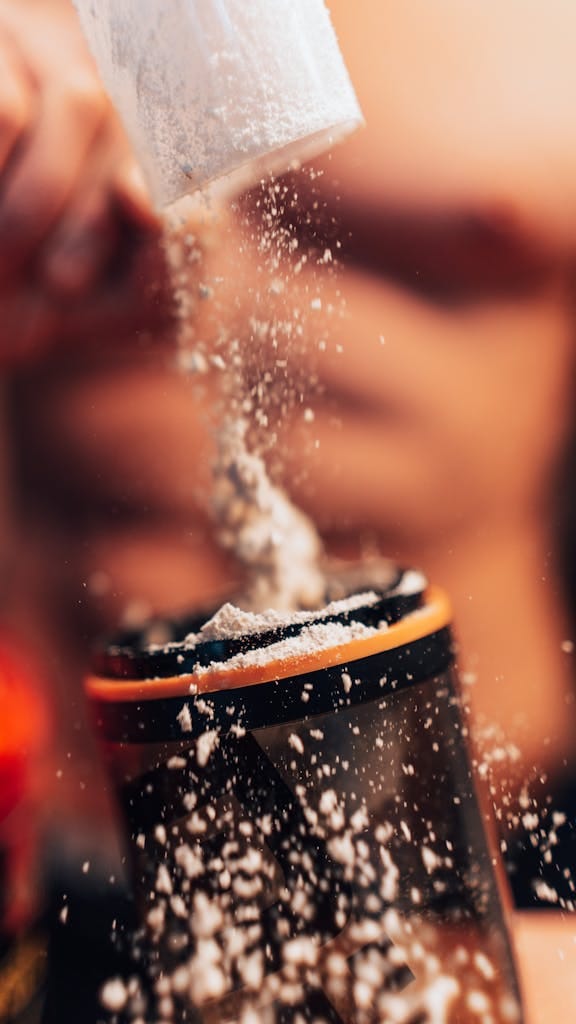
If you have ever missed a week of your supplement routine or decided to take a “break” from your daily five grams of creatine monohydrate, you have likely felt that creeping sense of anxiety while looking in the gym mirror. You wonder if your muscles are shrinking in real-time or if your bench press strength is about to plummet because your “saturation” levels are dropping. The good news is that creatine doesn’t just vanish the moment you stop scooping it; instead, your body undergoes a very predictable biological “washout” period. Understanding this timeline is the key to managing your physique expectations and, more importantly, ensuring you don’t panic when the scale suddenly drops by three pounds.
The Saturation Secret: How Your Muscles Store Creatine
To understand how creatine leaves your system, you first have to understand how it gets in there. Your body naturally produces about one to two grams of creatine per day, mostly in the liver and kidneys, and you get a bit more from red meat and fish. However, when you supplement, you are aiming for “super-saturation.” This means you are filling your muscle cells to their absolute brim with phosphocreatine.
This storage process is slow, which is why most people either do a “loading phase” or take it consistently for 30 days to feel the effects. Because the storage is deep within the intracellular fluid of the muscle tissue, it doesn’t just “drain” overnight. Your muscles hold onto those stores like a sponge holds onto water. Even after you stop supplementation, your body continues its natural production, which acts as a “floor” that prevents your levels from ever hitting zero.
The Washout Timeline: A Week-by-Week Breakdown
The “Washout Period” is the time it takes for your muscle creatine levels to return to their baseline (pre-supplement) state. For most healthy adults, this process takes anywhere from four to six weeks. It is not an instantaneous drop-off, but rather a gradual decline as your body uses up the stored phosphocreatine for energy during daily activities and workouts.
The Creatine Exit Strategy Table
| Time Since Last Dose | Saturation Level | Physical Effect | Strength Impact |
| 24-48 Hours | 95-100% | No visible change | No change |
| 1 Week | 80-85% | Slight drop in “pump” intensity | Minimal to none |
| 2 Weeks | 60-70% | Water weight begins to drop | Slight endurance dip |
| 4 Weeks | 30-40% | Muscles look “flatter” | Noticeable drop in 5-rep max |
| 6 Weeks | Baseline | Full washout complete | Strength plateaus at natural levels |
What Happens to Your Gains? (The Truth About “Muscle Loss”)
The biggest fear lifters have during a washout is losing muscle mass. Let’s set the record straight: You do not lose muscle fiber when you stop taking creatine. Creatine is an osmotic substance, meaning it pulls water into the muscle cell. When you stop taking it, that intracellular water eventually leaves.
You might look slightly smaller or “flatter” in the mirror, but this is a loss of water volume, not contractile protein. The actual muscle tissue you built while on creatine remains. However, because your muscles have less “instant” ATP energy (fuel) available for high-intensity bursts, you might find that you can only get 8 reps on a weight you used to hit for 10. Over time, this decrease in training volume could lead to slower gains, but the muscle you have already earned is yours to keep.
Managing the “Water Weight” Drop
When you stop creatine, the scale is going to move. For a lot of people, this is actually a relief. If you felt “bloated” or “soft” while on a heavy loading phase, the washout period is when you will see your true definition return.
Typically, you can expect to lose between two and five pounds of water weight within the first 14 days of stopping. This isn’t fat loss, and it isn’t muscle loss; it is simply your body re-balancing its fluid levels. Transitioning through this phase requires you to stay hydrated. Even though you are losing the “creatine water,” your muscles still need hydration to function and recover. Don’t make the mistake of cutting back on water just because the scale is dropping.
Why Take a Break at All?
While there is no scientific evidence suggesting that you need to cycle off creatine for health reasons, many people choose to do so. Some lifters find that “resetting” their system helps them regain a sense of focus, while others do it to shed water weight for a vacation or a photo shoot.
Furthermore, some athletes use the washout period to test their “true” strength levels without the help of ergogenic aids. This can be a great psychological tool to prove to yourself that your gains were the result of your hard work in the gym, not just a white powder in your shaker bottle. If you do choose to cycle off, just be prepared for that slight dip in anaerobic capacity around the three-week mark.
How to Maintain Performance During the Washout
If you are stopping creatine but want to keep your strength from dipping too low, you have to compensate in other areas of your recovery. Without the extra phosphocreatine “buffer,” your rest intervals between sets become more important than ever.
- Increase Rest Time: Give yourself an extra 30-60 seconds between heavy sets to allow for natural ATP resynthesis.
- Prioritize Carbohydrates: Since your “extra” energy source is gone, your body will rely more heavily on glycogen. Don’t go low-carb during a creatine washout.
- Focus on Technique: As your “explosive” power dips slightly, use this time to focus on perfect form and mind-muscle connection.
- Supplement with Beta-Alanine: While it works differently than creatine, beta-alanine can help buffer lactic acid, helping you maintain some of that endurance you might otherwise lose.
Will You Feel “Different” During the Washout?
Physically, the changes are subtle. You won’t feel a “crash” like you might when coming off caffeine. Most people simply report feeling a bit less “full” in their muscles and noticing that the final two reps of a heavy set feel significantly harder.
However, some users report a slight change in cognitive clarity. Since creatine also plays a role in brain energy metabolism, some people feel a bit more “mental fatigue” during the washout period. This is another reason why staying on top of your sleep and general nutrition is vital when you decide to take a break from the supplement.
Related Articles
- Is Your Collagen Aging You? 5 Hidden Risks Your Favorite Brand Won’t Mention
- Still Tired After Taking Vitamin D? 15 Dietitian-Approved Foods That Finally Make It Work
- Take This Daily? New Evidence Shows Multivitamins May Cut High Blood Pressure Risk as You Age
- Stop Wasting Money: The Only 5 Longevity Supplements a Harvard MD Actually Recommends
- Can Creatine and Protein Help Seniors Who Don’t Work Out? The Answer Might Surprise You