FREE SHIPPING OVER $50

The 5 Exercises People With Desk Jobs Should Be Doing Daily

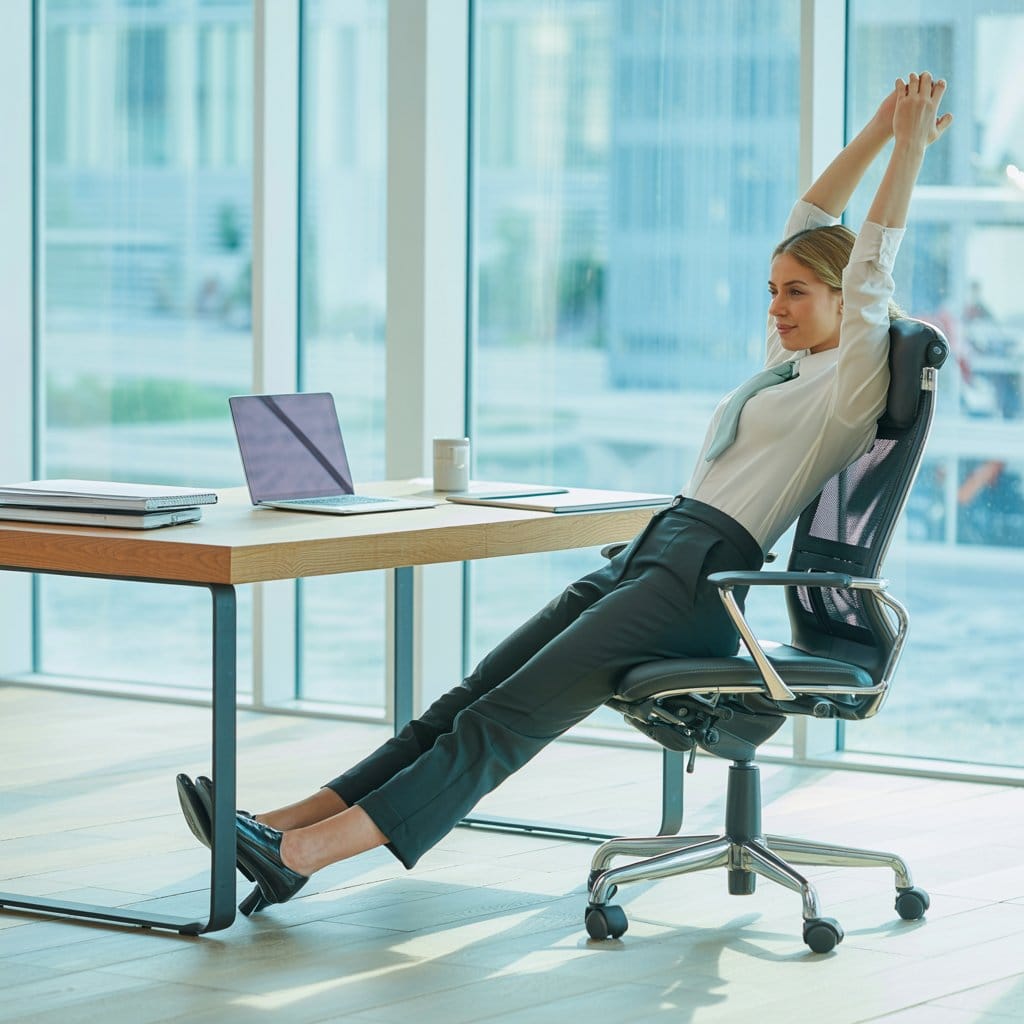
The modern office chair is a masterpiece of design, yet it remains a major threat to your physical longevity. If you spend eight hours a day behind a screen, your body is likely paying a “silent tax” in the form of tight hip flexors, a rounded upper back, and a core that has essentially gone to sleep. This isn’t just about feeling stiff; it is a biological shift where your anatomy physically molds itself into the shape of your chair, leading to chronic inflammation and premature spinal aging.
The good news is that you can reverse this damage without a marathon gym session. Your body just needs specific “reboot” signals to switch your muscles back on and neutralize the effects of a sedentary lifestyle. By performing five targeted movements every day, you can open up the areas the desk job closes and strengthen the muscles the chair weakens. If you want to protect your joints and keep your 9-to-5 from destroying your posture, these are the five non-negotiable moves you need to start today.
The Anatomy of “Sitting Disease”
Before we jump into the routine, we have to understand the mechanics of sitting. When seated, your hip flexors stay in a constantly shortened state, pulling your pelvis into an “anterior tilt” that crushes your lower back. Simultaneously, your glutes become inhibited—a phenomenon often called “Dead Butt Syndrome.”
Up top, the situation is equally taxing. Your chest muscles tighten as your shoulders roll forward to reach for the keyboard, and your neck protrudes to see the monitor. This creates “Upper Crossed Syndrome,” the primary driver of tension headaches and neck pain. These exercises are designed to hit “reset” on these specific anatomical glitches.
| Problem Area | Desk Job Effect | Corrective Exercise Focus |
| Hips | Tight / Shortened | Active Stretching / Opening |
| Glutes | Inactive / “Asleep” | Resistance Activation |
| Upper Back | Rounded / Weak | Scapular Retraction |
| Core | Disengaged | Isometric Stability |
| Neck | Forward Lean | Alignment Correction |
5 Daily Exercises For People With Desk Jobs
1. The World’s Greatest Stretch (The Total Body Opener)
If you only have time for one move, this is it. It targets nearly every major muscle group affected by sitting, breaking the spinal rigidity caused by staring at a screen for hours.
How to do it:
- Start in a high plank position.
- Step your right foot forward to the outside of your right hand.
- Take your right elbow and try to touch the inside of your right ankle.
- Reach that same right hand up toward the ceiling, following it with your eyes to rotate your spine.
- Switch sides and repeat for 5 reps per side.
2. The Glute Bridge (Ending “Dead Butt Syndrome”)
Your glutes stop firing when they are compressed against a chair all day. When they “switch off,” your lower back takes over the workload, leading to chronic lumbar pain. The glute bridge re-establishes the connection between your brain and your largest muscle group.
How to do it:
- Lie on your back with knees bent and feet flat on the floor.
- Squeeze your glutes hard and lift your hips until your body forms a straight line from shoulders to knees.
- Hold for 2 seconds at the top, focusing on the contraction.
- Lower slowly and repeat for 15 to 20 reps.
3. Wall Slides (The Posture Reset)
Wall slides are the ultimate “anti-hunch” move. They target the small, weak muscles in your upper back that allow your shoulders to roll forward. This move forces your alignment back into an upright, healthy position.
How to do it:
- Stand with your back, butt, and head against a wall.
- Bring your arms up into a “goalpost” position, with elbows and hands touching the wall.
- Slowly slide your arms up as high as possible without losing contact with the wall.
- Slide back down and repeat for 10 controlled reps.
4. The Couch Stretch (The Hip Flexor Antidote)
This is the most necessary stretch for anyone who sits. It targets the hip flexors and quads, allowing your pelvis to return to a neutral position and instantly relieving lower back tension.
How to do it:
- Stand in a lunge position with your back toward a couch or wall.
- Place your back knee on the floor and rest your back foot up on the couch.
- Squeeze the glute of your back leg and bring your torso upright.
- Hold for 60 seconds per side.
5. Bird-Dog (Core and Spinal Stability)
Sitting causes the stabilizing muscles around your spine to become “mushy.” The Bird-Dog builds “anti-rotation” stability, teaching your core to protect your spine while your limbs are moving.
How to do it:
- Get on all fours with a flat back.
- Simultaneously reach your right arm forward and your left leg back.
- Keep your hips level and do not let your back arch.
- Hold for 3 seconds, then switch sides. Perform 10 reps per side.
The “4-Minute Reset” Strategy
You don’t have to do these all at once. Science suggests that “movement snacks”—short bursts of activity spread throughout the day—are more effective for metabolic health than one single workout.
Try the 90-Minute Rule: Set a timer for 90 minutes. Every time it goes off, perform just one of these exercises. By the end of your shift, you will have completed the entire routine without ever having to “find time” to exercise. This keeps your blood flowing and prevents your muscles from reaching a “stiff-as-a-board” state.
Related Articles
- Your Hip Flexors Are Weak, Not Tight: The 3 Exercises That Actually Fixed My Back Pain
- The V-Taper Illusion: 6 Moves That Sculpt a Narrow Waist and Broad Shoulders Fast
- Flabby Arms?: The 4 “Anti-Gravity” Moves That Tighten Bat Wings Faster After 45
- 92% of New Year Workouts Fail by February: The ‘Identity Shift’ Secret to Beating the Odds
- The 5 Secret Exercises A-List Celebrities Swear By to Stay Muscular at Any Age