FREE SHIPPING OVER $50
Stop the Muscle Loss: 10 Secret Gentle, Low-Impact Moves to Rebuild Strength After 60

For many of us, the word “exercise” conjures up images of intense boot camps, heavy barbells, and sore joints. However, after the age of 60, the goal of fitness shifts from aesthetic bodybuilding to something much more critical: functional independence. The medical term for age-related muscle decline is sarcopenia, a process where muscle fibers shrink and are replaced by fat. Muscle loss directly impacts your balance, your metabolism, and your ability to perform daily tasks like carrying groceries or getting out of a chair.
The good news is that you don’t need a gym membership or heavy weights to reverse this process. In fact, high-impact training can often lead to injury in mature bodies, setting your progress back months. The real secret to rebuilding strength after 60 lies in slow-tempo, low-impact movements. These “secret” moves focus on time-under-tension, which signals your body to repair and grow muscle tissue without stressing your ligaments or tendons.
The Science of Sarcopenia and Muscle Recovery
Sarcopenia typically accelerates after age 60, with the body losing roughly 3% to 8% of its muscle mass per decade. This decline is largely driven by a decrease in “Type II” fast-twitch muscle fibers, which are responsible for power and balance. When these fibers disappear, your risk of falls increases significantly. Fortunately, muscle tissue remains “plastic” throughout your entire life, meaning it is never too late to stimulate growth.
To fight this, we use the principle of Isometric and Eccentric loading. By moving slowly, you bypass the momentum that usually takes over during exercise. This forces the muscle to work harder through the entire range of motion. Furthermore, low-impact movements reduce the production of cortisol, a stress hormone that can actually break down muscle tissue if levels stay too high for too long.
Heavy Weights vs. Low-Impact Tempo Training for Muscle Maintenance
| Feature | Traditional Weightlifting | Low-Impact Tempo Training |
| Joint Impact | High (Risk of inflammation) | Very Low (Protects cartilage) |
| Primary Goal | Peak Power / Mass | Functional Strength / Balance |
| Recovery Time | 48 to 72 Hours | 24 Hours |
| Equipment | Full Gym Required | Bodyweight or Household Items |
| Nervous System | High Stress | Calming / Parasympathetic |
10 Gentle Exercises That Prevent Muscle Loss
1. The Slow-Motion Chair Squat (Sit-to-Stand)
The ability to get up from a seated position is the ultimate indicator of longevity. Instead of dropping into your favorite chair, use it as a strength-building tool. This move targets the quadriceps, glutes, and core.
How to do it:
Stand in front of a sturdy chair. Slowly lower your hips toward the seat to a count of five seconds. Just as your tailbone brushes the seat (don’t sit down!), press through your heels to stand back up to a count of three. Repeat this 10 times to build powerful legs that support your joints.
2. Wall Push-Ups with a 3-Second Pause
Standard floor push-ups can be brutal on the wrists and shoulders. Wall push-ups provide the same chest and tricep benefits with a fraction of the strain. Adding a pause at the bottom of the movement builds “static strength,” which is vital for pushing open heavy doors or lifting objects.
How to do it:
Stand an arm’s length from a wall. Place your hands flat against it at shoulder height. Slowly lean in until your nose nearly touches the wall. Hold this position for 3 seconds, then slowly push back. Focus on keeping your body in a straight line from head to heels.
3. The “Bird-Dog” for Core Stability
A strong core isn’t about six-pack abs; it’s about protecting your spine. The Bird-Dog exercise improves coordination and strengthens the “erector spinae” muscles that keep you upright.
How to do it:
Get on your hands and knees on a soft surface. Simultaneously reach your right arm forward and your left leg back. Hold for 5 seconds while keeping your hips level. Lower them slowly and switch sides. This “cross-body” movement forces the brain and muscles to communicate, which is a key factor in preventing falls.
4. Standing Heel-to-Toe Raises
Calf strength is often overlooked, but it is the primary engine for walking. Strong calves act as shock absorbers for your knees.
How to do it:
Hold onto a counter for balance. Rise up onto your tiptoes slowly, hold for two seconds, and lower back down even slower. Then, lift your toes off the floor so you are balancing on your heels. This “rocking” motion strengthens both the front and back of the lower leg.
5. Single-Leg Stance (The Balance Builder)
Balance is a “use it or lose it” skill. By standing on one leg, you engage the tiny stabilizer muscles in your ankles and hips that rarely get used during normal walking.
How to do it:
Stand near a wall or chair for safety. Lift one foot just an inch off the ground and hold for 30 seconds. If you feel steady, try to close one eye. This forces your inner ear and muscles to work harder to keep you upright. Switch legs and repeat.
6. The “Dead Bug” (Back-Safe Abs)
Traditional crunches can strain the neck and compress the lower back. The Dead Bug allows you to strengthen your deep abdominal wall while your spine stays safely supported by the floor.+1
How to do it:
Lie on your back with arms reaching toward the ceiling and knees bent at 90 degrees (legs in the air). Slowly lower your right arm and left leg toward the floor simultaneously. Stop before your back arches, then bring them back to center. Repeat with the opposite limbs.
7. Doorway Chest Stretch and Row
Posture tends to slump forward with age as chest muscles tighten and back muscles weaken. This move solves both problems at once.
How to do it:
Stand in a doorway and place your forearms on the frame. Lean forward gently to stretch the chest. Then, step back and go through the motion of a “row,” squeezing your shoulder blades together as if you are trying to hold a pencil between them. This “opens” the ribcage and improves breathing capacity.
8. Glute Bridges for Hip Power
Weak glutes are a leading cause of lower back pain. Glute bridges wake up the largest muscle group in your body without requiring you to stand up or balance.
How to do it:
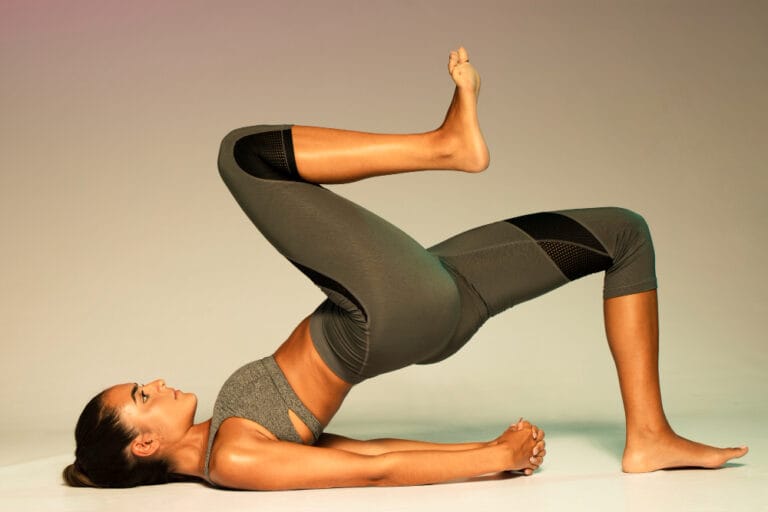
Lie on your back with knees bent and feet flat on the floor. Slowly lift your hips toward the ceiling until your body forms a straight line from knees to shoulders. Squeeze your glutes at the top for 3 seconds, then lower down one vertebra at a time.
9. Wall Slides for Shoulder Mobility
Shoulder stiffness can make reaching for a high shelf painful. Wall slides improve the “sliding” mechanism of the shoulder blades.
How to do it:
Stand with your back against a wall. Press your elbows and the backs of your hands against the wall. Slowly slide your arms up as high as you can without your hands leaving the wall, then slide them back down. This “W” to “Y” movement keeps the shoulder joints lubricated.
10. The Seated Leg Extension
You can do this move while watching the news. It specifically strengthens the “VMO” (the teardrop-shaped muscle above the knee), which is the primary stabilizer of the kneecap.
How to do it:
Sit tall in a chair with your feet flat. Straighten one leg out in front of you until it is perfectly straight. Flex your toes toward your shin and squeeze your thigh muscle for 5 seconds. Lower it slowly. Repeat 12 times per leg.
Tips for Staying Consistent After 60
Rebuilding strength is a marathon, not a sprint. To see the best results from these gentle moves, keep these three principles in mind:
- The “Slow” Rule: If you think you are moving slowly, move even slower. The magic happens during the “negative” (lowering) phase of the exercise.
- Hydration and Protein: Muscle repair requires building blocks. Ensure you are getting at least 25-30 grams of protein with your meals to support the new tissue you are stimulating.
- Listen to Your Joints: “Good” pain is a dull ache in the muscle. “Bad” pain is a sharp or stabbing sensation in a joint. If a move hurts your joints, reduce the range of motion.
Related Articles
- 10 Exercises That Could Be Dangerous After 60—Most People Still Do #7
- Can’t Sit Cross-Legged? Try These Trainer-Approved Standing Hip Stretches
- Transform Your Body After 50: Top Exercise Habits Revealed
- Defy Age: 13 Surprising Tips Making 60-Year-Olds Stronger Than Millennials
- Transform Your Body After 50: 10 Exercise Habits You Need to Know