FREE SHIPPING OVER $50

One Simple Exercise That Eases Knee Arthritis Pain Better Than Rest, Backed by Science

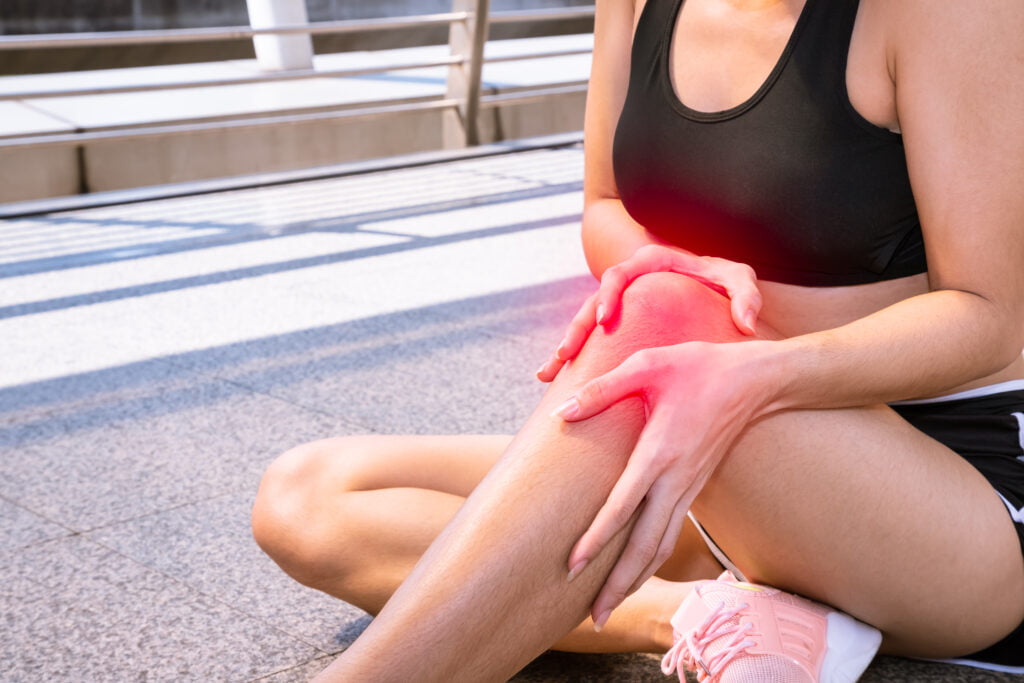
If you have ever felt that sharp, bone-on-bone ache while climbing stairs or getting out of a chair, your first instinct was probably to sit back down. For years, the standard medical advice for knee arthritis was to “take it easy” and avoid any movement that caused discomfort. We were told that our joints have a finite number of miles on them, and exercise would only speed up the “wear and tear” of our cartilage. However, modern sports science has completely flipped this script, proving that inactivity is actually the greatest enemy of an arthritic joint. When we stop moving, our supporting muscles weaken, our joints stiffen, and the very pain we are trying to avoid becomes a permanent resident.
While resting might provide temporary relief from acute inflammation, it leads to muscle atrophy in the quadriceps—the primary shock absorbers for your knees. Without strong muscles to offload the pressure, your joint takes a beating every time you take a step. The secret to long-term relief isn’t sitting on the couch; it is a specific, low-impact move that acts like “grease” for your joints. By utilizing the right movement, you can actually stimulate the production of healing fluids and strengthen the “internal brace” of your knee without the high-impact stress of traditional cardio.
The “Movement is Medicine” Breakthrough
To understand why exercise beats rest, we have to look at how a joint actually stays healthy. Unlike your skin or muscles, joint cartilage does not have a direct blood supply. It relies on a process called “diffusion” to get nutrients and get rid of waste. This only happens when the joint is loaded and unloaded—sort of like squeezing a sponge. When you move, you circulate synovial fluid, which is the “oil” that keeps your joints gliding smoothly.
When you rest for too long, that fluid becomes thick and stagnant. Consequently, your knee feels stiff and “crunchy” when you finally try to stand up. A recent study found that patients who engaged in targeted, low-impact strengthening exercises reported significantly lower pain levels than those who followed a “rest and ice” protocol. The goal isn’t just to burn calories; it is to use mechanotransduction, a process where your cells turn mechanical pressure into healing signals.
The Star Move: The Terminal Knee Extension (TKE)
If there is one exercise that has become the “gold standard” for knee arthritis relief, it is the Terminal Knee Extension, or TKE. Unlike squats or lunges, which can sometimes be too painful for those with severe arthritis, the TKE is a “closed-chain” movement that targets the Vastus Medialis Obliquus (VMO)—the teardrop-shaped muscle just above your kneecap.
This specific muscle is responsible for stabilizing the kneecap and ensuring it “tracks” correctly in its groove. When the VMO is weak, the kneecap wanders, causing the grinding sensation known as crepitus. The TKE allows you to strengthen this muscle without placing any “shearing force” on the joint.
How to Perform the TKE
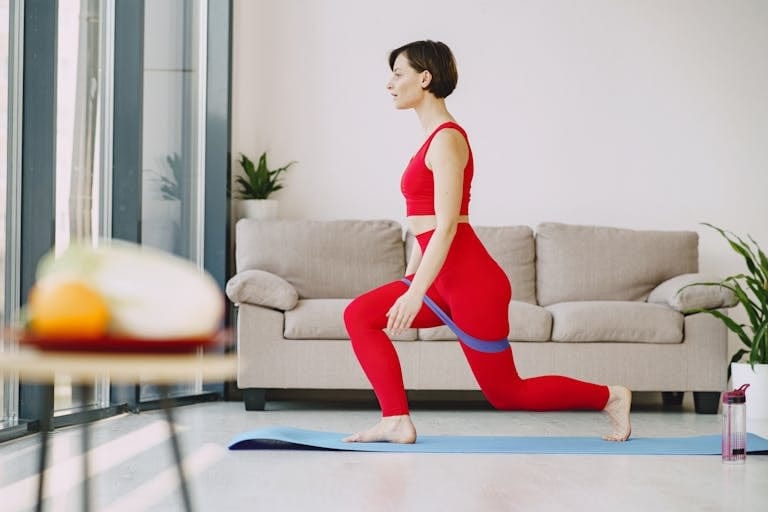
- The Setup: Loop a resistance band around a sturdy pole or table leg at knee height. Step inside the loop with your “bad” knee, facing the anchor point.
- The Position: Place the band just behind the back of your knee (the popliteal crease). Step back until the band is taut. Your working leg should be slightly bent at the knee, with your toes firmly on the ground.
- The Move: Slowly straighten your leg by pushing your knee back against the resistance of the band. Focus on squeezing your quad muscle at the very top of the movement.
- The Hold: Squeeze for two seconds, then slowly return to the starting bent-knee position.
- The Reps: Perform 3 sets of 15 reps on each leg.
Because this move is done standing and doesn’t require you to lower your body weight, it is incredibly gentle on the actual bone-on-bone areas. Most people feel an immediate “lightness” in their gait after just one session.
Why the TKE Beats Traditional Rest
Many people assume that if their knee hurts, they should avoid all resistance. However, the TKE provides a “therapeutic load.” By forcing the quad to fire at the very end of its range of motion, you are teaching the nervous system that it is safe to fully extend the leg. This is crucial because many arthritis sufferers develop a “limp” or a slightly bent-knee walk to avoid pain, which actually puts more stress on the hip and lower back.
Exercise Comparison: Pain Management Efficiency
| Method | Impact Level | Primary Benefit | Risk of “Flare-Up” |
| Complete Rest | Zero | Temporary inflammation dip | High (due to stiffness) |
| TKE (Terminal Knee Extension) | Very Low | Targeted VMO strength | Extremely Low |
| Walking / Treadmill | Moderate | Cardiovascular health | Moderate (repetitive stress) |
| Leg Press Machine | High | Overall leg power | High (easy to over-load) |
The Supporting Actor: Isometric Quad Sets
While the TKE is the “Knee-Grease” move, it works even better when paired with Isometrics. An isometric exercise is one where the muscle is working, but the joint isn’t moving. For someone with “bone-on-bone” arthritis, this is a game-changer because you can build strength without the friction of the bones rubbing together.
To do an isometric quad set, sit on the floor with your legs straight out in front of you. Place a rolled-up towel under your knee. Now, try to crush the towel into the floor by tightening your thigh muscle. Hold that contraction for 10 seconds, then relax. Research shows that isometrics have an analgesic (pain-killing) effect on the nervous system. Performing these for five minutes before you go for a walk can actually “numb” the joint pain, making your walk much more comfortable.
Transitioning from “Rest” to “Relief”
If you have been inactive for a while, jumping into a full workout can be intimidating. The key is to avoid the “Boom and Bust” cycle. This is where you feel good one day, do too much, and then spend three days on the couch recovering. Instead, focus on Progressive Overload.
Start with just the TKE and isometric sets for one week. Once your knees feel “greased” and the morning stiffness begins to dissipate, you can slowly add in low-impact activities like swimming or cycling. Surprisingly, cycling is often safer for arthritic knees than walking because the bike carries your body weight, allowing the knees to move through a full range of motion without the “pounding” of the pavement.
Common Mistakes to Avoid
Even with a “safe” exercise like the TKE, form matters. Many people make the mistake of using a band that is too heavy, which causes them to use their hips or lower back to “cheat” the movement. If you feel the work in your glutes or your back, the band is too tight. The focus should be entirely on the front of the thigh.
Another common error is rushing the “eccentric” or returning phase of the move. Your muscles actually grow and strengthen more during the return to the starting position than during the initial push. If you let the band “snap” your knee back into a bent position, you are missing out on 50% of the benefit. Control the band; don’t let the band control you.
Final Thoughts
The myth that knee arthritis requires total rest has been officially debunked by exercise science. While it might feel counterintuitive to move a joint that hurts, the Terminal Knee Extension (TKE) proves that targeted, low-impact movement is the fastest way to achieve pain relief and restore mobility. Remember, your joints are designed for motion; when you provide them with the right “grease,” they will reward you with years of pain-free activity. Ditch the “rest and ice” mentality and start using movement as medicine to take back your independence.
Related Articles
- No Time? 10 Genius Ways to Squeeze Workouts Into Your Busy Day
- Unwrap The Holiday Gift of Strength: How Training Adds Years to Your Life
- Doctors Said He’d Never Be Strong Again at 65—This Navy SEAL Proved Them Wrong with 5 Simple Exercises
- Longevity Experts Reveal: 10 Powerful Workouts That Stop Frailty and Keep You Agile for Life
- The HIIT Routine Seniors Swear By for Staying Strong, Lean, and Energized