FREE SHIPPING OVER $50

Neurologist Warning: 1 in 3 Adults are Starving Their Brains of the ONE Vitamin That Prevents Cognitive Decline

When we think about brain health and longevity, we usually imagine complex puzzles, learning a new language, or perhaps investing in high-end “smart drugs.” However, top neurologists are now sounding the alarm on a much simpler, more fundamental issue that is currently sabotaging the cognitive future of millions. According to recent data, roughly 1 in 3 adults in the United States are walking around in a state of “biological starvation,” deprived of a single, crucial vitamin that acts as the primary architect for neural protection. This isn’t just about feeling a little tired or having the occasional “senior moment”; it is about a systemic failure to provide the brain with the basic fuel it needs to prevent the physical shrinkage and plaque buildup associated with dementia and Alzheimer’s disease.
The warning is clear: if you are part of that 33%, your brain is effectively aging twice as fast as it should be. We often focus on what to add to our diets—more kale, more blueberries, more salmon—but we rarely talk about the foundational deficiency that makes all those other efforts less effective. If you want to keep your memory razor-sharp well into your 80s and 90s, you need to understand why you are likely starving your brain and, more importantly, how to fix it before the damage becomes irreversible.
The Neurological Master Key: Why Vitamin D is Not Actually a Vitamin
To understand the neurologist’s warning, we first have to clear up a major misconception. Vitamin D is technically a hormone, not a vitamin. While most vitamins act as cofactors for enzymes, Vitamin D acts as a master key that “unlocks” over 1,000 different genes throughout the body. Interestingly, the brain is packed with Vitamin D receptors, particularly in the hippocampus—the very area responsible for forming new memories and navigating your world.
The Brain’s Janitorial Service
One of the most critical roles Vitamin D plays in brain longevity is its ability to stimulate macrophages. These are essentially the “janitor cells” of the immune system. In a healthy brain, these cells seek out and destroy amyloid-beta plaques, the sticky proteins that clog up neural pathways and lead to Alzheimer’s. When your brain is starved of Vitamin D, these janitor cells go on strike. Consequently, the trash begins to pile up, leading to chronic inflammation and the eventual death of neurons.
Managing Neuroinflammation
Furthermore, Vitamin D is a potent anti-inflammatory agent. We now know that neuroinflammation is the primary driver of almost all neurodegenerative diseases. By keeping the brain’s immune response in check, Vitamin D prevents the “fire” of inflammation from burning through your delicate synaptic connections. Without it, your brain stays in a high-stress, high-inflammation state that makes cognitive decline almost an inevitability.
The “1 in 3” Crisis: Why We Are Starving Our Brains
You might be wondering how so many people could be starving of such a basic nutrient. The answer lies in our modern lifestyle, which has fundamentally detached us from our natural biological rhythms.
- The Indoor Epidemic: Humans evolved to produce Vitamin D through direct skin exposure to UVB rays. Today, we spend upwards of 90% of our time indoors. Even when we are outside, we are often covered in sunscreen, which effectively blocks Vitamin D production by up to 95%.
- The Aging Factor: As we get older, our skin becomes significantly less efficient at converting sunlight into Vitamin D. A 70-year-old produces about 75% less of the “sunshine vitamin” than a 20-year-old, even with the same amount of sun exposure.
- Geography and Pigment: If you live north of the “sun line” (roughly the latitude of Los Angeles or Atlanta), the sun’s rays are too weak for several months of the year to trigger any Vitamin D production at all. Additionally, individuals with more melanin in their skin require significantly more sun exposure to reach healthy levels, making them even more susceptible to the 1 in 3 deficiency statistic.
The Link to Dementia: What the Science Says
The neurologist’s concern isn’t just theoretical. A study found that those who took Vitamin D supplements had a 40% lower incidence of dementia compared to those who didn’t.
Preventing Brain Shrinkage
Another disturbing finding in brain health research is the correlation between low Vitamin D levels and brain atrophy. MRI scans show that individuals with chronic deficiencies have smaller brain volumes, particularly in the gray matter. This shrinkage is a direct precursor to memory loss and impaired executive function. By maintaining optimal levels, you are essentially providing the “structural support” needed to keep your brain physically intact as you age.
Mood and Cognitive Speed
Beyond the long-term risk of Alzheimer’s, this “brain starvation” shows up in the short term as brain fog, depression, and slow processing speed. Because Vitamin D regulates the enzymes that produce neurotransmitters like dopamine and serotonin, a deficiency can make you feel mentally sluggish and emotionally drained. Fixing the deficiency often feels like “turning the lights back on” in your mind.
How to Stop the Starvation: The Longevity Protocol
So, how do you ensure you aren’t the 1 in 3 adults starving their brains? It’s not as simple as just “getting more sun,” especially if you want to reach the levels required for neural protection.
Step 1: Get the Right Test
Don’t guess; test. Ask your doctor for a 25-hydroxy vitamin D test. Most standard labs consider a level of 30 ng/mL to be “sufficient,” but longevity experts and neurologists argue that for optimal brain health, you should aim for a range between 50 and 80 ng/mL. This higher range is where the strongest neuroprotective benefits are observed.
Step 2: Supplement with Synergy
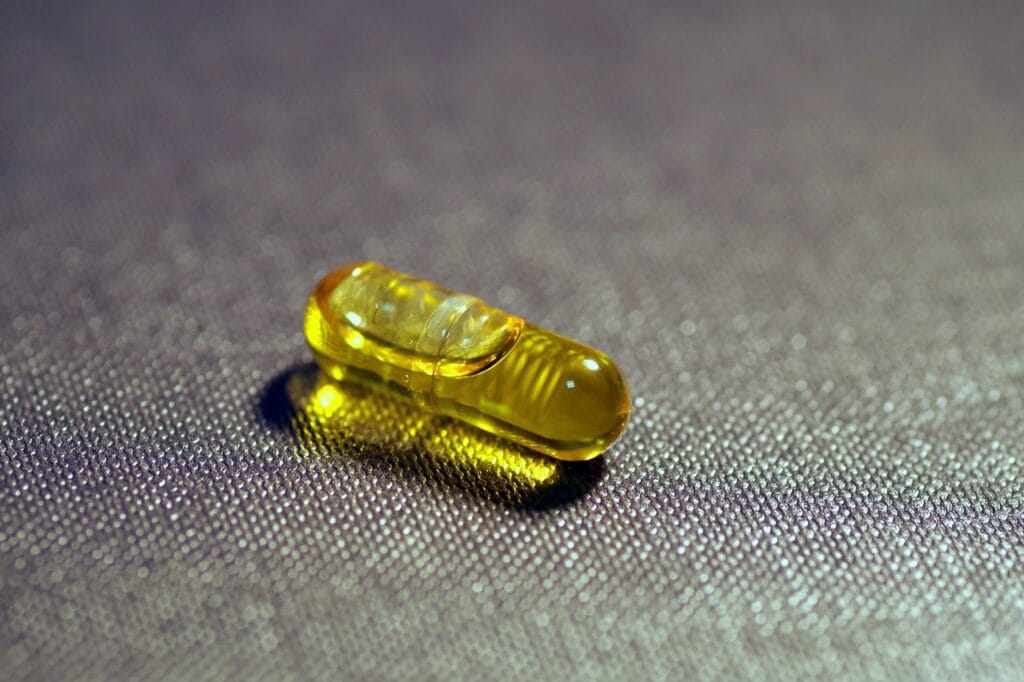
If you are deficient, you will likely need a supplement. However, taking Vitamin D in isolation can sometimes be counterproductive. To protect your longevity, you should look for a “Synergy Trio”:
- Vitamin D3: This is the most bioavailable form for humans.
- Vitamin K2: This is the “traffic cop” that ensures the calcium mobilized by Vitamin D goes into your bones and teeth, rather than your arteries or brain tissues.
- Magnesium: This is the “activator.” Your body cannot convert Vitamin D into its active form without adequate magnesium. Since most Americans are also low in magnesium, this is a critical piece of the puzzle.
Step 3: Dietary Backups
While it is nearly impossible to get enough Vitamin D from food alone to fix a major deficiency, you can support your levels with high-quality sources. Fatty fish like wild-caught salmon, mackerel, and sardines are excellent. Additionally, egg yolks from pasture-raised hens and certain mushrooms exposed to UV light can provide a small but helpful boost to your daily intake.
Conclusion
The warning serves as a vital wake-up call for anyone concerned about aging and brain health. Being the 1 in 3 adults starving their brains of Vitamin D is a high-stakes gamble that leads directly to inflammation, brain shrinkage, and a significantly higher risk of dementia. Fortunately, this is one of the most correctable health issues we face. By testing your levels, prioritizing targeted supplementation with K2 and magnesium, and reclaiming your connection to natural light, you can effectively “restart” your brain’s protective systems. Longevity isn’t always about the newest, most expensive technology; sometimes, it’s about providing your brain with the foundational nutrients it has been craving for decades. Don’t let your brain starve—fuel it for the long haul.
Related Articles
- Neurologist Reveals: The 3 Simple ‘Brain-Flex’ Routines That Erase Loneliness and Boost Cognitive Health After 60
- The Hidden Cause of Weak Knees After 50—And the Natural Fix Doctors Want You to Know
- The #1 Exercise Strategy for Managing PCOS—And Why Most Women Do It Wrong
- Struggling With Balance? This 1 Daily Habit Could Keep You Steady for Life
- Fix Your Posture at Home With These 5 Back Moves—No Equipment Needed