FREE SHIPPING OVER $50

Muscle Loss Isn’t Inevitable: The 9 “Non-Negotiable” Exercises for Longevity After 50

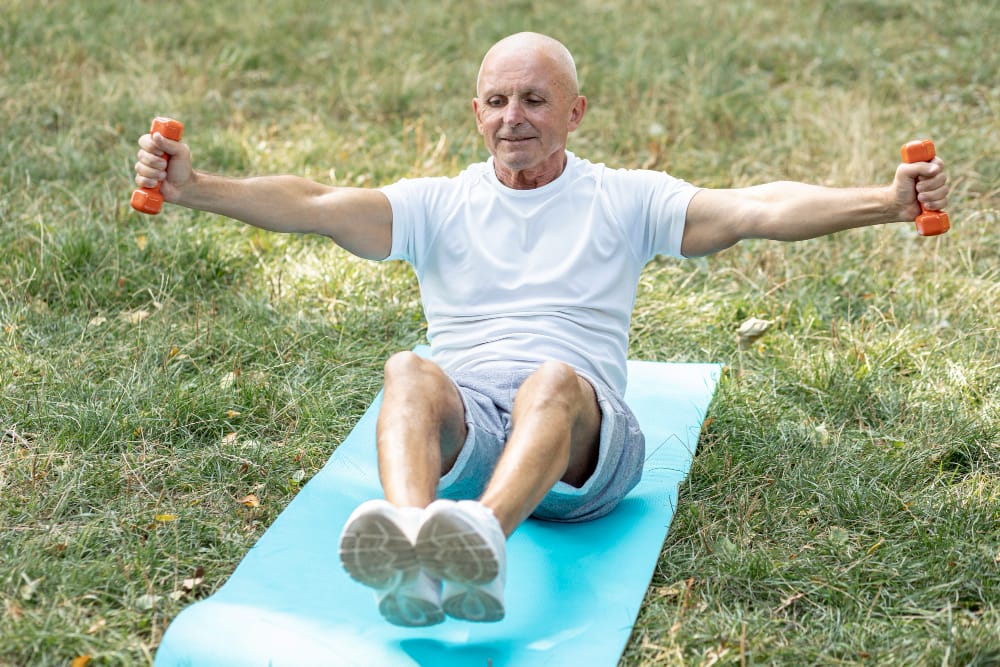
There is a common myth floating around gyms and doctor’s offices that once you hit 50, your body enters a state of permanent decline. We are told to “take it easy,” stick to the elliptical, and accept that our muscles will naturally fade away into retirement. This phenomenon, known as sarcopenia, is real—but it is not an absolute destiny.
In fact, the latest research in exercise science shows that men in their 50s, 60s, and beyond are capable of building significant lean muscle mass. The secret isn’t training harder like you did in your 20s; it’s training smarter. By focusing on “functional longevity,” you can build a body that doesn’t just look good in a t-shirt but actually performs better in real-world scenarios.
Why the “Old School” Bodybuilding Approach Fails After 50
Many men over 50 fall into the trap of trying to follow the same routines they used in college. They head straight for the heavy bench press or the leg extension machine. The problem is that as we age, our recovery capacity changes. Our tendons and ligaments become less elastic, and our recovery “window” narrows.
Standard bodybuilding isolation moves often put unnecessary shearing force on the joints without providing the systemic “hormonal spark” needed to fight aging. Compound exercises, on the other hand, trigger a larger release of growth hormone and testosterone. They teach your muscles to work in unison, which is the definition of functional strength.
The Big 3 Benefits of Training for Longevity
| Benefit | How It Works | Real-World Result |
| Metabolic Health | Muscle is active tissue that burns glucose. | Easier weight management and lower A1c. |
| Bone Density | Resistance training signals bones to mineralize. | Reduced risk of fractures and osteoporosis. |
| Balance & Stability | Strength training improves proprioception. | Fewer falls and better athletic performance. |
The 9 Non-Negotiable Exercises
These moves are selected to cover every major movement pattern: squat, hinge, push, pull, and carry. Incorporating these into your weekly routine will ensure no “weak links” develop in your physical armor.
1. The Trap Bar Deadlift
The traditional barbell deadlift is the “king” of exercises, but it can be brutal on a 50-year-old lower back. The Trap Bar (or Hex Bar) allows you to stand inside the center of gravity. This shifts the load away from your lumbar spine and onto your glutes and hamstrings. It builds massive posterior chain strength with significantly less risk.
2. Goblet Squats
Heavy back squats often lead to compressed spines and sore knees. The Goblet Squat—holding a weight at your chest—forces you to stay upright. This naturally improves your squat depth while engaging your core. It is the perfect move for maintaining the mobility you need to get in and out of chairs (and cars) with ease.
3. Half-Kneeling Overhead Press
Shoulder health is often a major concern after 50. Pressing heavy weights while standing can lead to “cheating” by arching the back. By dropping to one knee (the half-kneeling position), you lock your pelvis in place. This protects your lower back and forces your shoulders and core to do the work properly.
4. The Farmer’s Carry
If you could only do one exercise for the rest of your life, this should be it. Pick up two heavy dumbbells and walk for 40 yards. This builds incredible “grip strength,” which is one of the single best predictors of longevity in men. It also “bulletproofs” your shoulders and improves your postural stability.
5. Weighted Step-Ups
Balance becomes a “use it or lose it” skill as we age. Step-ups are a unilateral (one-legged) move that forces each leg to carry its own weight. This eliminates muscle imbalances and strengthens the stabilizing muscles around the knee, which is essential for hiking, climbing stairs, or playing sports.
6. Suspended Rows (TRX or Rings)
Pulling movements are the antidote to the “hunchback” posture that comes from years of desk work. Using suspension straps allows you to adjust the resistance by simply moving your feet. It builds a thick, strong back and improves your shoulder blade mechanics without the strain of heavy barbell rows.
7. The Bird-Dog
Core training after 50 shouldn’t be about six-pack crunches. It should be about spinal stability. The Bird-Dog involves being on all fours and extending the opposite arm and leg. It teaches your core to resist rotation and protects your spine from the “tweaks” that often happen when reaching for something in daily life.
8. Push-Ups (With Perfect Form)
The bench press is great, but the push-up is a more functional “pushing” pattern. It allows your shoulder blades to move freely, which is much healthier for the rotator cuff. If standard push-ups are too difficult, perform them with your hands on a bench rather than dropping to your knees to maintain core tension.
9. Glute Bridges
As we sit more, our glutes tend to “turn off,” leading to lower back pain. Glute bridges are a non-negotiable for “re-awakening” the largest muscle group in your body. Strong glutes act as a shield for your lower back and provide the power you need for walking and running.
Programming for the 50+ Athlete
You don’t need to live in the gym to see results. In fact, overtraining is the fastest way to get sidelined. For men over 50, a 3-day-a-week full-body routine is often the sweet spot. This allows for 48 hours of recovery between sessions, which is when the actual muscle growth happens.
Consistency is more important than intensity. Instead of trying to hit a “Personal Record” every day, focus on Progressive Overload. This means adding just one pound or one extra rep each week. These small “micro-gains” lead to massive changes in body composition over six to twelve months.
Nutrition: The Raw Materials for Muscle
You cannot build muscle out of thin air. As we age, our bodies become less efficient at processing protein—a condition called “anabolic resistance.” This means you actually need more protein than a younger man to get the same muscle-building signal.
Aim for roughly 0.8 to 1 gram of protein per pound of body weight. If you weigh 200 pounds, you should be targeting 160 to 200 grams of protein daily. Focus on high-quality sources like lean beef, chicken, eggs, and Greek yogurt. Pairing your “non-negotiable” exercises with high protein intake is the only way to truly defeat sarcopenia.
Related Articles
- The V-Taper Illusion: 6 Moves That Sculpt a Narrow Waist and Broad Shoulders Fast
- Flabby Arms?: The 4 “Anti-Gravity” Moves That Tighten Bat Wings Faster After 45
- 92% of New Year Workouts Fail by February: The ‘Identity Shift’ Secret to Beating the Odds
- The 5 Secret Exercises A-List Celebrities Swear By to Stay Muscular at Any Age
- Stop Wasting Hours: Scientists Say This 20-Minute Window Is the ONLY Time You Need to Build Muscle