FREE SHIPPING OVER $50
Move Like You’re 40 Again: The 5 Forgotten Movements That Rebuild Strength After 60

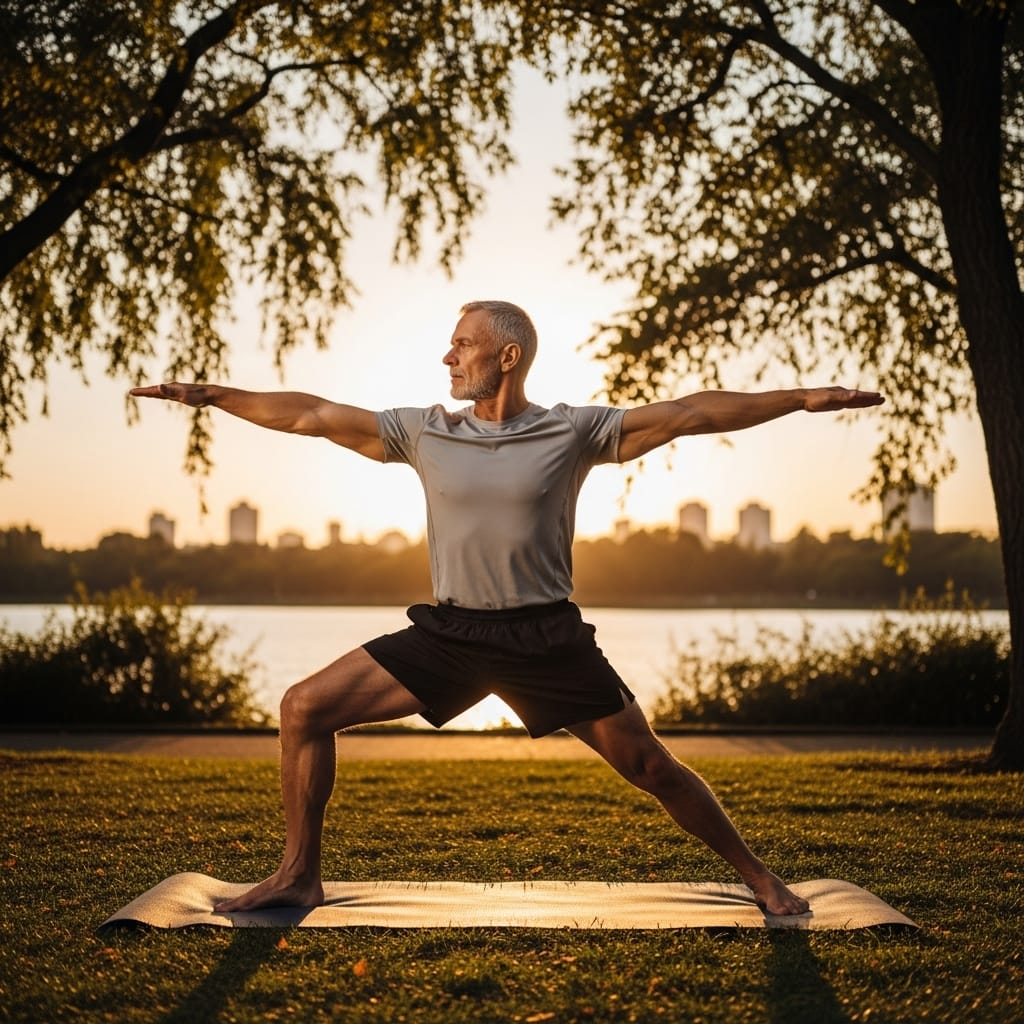
As we age in a modern, Western environment, our “movement vocabulary” shrinks. We stop sitting on the floor, we stop reaching overhead, and we stop carrying heavy things unevenly. This lack of variety leads to “biological rust.” Our joints stiffen, our muscles forget how to stabilize, and our balance begins to waver.
However, there is a subset of 60, 70, and even 80-year-olds who seem to have found a fountain of youth. They aren’t necessarily gym rats; they are people who have maintained “forgotten” movements. These are patterns that our ancestors performed daily but have been stripped away by chairs, elevators, and convenience. By reintegrating these five specific movements, you can effectively “reset” your physical age and rebuild the kind of resilient strength that makes you feel 40 again.
The Science of “Movement Amnesia”
The human body operates on a strict “use it or lose it” policy. This is particularly true for the proprioceptive system—the internal GPS that tells your brain where your limbs are in space. When we stop performing complex movements, the neural pathways to those muscles begin to prune away. This is called movement amnesia.
When you lose these connections, your brain perceives movement as “dangerous,” which results in the stiffness and hesitation we associate with aging. To reverse this, we don’t need more “exercise” in the traditional sense; we need to reintroduce the signals that tell our nervous system we are still capable, agile, and strong.
Forgotten Movements That Rebuild Strength After 60
1. The Floor-to-Standing Transition (The Ground Reset)
In the US, we live our lives at chair height. We sit in cars, at desks, on couches, and on toilets. Consequently, many people over 60 haven’t sat on the floor in years. This is a massive mistake for longevity. The ability to get up and down from the ground is one of the most accurate predictors of all-cause mortality.
When you sit on the floor, you are forced to use your hips, core, and ankles in ways that a chair never requires. By practicing “Floor-to-Standing” transitions, you build functional leg strength and extreme hip mobility. This isn’t just a workout; it is a vital life skill that prevents the “shuffle” walk often seen in seniors.
The Action: Every day, spend 5 minutes on the floor while watching TV. Try to get up and down using as little assistance from your hands as possible.
2. The Passive Hang (The Shoulder Decompressor)
Our ancestors spent a significant amount of time reaching, climbing, and hanging. Today, the furthest we reach is for the top shelf in the pantry. This lack of overhead tension causes the “collapsing” posture—rounded shoulders and a forward-leaning head.
A passive hang involves simply grabbing a pull-up bar or a sturdy tree branch and letting your weight hang. This does three miraculous things: it decompresses the spine, it stretches the tight fascia in the chest, and it strengthens your grip—another massive indicator of a long life.
| Benefit | How it Works | Result |
| Spinal Decompression | Gravity pulls the vertebrae apart. | Reduced back pain and increased height. |
| Grip Strength | Forearms must support body weight. | Lower risk of cardiovascular disease. |
| Shoulder Mobility | Opens the subacromial space. | Fixes the “hunched” senior posture. |
3. The Unilateral Carry (The Core Stabilizer)
Most people train their core with crunches or planks, but the core’s real job is to stabilize the spine while the limbs are moving. The “Unilateral Carry”—carrying a heavy weight in only one hand—is the ultimate real-world core workout.
When you carry a heavy suitcase or a bag of mulch on one side, your obliques and deep spinal stabilizers on the opposite side have to fire like crazy to keep you from tipping over. This builds “anti-fragile” strength. It protects your back during sudden movements and improves your gait, making your walk feel more powerful and purposeful.
4. The Deep Squat (The “Natural” Rest)
In many parts of the world, people don’t use chairs; they squat to rest, eat, and socialize. This “resting squat” keeps the ankles, knees, and hips incredibly mobile. In the US, our ankles have become “frozen” from years of wearing shoes with elevated heels and sitting in chairs.
If you can’t squat deeply with your heels on the ground, your body has to compensate by bending at the lower back. This is why so many seniors throw their backs out doing simple tasks like picking up a newspaper. Reclaiming the deep squat restores the “shock absorbers” in your lower body.
5. Contralateral Crawling (The Brain-Body Bridge)
Crawling isn’t just for babies. It is a fundamental human movement that requires “cross-lateral” coordination—using the opposite arm and leg simultaneously. This movement bridges the left and right hemispheres of the brain.
As we age, our coordination often declines before our strength does. Crawling forces the nervous system to “re-wire” and improves balance. It also strengthens the wrists, shoulders, and hips in a weight-bearing environment without the high impact of jumping or running.
Why These Moves Rebuild Strength Faster Than the Gym
Traditional gym machines isolate muscles. They take the “balance” out of the equation to make the exercise safer. While this is great for bodybuilders, it is terrible for longevity. You don’t need “isolated” quads; you need a body that knows how to move through space as a single, unified unit.
Transitioning to these “forgotten” movements creates Systemic Strength. Because these moves are complex, they trigger a higher release of growth hormone and testosterone compared to sitting on a leg extension machine. They also build “movement confidence”—the psychological feeling that your body is capable and “unbreakable.”
Creating a “Longevity Habit”
You don’t need a gym membership to implement these. In fact, these moves are best done in the “cracks” of your daily life. This is the “Movement Snack” approach.
- Morning: 1 minute of passive hanging while the coffee brews.
- Afternoon: 5 floor-to-standing transitions after lunch.
- Evening: Spend 5 minutes in a deep squat (hold onto a doorframe if needed) while reading.
By weaving these into your day, you avoid the “sedentary-plus-workout” trap, where you sit for 23 hours and exercise for one. Your body responds much better to frequent, low-intensity signals of competence.
Related Articles
- The “2 AM Warning” for Seniors: If You Feel This in Your Jaw or Shoulder, Don’t Go Back to Sleep
- The “Brain Expiration Date”: Why You Reach Your Mental Peak Much Earlier Than You Think
- Neurologist’s Discovery: The $0 ‘Cellular Reset’ That Makes 60-Year-Olds Age Slower Than Everyone Else
- Figs: The Anti-Aging Superfood With 15 Benefits Doctors Say You’re Missing
- The 7-Minute Morning Routine That Makes 55 Look Like 35 (Dermatologists Tried to Keep It Quiet)