FREE SHIPPING OVER $50
Most Exercise Advice for People Over 70 Was Written for a Younger Body — Here’s What Actually Works for Yours

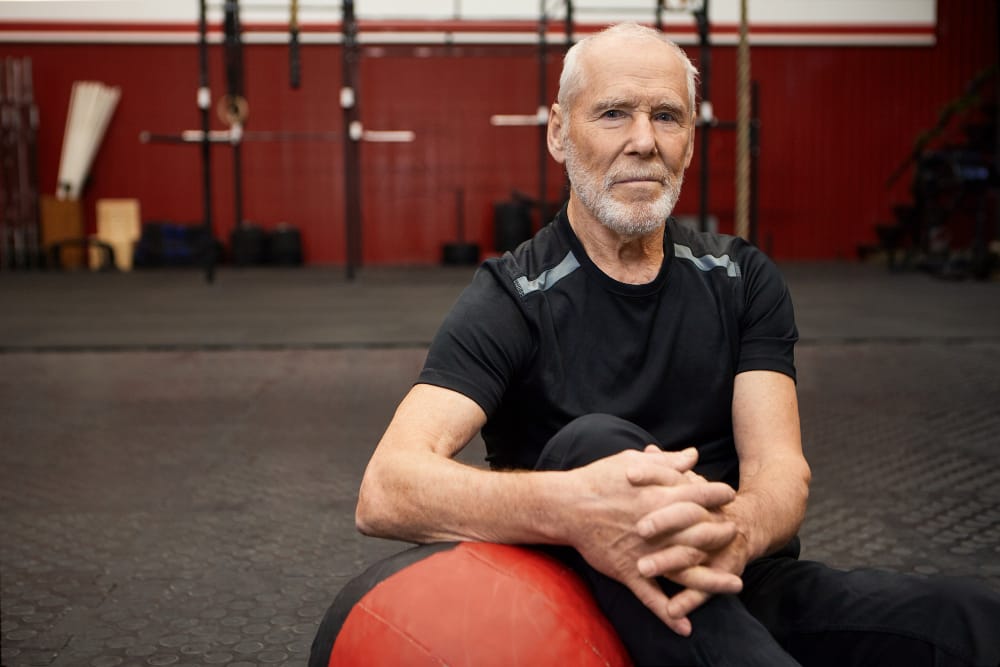
If you have ever felt like the fitness world is trying to “coddle” you with suggestions for gentle walks and light stretching, you are not alone—and you are likely being underserved. Most exercise advice targeting the seventy-plus demographic is watered-down versions of routines designed for people in their thirties, focusing on “not getting hurt” rather than “getting stronger.” The reality is that after seventy, your body faces a specific biological crossroads where “gentle” is no longer enough to stop the accelerated loss of muscle mass and bone density. To stay truly independent, focus on a strategy that prioritizes high-impact functional resistance and neuromuscular power. Move away from a “maintenance” mindset and toward a “resilience” protocol that respects your current physiology while demanding the growth you need to keep moving, lifting, and living without limitations.
The “Fragility Trap”: Why “Taking It Easy” Is Bad Advice
For decades, the standard medical advice for seniors has been to “avoid overexertion.” While well-intentioned, this advice has inadvertently led many into what longevity experts call the “Fragility Trap.” When you stop challenging your muscles with significant resistance, your body decides that maintaining expensive muscle tissue is no longer a priority. This leads to Sarcopenia, the age-related loss of skeletal muscle mass.
By the time you reach seventy, your muscle fibers—particularly the fast-twitch fibers responsible for balance and “saving” yourself from a fall—are at risk of atrophy. Walking is wonderful for your heart, but it does almost nothing to stop this muscle wasting. To fight back, you must engage in movements that force your nervous system to “recruit” those sleeping muscle fibers. This requires a shift from steady-state cardio to high-tension, functional movements that mimic real-life challenges.
Sarcopenia vs. Dynapenia: The Power Gap
Most people focus on the size of their muscles (Sarcopenia), but for those over seventy, the real enemy is Dynapenia, which is the loss of muscle power. Strength is the ability to move a heavy object; power is the ability to move it quickly. In the context of aging, power is what allows you to reach out and grab a railing if you trip on a curb.
Standard exercise plans for “younger bodies” focus on slow, controlled repetitions to build muscle size. However, a seventy-year-old body needs “Explosive Intent.” Even if you are moving a light weight, the act of trying to move it quickly trains the brain-to-muscle connection. This “Power Training” is the single most effective way to decrease fall risk and increase “Structural Independence.”
Biological Needs: Younger Body vs. 70+ Body
| Training Focus | 30-Year-Old Body | 70-Year-Old Body |
| Primary Goal | Hypertrophy (Muscle Size) | Functional Independence & Power |
| Recovery Time | 24–48 Hours | 48–72 Hours (Protein Dependent) |
| Bone Density | High Baseline | Critical Priority (Weight Bearing) |
| Joint Focus | Flexibility & Range | Stability & Integrity |
| Nervous System | High Coordination | Reactive Balance Training |
The “Big Three” Movements for Senior Resilience
You do not need a gym full of complicated machines to see results. In fact, machines are often less effective for seniors because they don’t challenge your balance or stabilizer muscles. Instead, focus on these three foundational movements that translate directly to a better quality of life.
1. The Box Squat (The Sit-to-Stand Master)
The ability to get out of a chair or off a toilet independently is the hallmark of senior mobility. Instead of traditional squats, use a box or a sturdy chair. Sit down slowly (the “eccentric” phase) and stand up as quickly and powerfully as you can. This protects the knees while building the “glute” and “quad” strength necessary for climbing stairs and walking hills.
2. The Farmer’s Carry (The Grip-to-Gait Link)
Grip strength is one of the most accurate predictors of longevity. Pick up a pair of moderately heavy weights (or even two gallons of water) and walk for 50 feet with your shoulders pulled back and your spine tall. This builds “core-to-extremity” stability and ensures that your gait remains steady even when you are carrying groceries or luggage.
3. The Dead Hang (Spinal Decompression)
Gravity compresses the spine more every year. Simply hanging from a pull-up bar (or holding onto the top of a door frame with your feet still on the floor) stretches the vertebrae and rehydrates the spinal discs. It also builds shoulder mobility, which is often the first thing seniors lose, leading to “hunched” posture.
Why Recovery Is Your New “Secret Weapon”
If you try to train like a thirty-year-old, you will likely end up with chronic inflammation or an overuse injury. Younger bodies have a high level of “Growth Hormone” that allows them to bounce back quickly. At seventy, your “Recovery Window” is much longer.
This doesn’t mean you should train less intensely; it means you should train less frequently. Instead of a daily “light” workout, aim for two or three “high-intensity” functional sessions per week, with full rest days in between. During these rest days, your body isn’t just sitting still; it is performing the hard work of synthesizing new muscle protein.
Protein: The Fuel for Your New Foundation
You can do all the squats in the world, but if you aren’t eating enough protein, your muscles will not grow. Seniors face a challenge called Anabolic Resistance, meaning the body becomes less efficient at turning dietary protein into muscle tissue.
To overcome this, you need to “bolus” your protein. Instead of a little protein at every meal, aim for at least 30 to 40 grams of high-quality protein (like eggs, Greek yogurt, or lean meats) in a single sitting, ideally after your workout. This triggers a “Leucine Threshold,” a chemical signal that tells your body to start the repair process. Without reaching this threshold, your exercise efforts are largely wasted.
The Role of Proprioception (Brain-Body Mapping)
Beyond muscle and bone, the 70+ body needs “Neurological Tuning.” Proprioception is your brain’s ability to know where your limbs are without looking at them. In younger bodies, this system is sharp and automatic. As we age, the “signal” can become fuzzy.
Incorporate “Balance Challenges” into your daily life. Stand on one leg while you brush your teeth. Walk heel-to-toe across the living room rug like you are on a tightrope. These small acts keep the “Vestibular System” (your internal level) calibrated, which is your best defense against the “shuffling gait” that leads to trips and stumbles.
Related Articles
- Stop Feeling “Rusty”: The 5-Minute Mobility Routine That Keeps Your Hips and Back Fluid After 50
- Scientists Just Identified the One Exercise That Protects Your Brain Better Than Swimming or Cycling — and Most People Are Already Ignoring It
- Stop Shin Splints Now: Simple Fixes Every Runner Needs
- How to Warm Up Before a Walking Workout: The Expert 3-Move Routine That Prevents Pain
- I Tried 5 Stretches Recommended by Yoga Teachers, PTs and Trainers — These Actually Fixed My Pain