FREE SHIPPING OVER $50

I Tried Powerlifting, Olympic Lifting, and Bodybuilding After 50 — This One Actually Worked

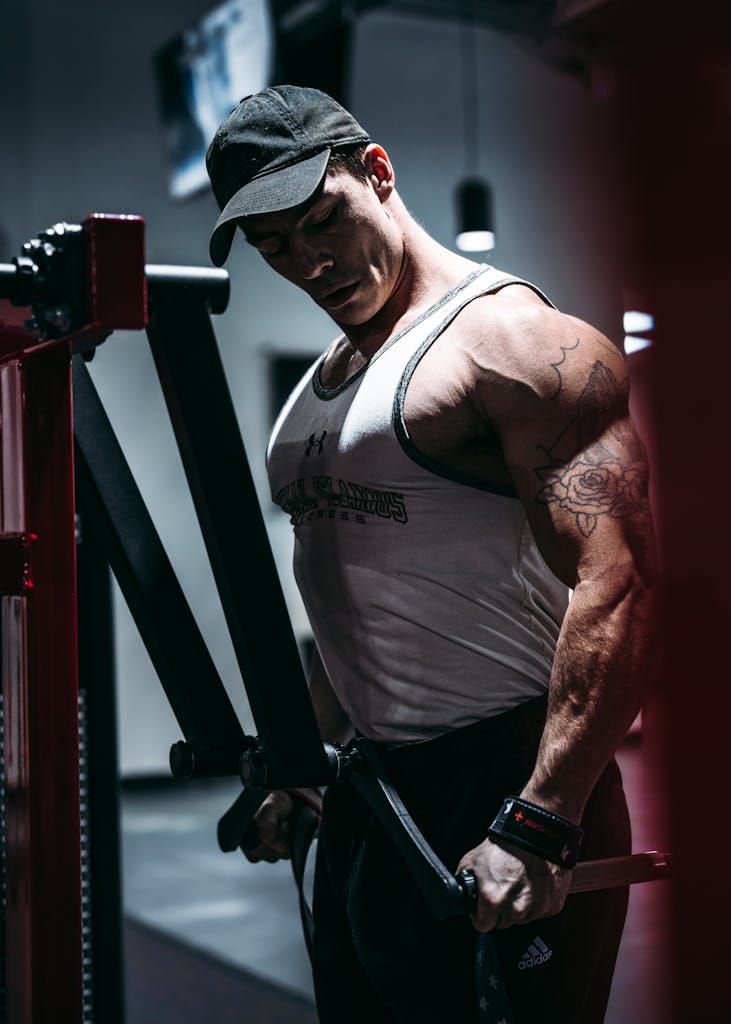
Walking into a gym after the age of 50 feels different than it did in your twenties. Back then, you could survive on ego, cheap pre-workout, and a complete disregard for warm-ups. Now, every heavy set comes with a mental “check-in” with your lower back, knees, and shoulders. When I hit the half-century mark, I refused to settle for the “slow walk on a treadmill” retirement plan. I wanted to be strong, look athletic, and maintain my independence. So, I put the three titans of strength training to the test: Powerlifting, Olympic Lifting, and Bodybuilding. I spent a year on each, and the results were eye-opening, painful, and eventually, life-changing.
The truth is that most fitness advice is written for people whose bodies still produce a mountain of testosterone and haven’t yet felt the sting of systemic inflammation. After 50, your recovery capacity, joint integrity, and hormonal profile have shifted. You can’t just “grind” through a program designed for a college athlete. After years of trial and error, I found that while all three methods have merits, only one truly aligns with the biology of an aging lifter.
The Contenders: A Breakdown of Strength Styles
Before we crown a winner, we need to look at the “Big Three” of the iron world. Each has a specific goal, and each places a unique type of stress on the body.
| Method | Primary Goal | The “Hook” | The Risk After 50 |
| Powerlifting | Maximum Strength | Moving the heaviest weight possible (SBD) | High axial loading; joint wear and tear |
| Olympic Lifting | Explosive Power | Speed, mobility, and technical precision | High velocity; extreme wrist/shoulder mobility |
| Bodybuilding | Hypertrophy | Muscle size, symmetry, and aesthetics | High volume; potential for overuse injuries |
The Powerlifting Experiment: Chasing the Numbers
Powerlifting is seductive. There is something primal about putting a heavy bar on your back or pulling 400 pounds off the floor. I spent a year chasing a “total” in the Big 3: Squat, Bench Press, and Deadlift. For a while, I felt like a beast. My absolute strength skyrocketed, and there is a definite psychological boost that comes from being the strongest guy in a typical commercial gym.
However, the “brutal” reality of powerlifting after 50 is the toll it takes on your Central Nervous System (CNS) and your joints. When you are constantly lifting at 85% to 95% of your one-rep max, your recovery needs become astronomical. I found that while my muscles could handle the load, my tendons were screaming. The axial loading—the weight compressing your spine—resulted in a constant, dull ache that followed me into my daily life. For the older lifter, the risk-to-reward ratio of a 1-rep max deadlift starts to look like a bad investment.
The Olympic Lifting Experiment: The Speed Trap
Next, I transitioned to Olympic Weightlifting—the Snatch and the Clean & Jerk. These movements are beautiful and require a level of athleticism that most people lose by 40. I wanted to regain my “pop” and explosive power. Science tells us that we lose power (speed x strength) faster than we lose absolute strength as we age, so Olympic lifting seemed like the logical antidote.
The problem? Mobility and velocity. Olympic lifting requires extreme “end-range” mobility in the wrists, shoulders, hips, and ankles. Most 50-year-olds have decades of desk-bound “tightness” that doesn’t just disappear. Attempting to catch a heavy barbell in a deep overhead squat is a high-stakes game. While the explosive nature was fun, the sheer technical complexity meant I spent more time frustrated with my form than actually building muscle. One slightly mistimed “catch” and my shoulders were out of commission for three weeks. It’s a young person’s game.
The Bodybuilding Experiment: The Hypertrophy Solution
Finally, I turned to traditional bodybuilding. This method focuses on “time under tension,” high repetitions (8 to 15), and the “pump.” Instead of moving the most weight possible, the goal is to make the muscle do the most work possible. I moved away from the “Big Three” as my only metric of success and started incorporating machines, cables, and isolation movements.
Something strange happened: the aches started to disappear, but the muscle started to grow. Because bodybuilding protocols use lower weights and higher reps, the mechanical tension on the muscles remains high, but the “shear force” on the joints is significantly lower. I wasn’t compressing my spine with 400 pounds anymore; I was destroying my quads with controlled, high-rep leg presses and hack squats.
Why Bodybuilding is the “Longevity Winner”
The reason bodybuilding—specifically Hypertrophy-Specific Training (HST)—wins after 50 comes down to three scientific pillars: Recovery, Joint Longevity, and Metabolic Health.
1. The Recovery Window
When you lift for “Max Strength” (Powerlifting), you are frying your nervous system. At 50, your nervous system takes longer to reset than your muscles do. Bodybuilding focuses on local muscle fatigue. This means you can train more frequently without feeling like you’ve been hit by a truck. Consistent, frequent stimulation is what keeps the muscle-building machinery turned on.
2. Connective Tissue Protection
Tendons and ligaments have a poorer blood supply than muscles. As we age, they become less elastic. The explosive movements of Olympic lifting or the crushing loads of Powerlifting put these tissues at high risk. Bodybuilding uses slower, controlled eccentric (lowering) phases. This “slow” loading actually strengthens tendons over time without the shock of high-velocity impact.
3. Metabolic and Hormonal Impact
High-rep training creates a massive metabolic demand. This increases insulin sensitivity and helps manage body fat—two things that become harder to control after 50. Furthermore, the “pump” (sarcoplasmic hypertrophy) increases blood flow to the area, delivering nutrients and clearing out waste products, which aids in the very recovery we desperately need.
The Hybrid Protocol: The “Power-Bodybuilder” After 50
While bodybuilding won the experiment, I didn’t completely abandon the heavy lifts. Instead, I modified them to fit a “Bodybuilding First” framework. This is the “Aging-Proof” protocol I now follow and recommend.
- Swap the Barbell Squat for the Hack Squat: You get all the quad growth with zero spinal compression.
- Swap the Conventional Deadlift for the Romanian Deadlift (RDL): Focus on the hamstrings and glutes without the high-risk “pull” off the floor.
- Use the 8–12 Rep Range: This is the “Goldilocks Zone” for older lifters. It’s heavy enough to build strength but light enough to maintain perfect form.
- Prioritize Machines and Cables: Don’t let “functional fitness” snobs talk you out of machines. They provide stability, which allows you to push the muscle to failure without your stabilizing joints giving out first.
Weekly Training Structure for the 50+ Lifter
| Day | Focus | Key Move | Why? |
| Monday | Upper Body (Push) | Incline Dumbbell Press | Better shoulder health than barbell bench |
| Tuesday | Lower Body (Quads/Calves) | Hack Squat or Leg Press | Maximum leg drive, minimum back pain |
| Wednesday | Active Recovery | 30 Min Zone 2 Walk | Flushes out lactic acid; heart health |
| Thursday | Upper Body (Pull) | Seated Cable Row | Controlled tension for a thick back |
| Friday | Lower Body (Hams/Glutes) | Romanian Deadlift | Builds the “posterior chain” safely |
| Saturday | Arms/Shoulders (Optional) | Lateral Raises/Curls | Focus on the “fun” stuff and symmetry |
| Sunday | Full Rest | Hydration and Mobility | Let the CNS fully recover |
Related Articles
- How to Sculpt Stronger Arms After 45: 6 No-Equipment Moves That Beat Dumbbells
- How Exercise Rewires Your Brain to Make Smarter Choices, According to Science
- Scientists Reveal the Simple Exercise That Makes 80-Year-Old Muscles Perform Like 25
- The “Lazy Girl” Workout: 10 Couch Moves That Tone Your Body While You Binge Netflix
- One Simple Exercise That Eases Knee Arthritis Pain Better Than Rest, Backed by Science