FREE SHIPPING OVER $50

I Tried Elevated Glute Bridges for 14 Days — The Results Shocked Me

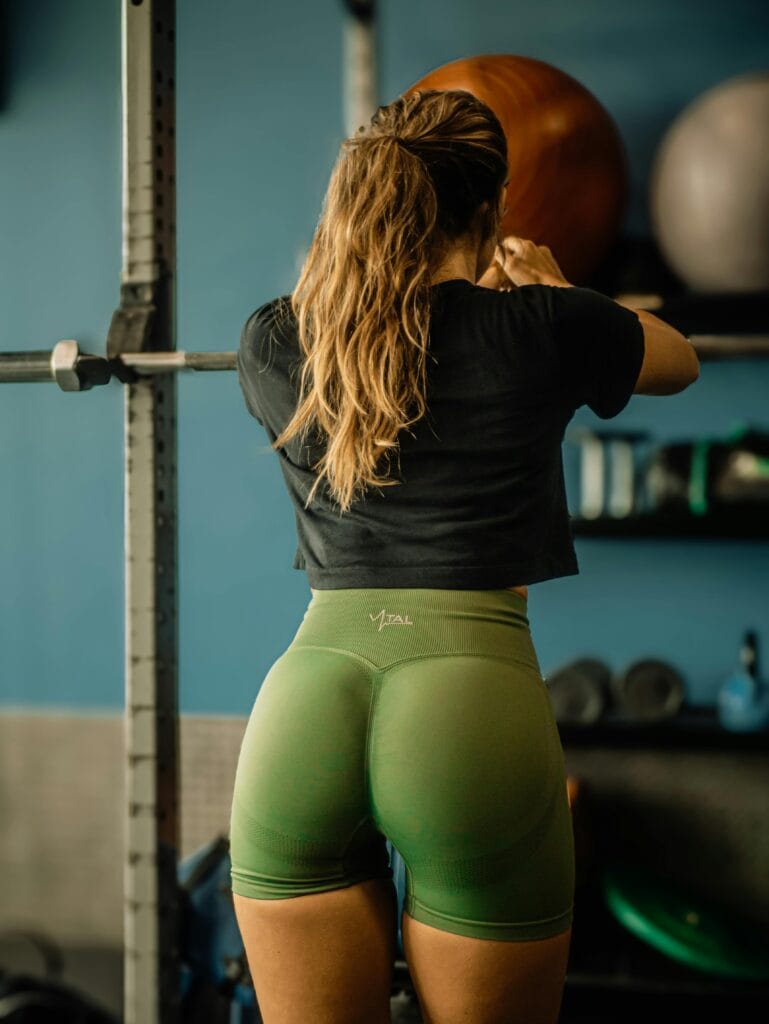
We have all been told that the squat is the undisputed king of lower-body exercises. If you want to build strength, power, or a better aesthetic, you are traditionally pointed toward the squat rack. However, for many of us, squats often lead to more knee strain and lower back fatigue than actual glute development. After months of feeling like my glutes were “asleep” despite my best efforts at the gym, I decided to pivot my strategy. I stepped away from the heavy barbells and committed to a single, focused movement: the elevated glute bridge. I performed this exercise every single day for two weeks, curious to see if a simple change in the range of motion could actually outperform the heavy-hitting compounds I had been relying on for years.
The premise was simple. By placing my feet on a bench or a sturdy couch instead of the floor, I was essentially doubling the distance my hips had to travel. I wanted to know if this increased “time under tension” and deeper stretch would translate into a visible difference or if it was just another fitness fad. What started as a small experiment quickly turned into a masterclass in mind-muscle connection. By the end of the 14 days, the changes weren’t just about how I looked in a pair of jeans; they were about how I moved, how my lower back felt, and how much power I could generate in my other workouts.
The Science of the “Elevated” Advantage
To understand why the results were so significant, we have to look at the physics of the movement. A standard glute bridge performed on the floor is a fantastic entry-level exercise, but it has a built-in “ceiling.” Because your hips start on the ground, the range of motion (ROM) is relatively short. You are essentially working in the top half of the muscle’s capability. While this is great for peak contraction, it misses out on the “stretch” phase, which is where a significant amount of muscle hypertrophy and tissue remodeling occurs.
When you elevate your feet, you create a deficit. This deficit allows your hips to drop below the level of your feet, putting the gluteus maximus under an intense stretch at the bottom of the movement. Research in biomechanics suggests that muscles are often most responsive to growth when they are challenged in their lengthened position. Furthermore, the elevated position changes the angle of the pull. Instead of pushing purely vertically, you are pushing at an angle that forces the hamstrings and the deep stabilizers of the pelvic floor to work in unison with the glutes. This creates a more “complete” contraction that you simply cannot replicate on a flat floor.
Floor Bridge vs. Elevated Bridge: A Comparison
| Feature | Standard Floor Bridge | Elevated Glute Bridge |
| Range of Motion | Limited by the floor. | Extended (Deep Deficit). |
| Muscle Recruitment | Primary: Glute Max. | Primary: Glute Max, Hamstrings, Adductors. |
| Spinal Pressure | Low. | Moderate (Requires higher core stability). |
| Difficulty Level | Beginner. | Intermediate to Advanced. |
| Metabolic Demand | Moderate. | High (More work per repetition). |
The 14-Day Journey: A Breakdown of the Experience
Embarking on a 14-day challenge requires more than just physical effort; it requires a shift in focus. I decided to perform four sets of 20 repetitions every morning. I didn’t use any heavy weights, choosing instead to focus on “bodyweight mastery” and the quality of the squeeze at the top of each rep.
Days 1 to 4: The Reality Check
The first few days were a humbling experience. Within the first ten reps of day one, I realized that my glutes hadn’t been working nearly as hard as I thought they were. Because of the elevation, my hamstrings tried to take over the movement immediately. This is a common issue for people who sit at desks all day. My brain had “forgotten” how to fire the glutes first. Consequently, the first four days were less about “growth” and more about “re-wiring.” I had to consciously tuck my pelvis and drive through my heels to make sure the glutes were doing the heavy lifting. By day four, the initial “cramp-like” feeling in my hamstrings began to fade, signaling that my glutes were finally taking the lead.
Days 5 to 9: The Mind-Muscle Connection
By the middle of the first week, something shifted. I no longer had to “think” about my glutes; I could feel them firing from the very first rep. This is the “neurological adaptation” phase. During these days, I noticed that my posture during the day felt different. Instead of my usual slouch, I felt a natural “tightness” in my core and hips that kept me standing taller. Moreover, the deep stretch at the bottom of the bridge was starting to act as a dynamic release for my tight hip flexors. It turned out that by strengthening the back of my body, I was inadvertently “opening up” the front.
Days 10 to 14: The Aesthetic and Functional Shift
In the final stretch, the “shocking” results began to manifest. While two weeks is a short time for massive muscle growth, the “pump” and the muscle tone were undeniable. My glutes felt firmer and more “active” even when I was just walking. However, the biggest surprise was my performance in other activities. On day 12, I went for my usual weekend run and felt a level of power in my stride that wasn’t there before. My hills felt easier, and my lower back—which usually gets stiff after three miles—felt completely supported. The glute bridge had turned my “sleepy” muscles into a functional powerhouse.
Perfecting the Form: How to Avoid Common Mistakes
If you want to try this 14-day challenge, you must prioritize form over repetitions. It is very easy to turn this into a “back” exercise if you aren’t careful. To get the results I did, you should follow these specific cues:
- Drive Through the Heels: Do not push through your toes. Pushing through your toes shifts the tension to your quads. By driving through your heels, you force the posterior chain (glutes and hamstrings) to engage.
- The Pelvic Tilt: Before you lift your hips, tuck your tailbone under. This “posterior pelvic tilt” flattens your lower back against the floor and ensures that the glutes are the primary movers.
- Pause at the Peak: Do not rush the movement. At the top of the bridge, your body should form a straight line from your knees to your shoulders. Hold this “peak contraction” for two seconds and squeeze your glutes as hard as possible.
- Control the Descent: The “down” phase is where the magic happens. Lower your hips slowly to feel that deep stretch. Don’t just let gravity pull you back down.
Related Articles
- Are You “Gym Strong” or Actually Strong? The Real Deadlift Benchmarks for Men
- Forget Melatonin: New Study Shows These 3 Workouts Beat Sleeping Pills (And #2 Is a Total Shock)
- 15 Fitness Lies Men Over 50 Still Believe (And the Truth That Keeps You Strong)
- Push-Ups Are Overrated—These 3 Shoulder Moves Build More Strength, Says a Weightlifting Coach
- The #1 Exercise Strategy for Managing PCOS—And Why Most Women Do It Wrong