FREE SHIPPING OVER $50

I Tried 5 Stretches Recommended by Yoga Teachers, PTs and Trainers — These Actually Fixed My Pain

We have all been there. You wake up with a stiff lower back, or perhaps your neck feels like it’s been locked in a vice after a long day at the desk. Naturally, you reach for the floor to touch your toes or pull your arm across your chest. You feel a temporary release, but twenty minutes later, the tightness returns with a vengeance.
For years, I followed the “standard” stretching routine I learned in high school gym class. It wasn’t until I started interviewing the heavy hitters in the industry—veteran yoga teachers, clinical physical therapists (PTs), and elite personal trainers—that I realized I was doing it all wrong.
It turns out that the areas where we feel pain are often just the “victims.” The true “criminals” are usually tight hips, “frozen” mid-backs, and dormant glutes. When I swapped my generic stretches for the five “consensus moves” these experts all agreed on, my chronic aches didn’t just fade—they vanished. Here is the protocol that changed everything.
The Mobility Gap: Why Your Current Stretching Isn’t Working
The biggest mistake most people make is stretching the area that hurts. If your lower back is screaming, your instinct is to stretch your back. However, physical therapists will tell you that the lower back is often overstretched and unstable. The real issue is usually “locked” hips or a stiff thoracic spine that is forcing your lower back to do too much work.
Yoga teachers refer to this as a lack of “opening,” while trainers call it a “mobility deficit.” Regardless of the terminology, the solution is the same: you must target the foundational joints that govern how the rest of your body moves. By focusing on these five specific areas, you create a ripple effect of relief throughout your entire kinetic chain.
The Expert Consensus: Why These 5?
I noticed a pattern during my interviews. Despite their different backgrounds, these three groups of professionals kept coming back to the same five movements. They weren’t interested in fancy “pretzel” poses. They wanted movements that addressed the “modern human condition”—the hunching, the sitting, and the tech-neck.
| Discipline | Focus Area | Why They Recommend It |
| Physical Therapist | Joint Centration | To prevent compensatory injuries and fix alignment. |
| Yoga Teacher | Breath & Fascia | To release deep-seated tension and improve blood flow. |
| Personal Trainer | Functional Range | To ensure you can move heavy loads without “tweaking” your back. |
1. The 90/90 Hip Switch (The Hip Opener)
If you sit for more than four hours a day, your hip capsules are likely “glued” shut. This is the #1 cause of lower back pain in the United States. While the classic “pigeon pose” is popular, every PT I spoke to preferred the 90/90 stretch.
- Sit on the floor with your right leg in front of you, bent at a 90-degree angle.
- Place your left leg to the side, also bent at 90 degrees.
- Keep your spine tall and lean slightly over your front shin.
- You should feel this deep in the hip socket, not the knee.
- Switch sides slowly, keeping your heels on the ground.
This move targets both internal and external rotation of the hip. Most standard stretches only focus on one, which leaves half of the joint restricted.
2. The World’s Greatest Stretch (The Total Body Reset)
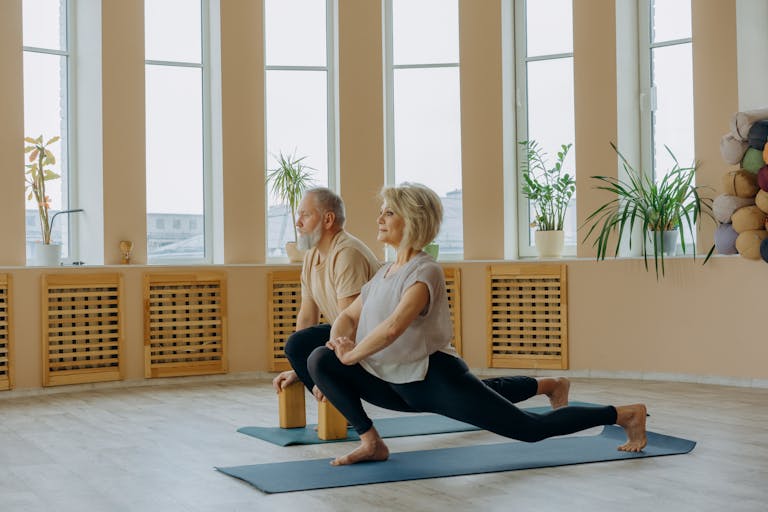
Trainers call it “The World’s Greatest” for a reason. It hits almost every major muscle group in one fluid motion. It addresses the hip flexors, the thoracic spine (mid-back), and the hamstrings simultaneously.
- Start in a deep lunge with your left foot forward and your right knee off the ground.
- Place your right hand on the floor and rotate your left arm toward the ceiling, looking at your hand.
- Drop your left elbow toward the inside of your left foot.
- Finally, sit back into your hips to stretch the front hamstring.
By combining a deep lunging stretch with a spinal twist, you are “unlocking” the parts of your body that get compressed from sitting in a chair.
3. Cat-Cow with a Twist (The Spinal Decompressor)
Yoga teachers have used Cat-Cow for centuries to improve spinal fluidity, but PTs often add a slight modification to make it even more effective for modern back pain. Instead of just moving up and down, adding a lateral “rib reach” helps hydrate the discs between your vertebrae.
- Start on all fours with a neutral spine.
- As you inhale, drop your belly and look up (Cow).
- As you exhale, round your back and tuck your chin (Cat).
- The Upgrade: While in the “Cat” position, gently shift your hips toward your heels and back to “floss” the nerves in your lower back.
This movement encourages the flow of synovial fluid, which acts as the “oil” for your spinal joints.
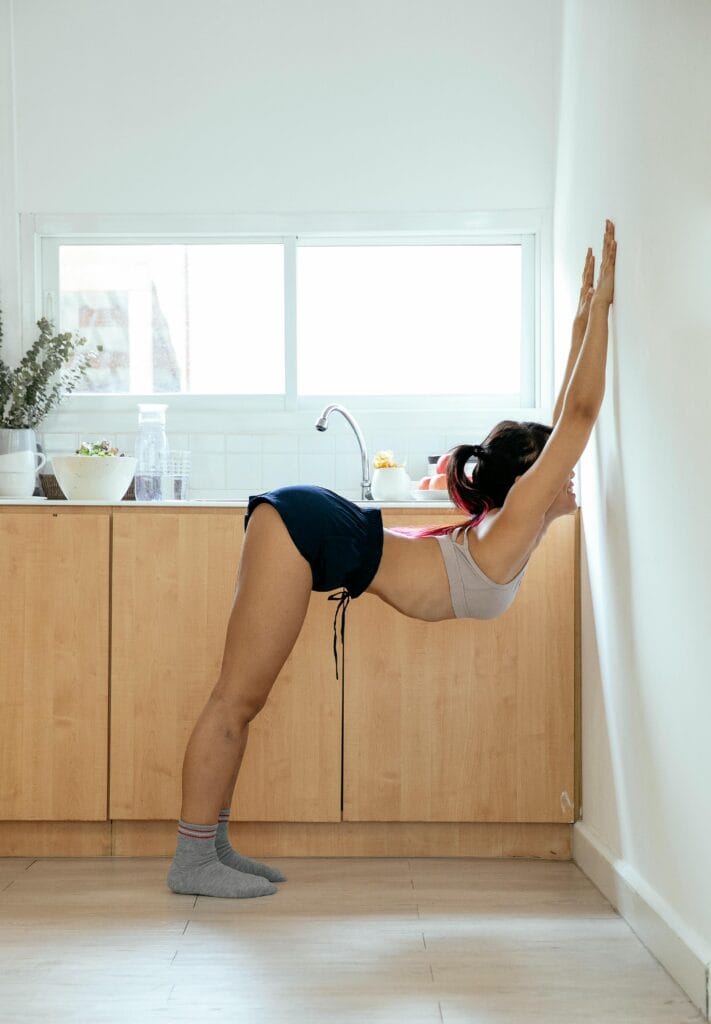
4. The Wall Thoracic Extension (The Hunchback Cure)
We live in a “forward-folded” world. Between smartphones and steering wheels, our mid-backs (thoracic spine) become rounded and stiff. This forces our neck to jut forward, leading to tension headaches and shoulder impingement.
- Stand facing a wall or use the back of a couch.
- Place your elbows on the surface and step back.
- Sink your head and chest between your arms, keeping your core tight so you don’t arch your lower back.
- You should feel a deep stretch in your upper back and lats.
Every personal trainer I interviewed emphasized that if you can’t move your mid-back, your shoulders will eventually pay the price.
5. The Couch Stretch (The Quad Killer)
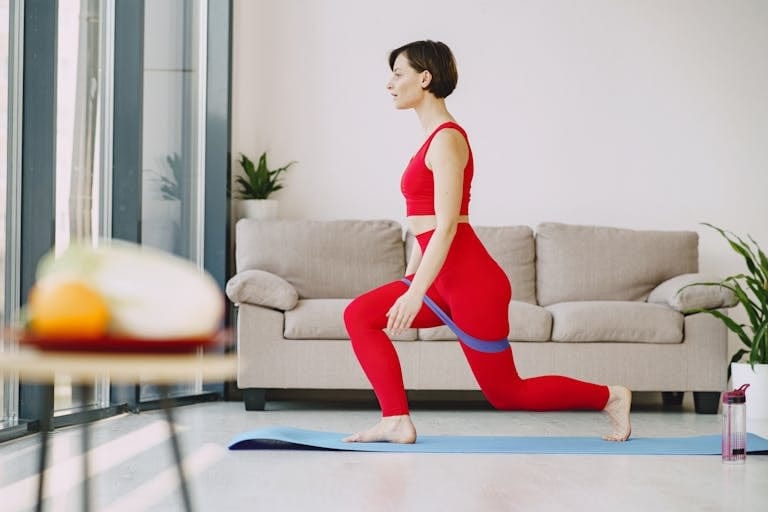
Don’t let the name fool you—this is the most intense stretch on the list. Most people think they have “tight hamstrings,” but the truth is often that their quads and hip flexors are so tight they are pulling the pelvis forward. This puts the hamstrings on constant tension.
- Stand in front of a couch or chair.
- Place one knee on the cushion and the top of that foot against the back of the couch.
- Step the other foot forward into a lunge.
- Squeeze your glute on the “down” leg and stay upright.
This stretch “un-pulls” your pelvis, allowing your lower back to finally relax into its natural curve.
The Secret Sauce: Active vs. Passive Stretching
The biggest takeaway from my expert interviews was that holding a stretch isn’t enough. To make the results stick, you need to engage your muscles while you stretch them. This is known as “active mobility.”
Yoga teachers use the breath to create internal tension, while PTs use “PAILs and RAILs” (a technique where you push against the stretch). If you just “flop” into a stretch, your nervous system remains on high alert. If you breathe deeply and engage your muscles, your brain receives a signal that it is “safe” to relax into that new range of motion.
Creating a Sustainable Routine
You do not need to spend an hour a day on your yoga mat to fix your pain. The experts I interviewed suggested that frequency beats duration.
- The 5-Minute Morning Reset: Pick two moves and do them right after you wake up.
- The “Movement Snack”: Perform the Wall Thoracic Extension every two hours you spend at your desk.
- The Evening Decompression: Use the 90/90 switch and the Couch Stretch while watching TV at night.
By integrating these moves into your daily “dead time,” you prevent the stiffness from accumulating in the first place.
Related Articles
- 3-Minute Gentle Floor Routine That Actually Ignites Your Core — Beginner Friendly
- One Simple Exercise That Eases Knee Arthritis Pain Better Than Rest, Backed by Science
- No Time? 10 Genius Ways to Squeeze Workouts Into Your Busy Day
- Unwrap The Holiday Gift of Strength: How Training Adds Years to Your Life
- Doctors Said He’d Never Be Strong Again at 65—This Navy SEAL Proved Them Wrong with 5 Simple Exercises