FREE SHIPPING OVER $50

How Eating Like an Italian for 30 Days Finally Broke My 5-Year Weight Plateau

For five long years, I lived in a state of constant nutritional warfare. I tracked every gram of carbohydrate, treated a slice of sourdough like a hand grenade, and spent a small fortune on “keto-friendly” snacks that tasted like sweetened cardboard. Despite my discipline, the scale wouldn’t budge. I was stuck in the classic American diet trap: high stress, hyper-processed “health” foods, and a deep-seated fear of anything that came from a bakery. Then, a month-long trip to Italy changed everything. I didn’t just lose weight; I found a way to eat that actually felt human again.
In Italy, people eat pasta and bread daily, yet they maintain some of the lowest obesity rates in the developed world. While we are busy arguing over net carbs, they are focusing on food quality, fermentation, and a lifestyle that treats eating as a biological necessity rather than a moral failing. By adopting the specific habits of the Italian table, I managed to drop the stubborn weight that years of HIIT and low-carb dieting couldn’t touch. If you have been spinning your wheels on the treadmill of restrictive dieting, here is the “un-diet” strategy that finally worked.
The Gluten Myth vs. The Glyphosate Reality
One of the first things I realized during my 30-day experiment is that we aren’t necessarily sensitive to bread; we are sensitive to how it’s made. In the US, much of our wheat is treated with glyphosate right before harvest. This can disrupt the gut microbiome and cause the bloating many people mistake for a gluten allergy. Italian wheat standards are significantly more stringent, often focusing on ancient grains and traditional milling.
During my 30 days, I sought out local bakeries that used organic, stone-ground flour and long fermentation cycles. Long-fermented sourdough isn’t just a trend; the bacteria actually “pre-digest” the gluten and lower the glycemic index of the bread. This means you get the satisfaction of the carb without the massive insulin spike that tells your body to store fat.
The Fat-to-Carb Ratio: The Olive Oil Secret
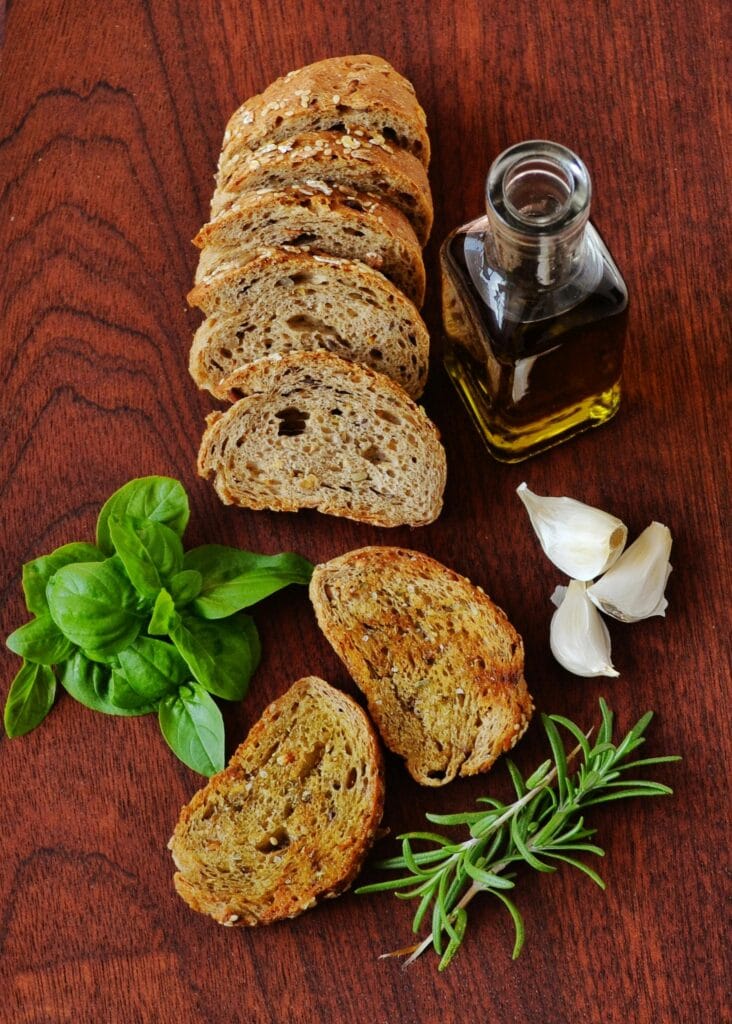
In Italy, bread is rarely eaten “naked.” It is almost always accompanied by high-quality extra virgin olive oil (EVOO). This isn’t just about flavor; it’s about biochemical signaling. When you combine a complex carbohydrate with a healthy monounsaturated fat, you significantly slow down the rate of gastric emptying.
Why the “Italian Dip” Works for Weight Loss
| Component | Biological Action | Result |
| Sourdough Bread | Slow-release glucose | Sustained energy |
| Extra Virgin Olive Oil | Triggers Cholecystokinin (CCK) | Immediate satiety signals |
| Balsamic Vinegar | Improves insulin sensitivity | Less fat storage |
| Herbs (Oregano/Basil) | Antioxidant boost | Reduced systemic inflammation |
When I started eating bread dipped in olive oil before my main course, I found that I was significantly less hungry by the time the entree arrived. I was using the bread as a tool to prevent overeating, rather than as a mindless side dish. This simple shift in the “order of operations” of my meal was a game-changer for my caloric intake.
The “Passeggiata” Effect: Movement Over Exercise
Perhaps the biggest secret to breaking my plateau had nothing to do with the kitchen. It was the Passeggiata—the traditional Italian evening stroll. In my old “plateau” life, I would do a punishing 60-minute workout and then sit at a desk for the next eight hours. In Italy, everyone walks after a meal.
I started walking for just 15 minutes after lunch and dinner. Science shows that light movement immediately following a carbohydrate-rich meal allows your muscles to soak up the glucose before it can be converted into triglycerides (stored fat). By the end of the 30 days, my fasting blood sugar had dropped into the optimal range, all because I chose a slow walk over a seated food coma.
Quality Over Convenience: Killing the “Ultra-Processed” Habit
Italian food culture is built on the concept of L’Arte della Semplicità—the art of simplicity. A meal might just be three ingredients, but those ingredients are world-class. When I committed to the “Italian Way,” I had to kill my habit of buying “low-calorie” frozen dinners or protein bars with twenty-item ingredient lists.
- The Rule of Five: If a food had more than five ingredients or things I couldn’t pronounce, I didn’t buy it.
- The Freshness Window: I shopped for produce every three days instead of once every two weeks. This forced me to eat more seasonal, nutrient-dense vegetables.
- Zero Liquid Calories: I swapped sodas and “diet” drinks for sparkling water with lemon and a single glass of dry red wine with dinner.
By removing the stabilizers, emulsifiers, and artificial sweeteners found in “diet” foods, my gut microbiome began to heal. Emulsifiers, in particular, have been linked to a “leaky” gut and chronic inflammation—two things that keep weight plateaus firmly in place.
The Psychological Reset: Eating Without Guilt
The most profound change wasn’t on the scale; it was in my head. Chronic dieting creates a “stress state” every time you look at a menu. Stress elevates cortisol, and high cortisol is a magnet for belly fat. Italians view food as a source of pleasure and connection, not a list of sins to be managed.
During these 30 days, I stopped eating in my car, at my desk, or standing over the sink. I sat down, used a real plate, and took at least 20 minutes to finish my meal. This allowed my “fullness hormones” (leptin) to catch up with my appetite. When you actually enjoy your food, you need less of it to feel satisfied. This transition from “restriction” to “appreciation” was the final blow to my five-year plateau.
A Sample “Italian Style” Day for Weight Loss
| Meal | What I Ate | The Strategy |
| Breakfast | Double Espresso + Small Sourdough Croissant | High quality, small portion |
| Lunch | Chickpea Salad with Tuna, Olives, and Lemon | Fiber and lean protein |
| Mid-Day | A handful of walnuts or a piece of fruit | Natural fats over processed snacks |
| Dinner | Pasta Pomodoro (Small Portion) + Large Green Salad | Veggies first, carbs second |
| Post-Dinner | 15-Minute Walk | Glucose management |
Related Articles
- 7 Natural Sweeteners That Protect Your Metabolism — Ditch Sugar Without Sacrificing Taste
- The “Bloat-Free” Rule: Why Japanese Women Ditch Probiotics for This 0-Cent Habit
- Why Authentic Pasta Doesn’t Wreck Your Blood Sugar (Unlike the Carbs Most Americans Eat)
- Don’t Toss Those Eggs Yet — 5 Quick Tests to Know If They’re Fresh
- Stop the 3 AM Wake-Up: The 1-Teaspoon Kitchen Hack for Uninterrupted Sleep