FREE SHIPPING OVER $50
How Compound Exercises Help Balance Hormones in PCOS — Try These Now

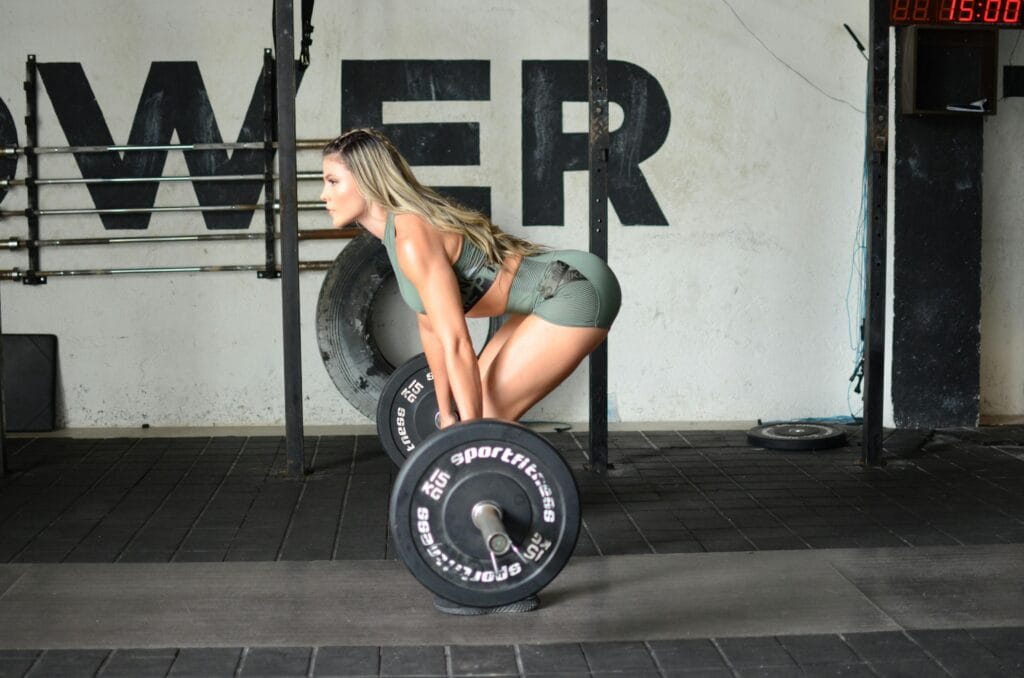
If you have been living with Polycystic Ovary Syndrome (PCOS), you have probably been told a hundred times to “just lose weight” or “go for a walk.” While walking is great, many women find that standard cardio doesn’t always move the needle on their most frustrating symptoms—like the stubborn midsection weight, the hormonal acne, or the crushing fatigue.
The missing link for many is a specific style of training called compound exercises. Instead of spending hours on a treadmill, focusing on “big” moves that use multiple muscle groups at once can actually change your internal chemistry.
The “Insulin Switch”: Why Muscle is Your Best Friend
To understand why compound exercises work, we have to talk about insulin. About 70% to 80% of women with PCOS deal with some level of insulin resistance. This means your cells are “numb” to insulin, forcing your body to pump out more and more of it to keep your blood sugar stable.
High insulin is the primary driver of PCOS symptoms because it tells your ovaries to produce more testosterone. This is where your muscles come in. Muscle tissue is responsible for about 80% of your body’s insulin-dependent glucose uptake.
When you perform a compound exercise—like a squat—you aren’t just working your legs. You are engaging your glutes, hamstrings, quads, and core. By recruiting these massive muscle groups simultaneously, you create a massive “sink” for glucose. Your muscles literally “soak up” the sugar in your blood, which means your pancreas doesn’t have to produce as much insulin. Lower insulin leads directly to lower testosterone and better hormone balance.
Compound vs. Isolation: The Efficiency Factor
A compound exercise is any movement that involves more than one joint and multiple muscle groups. An isolation exercise, like a bicep curl, only uses one joint. For a woman with PCOS, efficiency is everything.
| Feature | Compound Exercises | Isolation Exercises |
| Muscle Recruitment | High (Full Body) | Low (Single Muscle) |
| Insulin Response | Massive | Minimal |
| Metabolic Boost | Lasts up to 48 hours | Lasts a few hours |
| Hormonal Impact | Lowers Testosterone & Cortisol | Negligible |
| Example | Barbell Squat | Leg Extension Machine |
As you can see, compound moves give you the most “bang for your buck.” By lifting heavier weights for fewer repetitions, you build lean muscle mass. This muscle increases your Basal Metabolic Rate (BMR), meaning you burn more calories even while you are sleeping.
The Androgen Connection: Lifting to Lower Testosterone
One of the biggest myths in the fitness world is that lifting weights will make women “bulky” or increase their testosterone. In reality, the opposite is true for women with PCOS.
When you strengthen your muscles through compound movements, you improve your body’s metabolic health. As your insulin sensitivity improves, your ovaries stop receiving the “over-produce testosterone” signal. Research has consistently shown that progressive resistance training can significantly reduce free androgen index (FAI) and total testosterone in women with PCOS.
Instead of looking like a bodybuilder, you will likely notice that your skin starts to clear up, your hair loss slows down, and that “belly pouch” begins to shift. You aren’t “bulking up”; you are finally giving your hormones the environment they need to stabilize.
Avoiding the Cortisol Trap
One reason many women with PCOS fail with high-intensity cardio is cortisol. Excessive “pounding” on the treadmill can keep your stress hormones elevated for hours. Since many women with PCOS already have a sensitive “stress switch,” this can lead to even more inflammation and weight gain.
Compound lifting allows you to train at a high intensity with a low impact on your nervous system—provided you take long rest periods. By lifting heavy for 5 to 8 reps and resting for 2 to 3 minutes between sets, you get the metabolic benefit without the massive cortisol spike.
The “Big 3” Compound Moves to Start Today
You don’t need fifty different machines to fix your hormones. You just need to master these three “big” moves.
1. The Goblet Squat
The squat is the king of PCOS exercises because it targets the largest muscles in the body. Using a kettlebell or dumbbell in the “goblet” position (held at your chest) also forces your core to work overtime.
- Stand with your feet slightly wider than shoulder-width.
- Hold a weight against your chest, keeping your elbows tucked.
- Sit back into your hips as if sitting in a chair, keeping your chest tall.
- Drive through your heels to return to standing.
- Aim for 3 sets of 10 reps.
2. The Romanian Deadlift (RDL)
This move targets the “posterior chain”—your hamstrings, glutes, and lower back. This is critical for metabolic health because these muscles are incredibly dense and metabolically active.
- Hold a pair of dumbbells in front of your thighs.
- Keeping a slight bend in your knees, hinge at your hips and push your butt back.
- Lower the weights until you feel a deep stretch in your hamstrings.
- Squeeze your glutes to pull yourself back to an upright position.
- Focus on the “hinge,” not the “squat.” Aim for 3 sets of 8 reps.
3. The Overhead Press
Don’t ignore your upper body! Building shoulder and back strength helps improve your posture and contributes to that “V-taper” look that makes the waist appear smaller.
- Stand tall with a pair of dumbbells at shoulder height.
- Brace your core so your back doesn’t arch.
- Press the weights toward the ceiling until your arms are straight.
- Lower slowly to the starting position.
- Aim for 3 sets of 10 reps.
How to Structure Your Week
Consistency is the secret sauce. You do not need to be in the gym every day to see a hormonal shift. In fact, training too often can actually hinder your progress by keeping your inflammation levels high.
A perfect “Hormone-Balance” week might look like this:
- Monday: Compound Lifting (Squats, Presses, Rows)
- Tuesday: Brisk Walk (30 minutes)
- Wednesday: Rest or Gentle Yoga
- Thursday: Compound Lifting (Deadlifts, Lunges, Push-ups)
- Friday: Brisk Walk or Fun Activity
- Saturday: Optional Full Body Compound Session
- Sunday: Complete Rest
By alternating lifting days with “active recovery” days like walking, you keep your insulin levels low without burning out your adrenals.
The Nutrition-Lifting Synergy
You cannot out-train a poor diet, especially with PCOS. When you start a compound lifting program, your body will need more protein to repair the muscle tissue you are building.
Aim for about 20 to 30 grams of protein at every meal. Pairing your compound exercises with a high-protein, moderate-carb diet is the fastest way to “reset” your insulin sensitivity. Try to eat a small meal containing protein and complex carbs (like a turkey wrap or Greek yogurt with berries) about 60 to 90 minutes after your workout to help your hormones recover.
Related Articles
- The V-Taper Illusion: 6 Moves That Sculpt a Narrow Waist and Broad Shoulders Fast
- Flabby Arms?: The 4 “Anti-Gravity” Moves That Tighten Bat Wings Faster After 45
- 92% of New Year Workouts Fail by February: The ‘Identity Shift’ Secret to Beating the Odds
- The 5 Secret Exercises A-List Celebrities Swear By to Stay Muscular at Any Age
- Stop Wasting Hours: Scientists Say This 20-Minute Window Is the ONLY Time You Need to Build Muscle