FREE SHIPPING OVER $50
Forget Sit-ups: The ‘Bulletproof’ Core Move That Torches Your Abs (And Saves Your Spine)

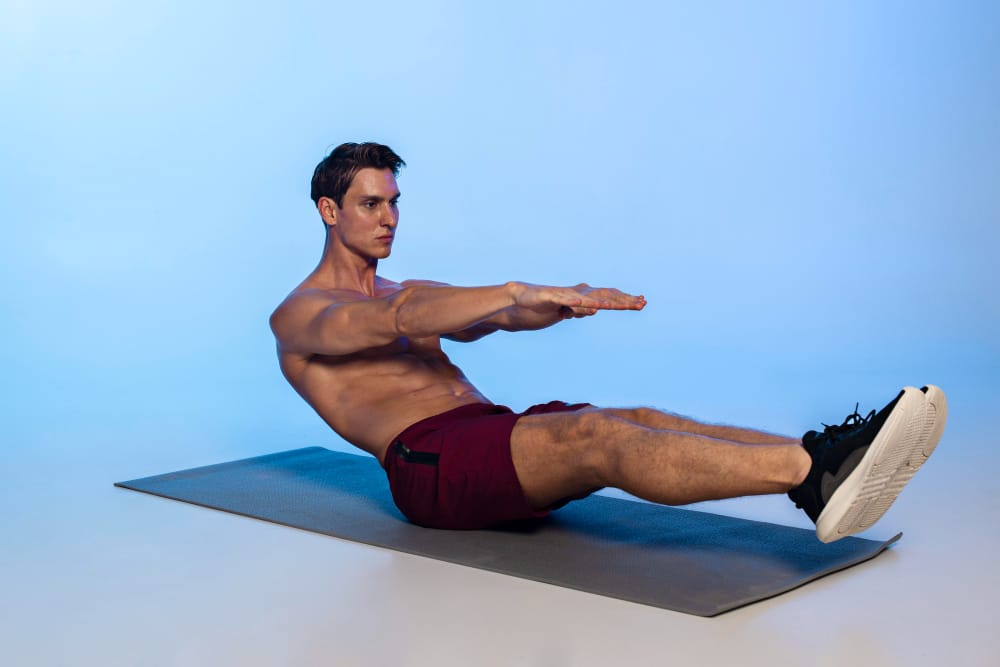
Look, we have all been there—lying on a gym floor or a bedroom carpet, cranking out dozens of sit-ups in hopes of finally seeing some abdominal definition. It is the classic exercise we were taught in gym class, and for decades, it was the gold standard for anyone wanting a flat stomach. However, if you have ever finished a set of sit-ups only to find that your lower back is screaming louder than your abs, you aren’t doing it wrong; you are simply doing an exercise that modern sports science has largely left behind. The truth is that for many people, the traditional sit-up does more to wear down the discs in your spine than it does to build a functional, “bulletproof” core.
Top physical therapists and strength coaches are now sounding the alarm on high-repetition spinal flexion. Instead of constantly folding your body in half, the secret to a resilient midsection lies in stability and “anti-movement.” There is one specific exercise that outperforms the sit-up in almost every metric: it targets the deep stabilizers that protect your back, it hits the “six-pack” muscles without the strain, and it is arguably the most effective way to build a core that can handle anything life throws at it.
Why the Traditional Sit-up is Outdated
To understand why we need to make the switch, we have to look at the anatomy of the move. When you perform a sit-up, you are forcing your lumbar spine (the lower back) to curve and flatten against the floor while under tension. This creates what engineers call “shear force” on your intervertebral discs. Think of your discs like jelly donuts; if you squeeze one side repeatedly and with enough force, the jelly eventually wants to pop out the other side. This is a primary mechanism for disc herniation and chronic nerve pain.
Furthermore, sit-ups often rely heavily on the hip flexors. Because these muscles are attached to the front of your lower spine, when they get tight and overactive, they pull on your vertebrae, creating an exaggerated arch in your back. This is why you might feel “tight” or “achy” in your lower back after an ab workout. You aren’t actually working your core to its full potential; you are just reinforcing the bad postural habits that lead to “desk slouch” and chronic pain.
The “Bulletproof” Solution: Meet the Dead Bug
The Dead Bug might have a funny name, but its results are serious. Unlike sit-ups, which focus on moving the spine, the Dead Bug focuses on stabilizing the spine while your limbs move around it. This is known as “anti-extension” training. In the real world, your core’s primary job isn’t to crunch you into a ball; it is to act as a rigid brace that protects your spine while you carry groceries, lift your kids, or run a marathon.
When you perform a Dead Bug, you are teaching your brain and your muscles how to work together to maintain a neutral pelvic position. You are essentially building an “internal corset” that keeps your spine safe. Because your back remains flat against the floor throughout the entire movement, there is zero shear force on your discs. You get all of the muscle-building tension with none of the structural risk.
How to Master the Dead Bug
To get the most out of this move, you have to prioritize form over repetitions. Follow these steps to ensure you are hitting the right muscles:
- The Starting Position: Lie on your back with your arms reaching straight up toward the ceiling. Lift your legs and bend your knees to a 90-degree angle (this is called the “tabletop” position).
- The Low Back Flush: This is the most important part. Press your lower back firmly into the floor. There should be no space between your spine and the ground. If someone tried to slide a piece of paper under your back, they shouldn’t be able to.
- The Contralateral Move: Slowly lower your right arm behind your head while simultaneously straightening and lowering your left leg toward the floor.
- The “Freeze” Point: Lower them only as far as you can without letting your lower back lift off the ground. For many, this might only be halfway to the floor at first.
- The Return: Exhale deeply as you pull your arm and leg back to the starting position, then switch sides.
Expanding the Core: It’s More Than Just the “Six-Pack”
One of the reasons the Dead Bug is so effective is that it recruits the Transverse Abdominis (TVA). This is the deepest layer of abdominal muscle, sitting underneath the rectus abdominis (the visible six-pack). The TVA acts like a natural weight belt, wrapping around your midsection to provide stability. While sit-ups mostly hit the superficial layer, the Dead Bug forces the TVA to fire intensely to keep your back flat.
The Role of the Obliques and Multifidus
We also have to consider the rotational and lateral stabilizers. As you move opposite limbs during the Dead Bug, your internal and external obliques have to work overtime to prevent your torso from rocking side to side. Behind the scenes, the multifidus—tiny muscles that run along your spine—are also engaging to maintain segmental stability. This total-package recruitment is what creates a “bulletproof” core. You aren’t just building vanity muscles; you are building a functional shield for your nervous system.
Transitioning to Functional Core Strength
Once you have mastered the basic Dead Bug, the “bulletproof” philosophy suggests you should keep challenging the system. The goal is to take that feeling of a “braced” spine and apply it to every other movement you do.
The Bird Dog: The Dead Bug’s “Flip Side”
If the Dead Bug is the king of supine (lying on your back) exercises, the Bird Dog is its counterpart for the posterior chain. By flipping over onto all fours and extending opposite limbs, you challenge your core to maintain stability against gravity. This move specifically strengthens the erector spinae and glutes, which are essential partners to your abs in maintaining a healthy back.
The Plank: The Ultimate Brace
Transitioning into a plank is the logical next step. However, most people do planks incorrectly by letting their hips sag or their backs arch. By applying the “Low Back Flush” principle you learned from the Dead Bug, you can turn a standard plank into a high-tension, medical-grade stability move. Think about pulling your belly button toward your chin and squeezing your glutes as hard as possible. This creates “intra-abdominal pressure,” which is the ultimate defense against spinal injury.
The Lifestyle Impact: Beyond the Gym Floor
We spend most of our lives sitting in chairs, hunched over steering wheels, or leaning into computer screens. This constant “flexed” position weakens our core and puts our spine in a vulnerable state. By performing “anti-extension” moves like the Dead Bug daily, you are effectively reversing the damage caused by modern living.
Many people find that after just two weeks of consistent Dead Bug practice, their daily back aches begin to vanish. This isn’t magic; it is simply the result of your body finally having the muscular support it needs to hold itself upright. Your posture improves, your gait becomes more efficient, and you move with a sense of “centeredness” that makes every other physical task feel easier.
Final Thoughts
Building a powerful core doesn’t require high-impact crunches or painful sit-ups that leave your neck and back feeling wrecked. By shifting your focus to “bulletproof” moves like the Dead Bug, you are choosing a path of functional fitness and long-term longevity. Remember, the goal of core training isn’t just to look good in a swimsuit; it is to ensure that your spine remains healthy and mobile well into your 70s, 80s, and beyond. Stop “starving” your stabilizers of the attention they deserve. Ditch the sit-ups, embrace the “anti-movement” philosophy, and build a midsection that is as strong as it is safe. Your spine will thank you for years to come.
Related Articles
- Rebuild Muscle After 45: 5 Doctor-Approved Moves That Reverse Strength Loss Fast
- Stop Wasting Hours: Scientists Say This 20-Minute Window Is the ONLY Time You Need to Build Muscle
- 5 Chair Exercises That Flatten Belly Fat Faster Than Crunches (Perfect for Women Over 50)
- 7 Glute Moves That Sculpt, Lift, and Strengthen—No Squats Required
- This 3-Second Posture Test Revealed the Back Problem I Didn’t Know I Had