FREE SHIPPING OVER $50
Ditch the Gym Machines: The 3 “Survival Lifts” That Predict How Long You’ll Live

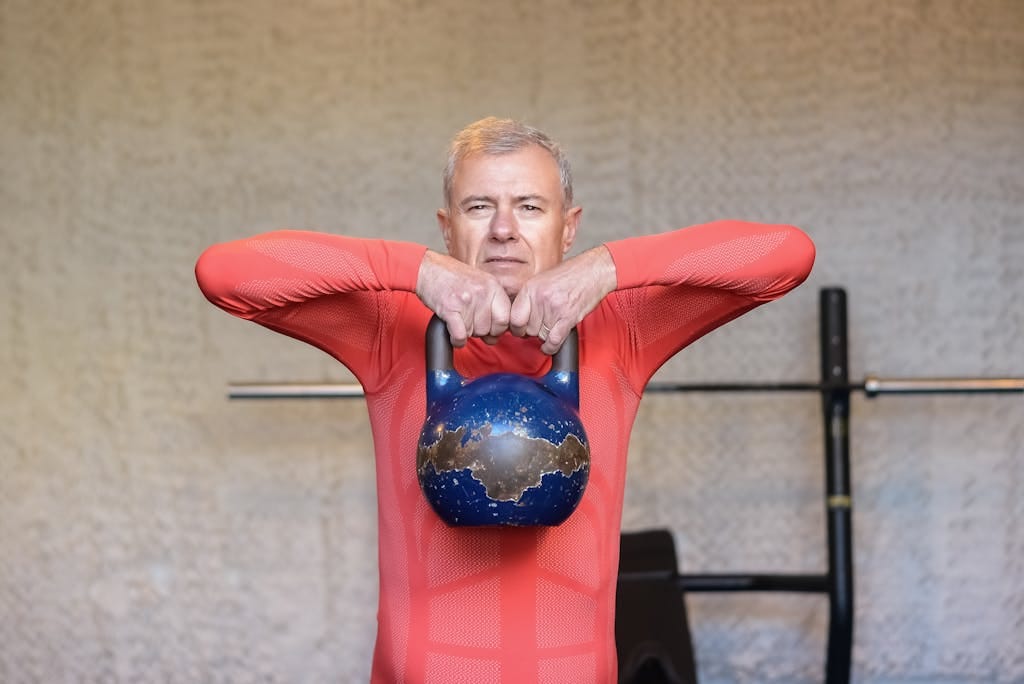
If you walk into any commercial gym today, you will see rows upon rows of shiny, expensive machines designed to isolate specific muscles. You see the seated leg extension, the bicep curl station, and the pec deck. For decades, we have been told that these machines are the safest and most effective way to stay in shape, especially as we get older. However, for those of us focused on longevity and functional independence, these machines are often a gilded cage. They strip away the need for balance, core stability, and neurological coordination—the very things that tend to fail us as we age. While a leg extension might make your quads look better in a mirror, it does almost nothing to help you get off a low sofa or catch yourself during a slip on an icy sidewalk.
The reality of aging is that your body doesn’t care about “muscle isolation”; it cares about integrated movement. Research in the longevity niche has increasingly pointed toward specific physical markers that serve as powerful predictors of all-cause mortality. These aren’t related to the size of your biceps, but rather to your ability to move heavy loads through a full range of motion while maintaining structural integrity. This is where the concept of “Survival Lifts” comes in. By focusing on fundamental movements that mimic real-world challenges, you aren’t just building a gym body—you are building a “life body.”
Why Machines are the “Fast Food” of Fitness
Machines are designed for one thing: convenience. They make it easy for a gym to move people through a circuit without needing a coach to teach them proper form. Because the machine dictates the path of the weight, your “stabilizer” muscles—the tiny fibers around your joints that prevent injury—essentially go on vacation. When you rely solely on machines, you develop “stupid strength.” You might be able to push 200 pounds on a chest press machine, but the moment you have to lift a heavy box into an overhead attic, your shoulders and core lack the coordination to handle the load safely.
Transitioning away from machines and toward “Survival Lifts” forces your brain and body to communicate. This neurological load is a massive benefit for longevity. Studies show that complex, multi-joint movements help preserve cognitive function and stave off neurodegenerative diseases. You aren’t just lifting for your muscles; you are lifting for your brain. By ditching the fixed-path machines, you reintroduce the “wobble” and the “strain” that forces your bones to become denser and your connective tissue to become more resilient.
Machine Training vs. Survival Lifts
| Feature | Gym Machine Training | Survival Lifts |
| Muscle Focus | Isolation (one muscle at a time). | Integration (entire chains of muscle). |
| Core Engagement | Minimal; the seat supports you. | Maximum; you are the support. |
| Balance Requirement | Zero; fixed path. | High; requires coordination. |
| Longevity Benefit | Purely aesthetic/hypertrophy. | Improves bone density and mobility. |
| Functional Carryover | Low (doesn’t mimic real life). | High (mimics lifting, carrying, rising). |
Survival Lift 1: The Goblet Squat (The Independence Maker)
The most important movement for any human over the age of 40 is the squat. However, we aren’t talking about the “ego lift” back squats you see in powerlifting videos. We are talking about the Goblet Squat. By holding a weight (a kettlebell or dumbbell) in front of your chest like a goblet, you create a counter-balance that allows you to sit deeper and keep your spine more vertical.
Why is this a survival lift? The ability to stand up from a deep-seated position is a direct indicator of your lower-body power and joint health. The “Sitting-Rising Test” is a famous clinical tool used by physicians to predict longevity; those who can get off the floor with minimal help from their hands have a significantly lower risk of death in the following decade. The Goblet Squat builds the specific quad, glute, and core strength required to maintain this independence. Furthermore, the front-loaded weight forces your upper back to work, preventing the “slump” that many adults develop.
Survival Lift 2: The Farmer’s Carry (The “Grip of Life”)
If you want to know how long someone is likely to live, look at their hands. Grip strength is one of the most studied biomarkers in the longevity world. A landmark study published in The Lancet found that for every 11-pound decrease in grip strength, there was a 17% increase in the risk of cardiovascular death and a 16% increase in all-cause mortality. Your grip strength is a “proxy” for your overall muscle mass and the health of your nervous system.
The Farmer’s Carry is the ultimate way to train this. Simply pick up two heavy weights and walk. While it looks simple, your body is performing a high-wire act of stabilization. Your core is bracing to keep you upright, your shoulders are pinned back to support the load, and your forearms are screaming to keep the weight from dropping. This lift builds “work capacity”—the ability of your heart and lungs to handle sustained stress. It also fixes your posture by forcing your “anti-slouch” muscles to stay engaged under load.
Survival Lift 3: The Deadlift Hinge (The Spinal Armor)
The word “deadlift” scares many people, especially those who have been told by doctors to “be careful with your back.” However, avoiding the hinge movement is exactly how you end up with a weak, injury-prone back. The Deadlift (specifically the Trap Bar Deadlift or Kettlebell Deadlift for beginners) is the king of posterior chain development. It teaches you how to pick up a heavy object from the ground using your hips and legs rather than your lower spine.
As we age, we tend to lose power in our “glute-hamstring” complex, which leads to the “old man shuffle” walk. The Deadlift reverses this by building explosive power in the hips. It also places a massive demand on bone mineral density in the hips and spine, which is the best defense against osteoporosis. When you deadlift, you are effectively putting “armor” on your spine. By training your body to handle a heavy “dead” weight on the ground, you make every other daily task—from gardening to carrying groceries—feel effortless.
Avoiding the “Fragility Trap”
Many fitness programs for older adults focus purely on flexibility or light cardio. While walking and stretching are great, they do not stop the process of Sarcopenia (muscle loss) or Osteopenia (bone loss). To stay young, you must provide your body with a reason to keep its muscles and bones. This requires “Mechanical Tension.”
Survival Lifts provide this tension in a way that machines cannot. When you have a heavy weight in your hands or on your frame, your body releases a cocktail of anabolic hormones, including growth hormone and testosterone. These hormones are the “fountain of youth” for your cells, helping to repair tissue and keep your metabolism high. If you only ever do “easy” movements, your body decides that it no longer needs to spend the energy required to maintain expensive muscle tissue. You must “fight” for your muscle mass as you age, and these three lifts are your best weapons in that battle.
The Survival Lift Weekly Protocol
| Day | Movement | Sets/Reps | Goal |
| Monday | Goblet Squat | 3 Sets of 10 | Focus on depth and keeping the chest up. |
| Wednesday | Farmer’s Carry | 4 Rounds of 40 Yards | Use the heaviest weights you can hold for 30 seconds. |
| Friday | Trap Bar Deadlift | 3 Sets of 5 | Focus on a flat back and driving through the heels. |
Related Articles
- Are You “Gym Strong” or Actually Strong? The Real Deadlift Benchmarks for Men
- 15 Fitness Lies Men Over 50 Still Believe (And the Truth That Keeps You Strong)
- Push-Ups Are Overrated—These 3 Shoulder Moves Build More Strength, Says a Weightlifting Coach
- The #1 Exercise Strategy for Managing PCOS—And Why Most Women Do It Wrong
- Struggling With Balance? This 1 Daily Habit Could Keep You Steady for Life