FREE SHIPPING OVER $50

Crunches Hurt Your Back? 5 Gentle Bed Exercises That Flatten Your Belly After 60

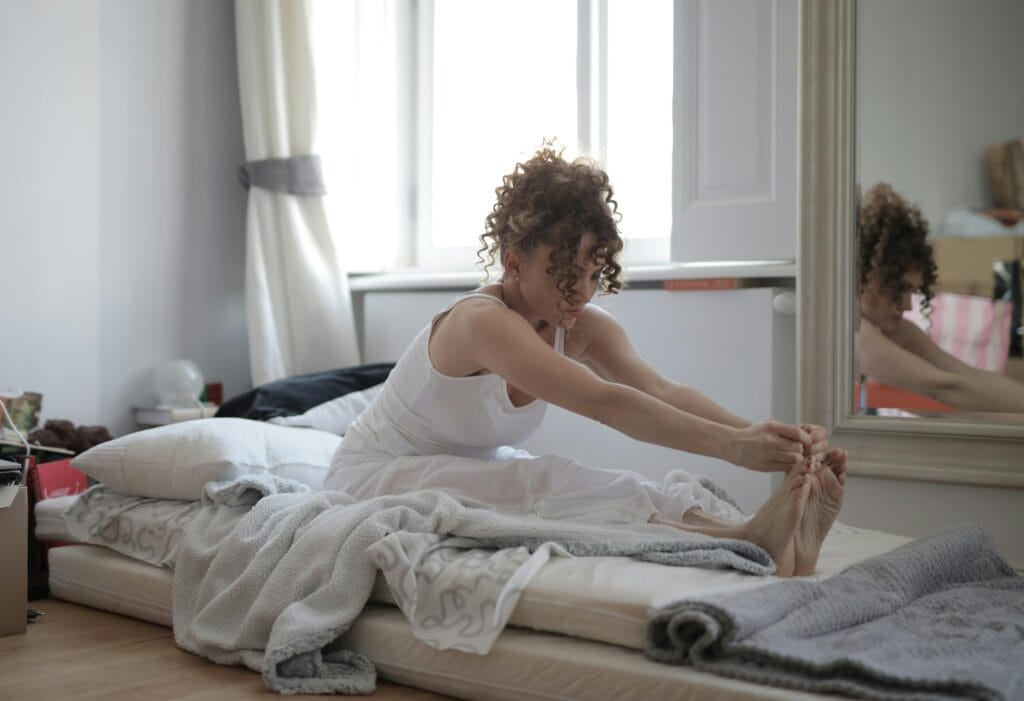
If you have ever rolled out a yoga mat, struggled through ten crunches, and felt like your lower back was being stabbed by a thousand needles, you are not alone. For decades, the fitness world has hailed the crunch as the “gold standard” for a flat stomach. But for those of us over 60, crunches can often do more harm than good.
As we age, our spinal discs lose some of their cushioning, and our necks become more sensitive to the repetitive pulling motion associated with traditional sit-ups. The result? A sore back, a strained neck, and a belly that hasn’t changed a bit. Fortunately, there is a better way. You can actually build a strong, flat core without ever leaving your mattress.
By shifting your workout to the bed, you provide your spine with a supportive, semi-firm surface that allows you to target the deep abdominal muscles without the typical “crunch pain.” Let’s look at why your back is screaming at you and how these five gentle bed moves can transform your midsection.
The Problem with Crunches After 60
To understand why crunches hurt, we have to look at the anatomy of the move. A crunch forces your spine into “flexion,” which is a fancy word for rounding your back. For a younger spine, this is usually fine. However, as we hit our 60s and beyond, this repetitive rounding puts immense pressure on the lumbar discs.
Moreover, many people unintentionally use their neck and hip flexors to “yank” themselves upward. This bypasses the abdominal muscles entirely. You end up working your hip joints and neck muscles while your core stays soft. This is why you can do 50 crunches and still see a “pooch” in your lower belly.
The “pooch” is often caused by a weak transversus abdominis (TVA). This is your body’s natural corset—the deepest layer of muscle that wraps around your midsection. Traditional crunches mostly hit the “six-pack” muscles (the rectus abdominis) on the surface, but they often ignore the TVA. To flatten the belly, we need to activate that deep corset muscle, and the best way to do that is through stable, low-impact movements.
Why the Bed is Your New Secret Weapon
You might feel like exercising in bed is “lazy,” but it is actually a smart physiological choice. A mattress—assuming it is reasonably firm—offers a unique blend of support and instability.
- Reduced Joint Impact: The mattress cushions your spine and tailbone, preventing the “bony” discomfort of a hard floor.
- Increased Muscle Engagement: Because a bed has a slight “give,” your core has to work harder to keep you stable. These are micro-adjustments that fire up those deep stabilizing muscles.
- Better Compliance: Let’s be honest—the hardest part of a workout is getting started. If you can perform your routine before you even get out of your pajamas, you are much more likely to stick with it every single day.
5 Gentle Bed Moves for a Flatter Belly
Perform each of these moves slowly. In the world of senior fitness, speed is the enemy of results. The slower you move, the more your muscles have to work.
1. The Pelvic Tilt (The “Zipper” Move)
This is the most important move on the list because it teaches you how to engage your deep core.
- How to do it: Lie on your back with your knees bent and feet flat on the mattress. Place your hands on your hip bones.
- The Action: Imagine there is a grape sitting under the small of your back. Gently try to “squish” the grape by pressing your lower back into the mattress. As you do this, imagine zipping up a tight pair of pants.
- Hold: Keep the squeeze for 5 seconds, then relax. Repeat 10 times.
2. Alternating Leg Slides
This move targets the lower abs without putting any strain on the hip joints.
- How to do it: Stay in the same position as the pelvic tilt.
- The Action: While keeping your lower back pressed into the bed (the “squished grape” position), slowly slide your right heel away from you until your leg is straight.
- The Return: Slowly pull the heel back to the starting position. The key is to keep your back perfectly flat the entire time. If your back arches, you’ve gone too far.
- Repetition: Do 10 slides per leg.
3. The Bed-Bound “Dead Bug”
The Dead Bug is a physical therapy staple because it builds core stability while protecting the spine.
- How to do it: Raise your arms toward the ceiling and lift your legs into a “tabletop” position (knees bent at 90 degrees).
- The Action: Slowly lower your right arm behind your head and your left leg toward the mattress. Only go as low as you can without your back lifting off the bed.
- The Return: Bring them back to center and switch sides.
- Tip: If moving both limbs is too hard, just move your legs while keeping your hands on your belly to feel the muscles working.
4. The Glute Bridge with a Squeeze
This move strengthens the pelvic floor and the lower abs simultaneously.
- How to do it: Feet flat, knees bent. Place a small pillow or a rolled-up towel between your knees.
- The Action: Squeeze the pillow gently and lift your hips toward the ceiling.
- The Hold: At the top of the bridge, pull your belly button toward your spine. Hold for 3 seconds, then slowly lower your hips back down.
- Repetition: Repeat 12 times.
5. Knee-to-Chest “Tucks”
This is the perfect finishing move because it massages the lower back while engaging the lower abdominals.
- How to do it: Lie flat. Pull one knee into your chest and hug it gently.
- The Action: Instead of just holding it, use your abdominal muscles to “pull” the knee closer as you exhale. Switch legs.
- Advanced: Try to lift both knees at once, but only if you can keep your lower back pressed into the mattress.
Comparing Bed Moves to Traditional Crunches
If you are still skeptical that a bed routine can be effective, take a look at how these moves stack up against the old-school crunch.
| Feature | Traditional Crunches | Gentle Bed Routine |
| Spinal Pressure | High (Compression) | Low (Neutral Spine) |
| Target Muscle | Surface Abs (Six-Pack) | Deep Core (Transversus) |
| Neck Strain | High | Zero |
| Ease of Start | Low (Must get on floor) | High (Start in bed) |
| Back Pain Risk | Common | Very Low |
Consistency Over Intensity
For those of us over 60, the goal of fitness shifts from “bulking up” to “staying functional.” A flatter belly is a great aesthetic goal, but the real benefit of these bed moves is the support they provide for your back. A strong core means you can pick up your groceries, walk the dog, and get in and out of the car without a groan.
Because these moves are gentle, you can—and should—do them every morning. It takes less than eight minutes to run through this circuit twice. Over time, this consistency builds a level of “passive” core strength. You will start to notice that you stand taller and sit straighter without even trying.
Related Articles
- The “Lazy Girl” Workout: 10 Couch Moves That Tone Your Body While You Binge Netflix
- One Simple Exercise That Eases Knee Arthritis Pain Better Than Rest, Backed by Science
- No Time? 10 Genius Ways to Squeeze Workouts Into Your Busy Day
- Unwrap The Holiday Gift of Strength: How Training Adds Years to Your Life
- Doctors Said He’d Never Be Strong Again at 65—This Navy SEAL Proved Them Wrong with 5 Simple Exercises