FREE SHIPPING OVER $50

This Dad Lost 60 Pounds and Dunked at 40 Using Just 6 Simple Rules (Here’s Exactly What He Did)

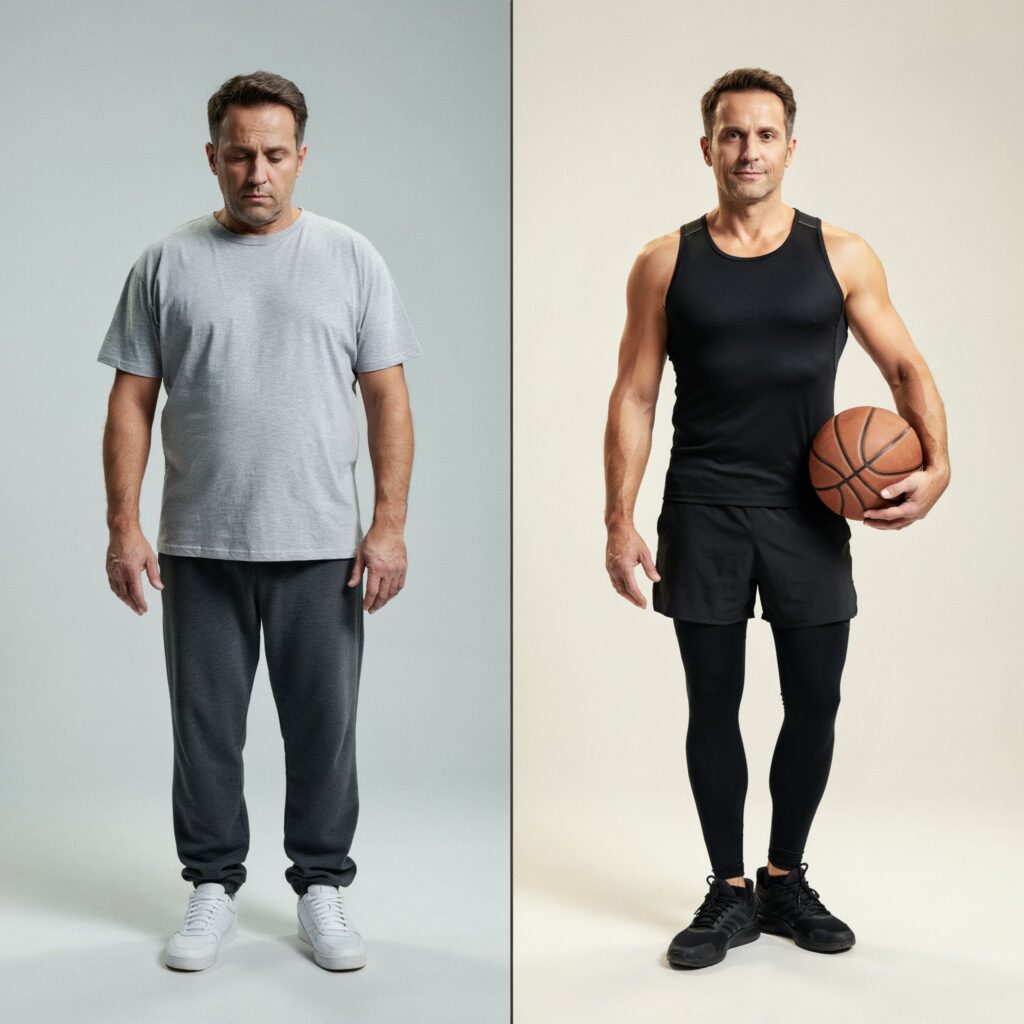
Most men in their 40s assume that chronic joint pain, slow metabolism, and a growing midsection are unavoidable milestones of aging, resigning themselves to passive evenings on the couch and treating athletic explosive power as an ancient memory reserved exclusively for teenagers. However, physical decline in midlife is rarely an inevitable biological sentence; rather, it is usually the compound result of sedentary work habits, chronic stress, poor sleep, and inflammatory diets. By abandoning extreme crash diets and punishing, joint-destroying workout routines in favor of smart, biomechanically sound movement and sustainable metabolic habits, one 40-year-old father completely transformed his body—shedding 60 pounds of stubborn fat, restoring elastic tendon power, and dunking a standard 10-foot basketball rim for the first time in his life.
The Science of Rebuilding Athletic Power in Midlife
To understand how a man in his 40s can build explosive athletic capacity while dropping significant body mass, you have to look at how tendons, nervous system pathways, and muscle tissue adapt to physical strain. Explosive movement—like jumping high enough to dunk a basketball—relies heavily on the stretch-shortening cycle (SSC) of your lower-body tendons, particularly the Achilles and patellar tendons.
As adults age, tendons naturally lose collagen elasticity and become stiff and brittle, especially when combined with excess body weight and long hours spent sitting in chairs.
Carrying an extra 60 pounds adds hundreds of pounds of joint impact force every time your feet hit the floor.
Losing that excess weight immediately reduces joint compression stress.
Meanwhile, progressive isometric and plyometric exercises stimulate tendon remodeling, increasing collagen synthesis and rebuilding elastic stiffness.
When you pair targeted tendon loading with proper protein intake and systemic inflammation reduction, your nervous system learns to fire motor units explosively again, proving that biological age does not cap athletic potential.
“You do not stop jumping because you grow old; you grow old because you stop jumping. Rebuilding tendon elasticity and dropping excess body mass restores explosive power at any age.”
At a Glance: The 6 Transformation Rules Compared
Comparing these core transformation strategies side-by-side illustrates how targeted daily choices drive rapid fat loss, protect aging joints, and restore athletic performance.
| Transformation Rule | Primary Target Area | Key Health & Performance Benefit |
| 1. High-Protein Energy Deficit | Fat loss & lean muscle preservation | Preserves fast-twitch muscle fibers while melting visceral fat |
| 2. Heavy Tendon & Ankle Loading | Achilles & patellar tendon stiffness | Eliminates knee pain and builds elastic spring power |
| 3. Progressive Jump Plyometrics | Neural recruitment & explosive force | Retrains the central nervous system to fire fast-twitch fibers |
| 4. Low-Impact Zone 2 Cardio | Mitochondrial density & fat oxidation | Burns fat efficiently without causing joint wear or cortisol spikes |
| 5. Full-Range Joint Mobility | Hips, ankles, and spinal alignment | Unlocks full stride power and protects the lower back |
| 6. Restorative Deep Sleep | Growth hormone release & tendon repair | Accelerates overnight tissue recovery and lowers systemic inflammation |
The 6 Simple Rules That Made It Happen
1. Maintain a Moderate, High-Protein Caloric Deficit
Crash diets that drastically cut calories destroy lean muscle mass, lower your resting metabolic rate, and leave you feeling constantly exhausted. To drop 60 pounds without losing power, this dad focused on a manageable, 500-calorie daily deficit anchored by high protein intake.
Consuming roughly 1 gram of protein per pound of target body weight provided the essential amino acids needed to preserve fast-twitch muscle fibers while shedding body fat.
Prioritizing whole foods like lean beef, chicken breast, eggs, wild fish, and Greek yogurt kept satiety high and blunted sugar cravings.
Shedding fat while keeping muscle improved his power-to-weight ratio, meaning his legs had far less mass to lift off the ground with every jump attempt.
2. Strengthen the Tendons Before Chasing Explosive Jumps
Jumping repeatedly with weak, underprepared tendons is a fast track to patellar tendonitis and plantar fasciitis. Before attempting to jump high, he spent weeks building tendon resilience using heavy isometric holds.
Isometric exercises—such as holding a deep wall sit or standing calf raise under load—stimulate collagen synthesis inside tendons without grinding irritated joint cartilage.
Gradually progressing from isometric holds to eccentric (slow-lowering) heel drops and tibialis raises fortified his ankles, calves, and knees.
Building strong, resilient tendons created a rigid internal spring capable of absorbing heavy landing forces and storing explosive elastic energy.
3. Graduate to Controlled, Progressive Plyometrics
Once his tendons adapted to isometric loading and his body weight dropped, he introduced low-impact plyometric drills to retrain his nervous system. Jumping is an athletic skill that requires rapid nerve-to-muscle communication.
He started with low-amplitude drills like pogo hops, skipping, and box jumps, which eliminate high landing forces while teaching muscles to contract explosively.
As his coordination improved, he progressed to depth jumps and maximal approach jumps.
Limiting plyometric sessions to twice a week with ample rest between reps kept his central nervous system fresh, allowing every jump to produce maximum force output.
4. Build a Deep Aerobic Engine with Low-Impact Cardio
High-intensity cardio workouts can cause excessive joint strain when carrying extra body weight. To maximize fat loss while protecting his knees, he relied heavily on low-impact Zone 2 cardio, such as incline treadmill walking and stationary cycling.
Exercising in Zone 2 keeps your heart rate at a conversational pace where your body relies almost exclusively on fat oxidation for fuel.
Building a robust aerobic base increased mitochondrial density in his muscle cells, helping him burn fat steadily without elevating baseline stress hormones like cortisol.
Furthermore, improved cardiovascular circulation accelerated recovery between explosive jumping sessions by flushing away metabolic waste.
5. Restore Full Mobility in the Hips and Ankles
Decades of sitting at a desk cause hip flexors to shorten and ankle joints to lose dorsiflexion mobility. When your ankles and hips are stiff, your body cannot sink into a deep, power-generating jump squat position, forcing your lower back to take unnecessary strain.
He dedicated ten minutes every morning to targeted joint mobility work:
- Knees-Over-Toes Split Squats: Strengthened the quadriceps through a full range of motion while stretching tight hip flexors.
- Ankle Dorsiflexion Wall Drives: Expanded ankle flexibility, allowing the knees to travel naturally forward over the toes during jump prep.
- Pigeon Pose Holds: Opened up tight glutes and deep hip rotators to improve movement fluidness.
Restoring full mobility unlocked hidden explosive power, allowing his hips to extend fully at the top of every jump.
6. Prioritize Deep Sleep and Systemic Inflammation Control
Muscle repair, tendon remodeling, and fat oxidation do not happen during workouts; they happen while you sleep. Chronic sleep deprivation suppresses natural growth hormone release, lowers testosterone, and elevates inflammatory markers that cause lingering joint aches.
He optimized his night routine by turning off bright screens an hour before bed, keeping his bedroom cool at 65 degrees, and taking magnesium glycinate to calm his nervous system.
Getting seven to eight hours of quality sleep each night allowed his tendons to repair overnight, preventing overuse injuries and giving him the energy required to train consistently.
2 Common Myths That Sabotage Midlife Fitness
Steering clear of outdated fitness myths ensures your transformation stays safe, smooth, and sustainable:
Myth 1: Heavy Squats and Deadlifts Are Dangerous for Older Knees and Backs
Many middle-aged adults avoid lifting weights out of fear of injury. In reality, properly scaled resistance training increases bone density and strengthens the deep stabilizing muscles supporting your spine and knees. Injury risk spikes when poor form or excessive weight is used, not from the lifting movement itself.
Myth 2: You Must Suffer Through Joint Pain to Make Progress
“No pain, no gain” is a dangerous mindset for midlife athleticism. Sharp, localized joint pain is a clear warning signal that tissue capacity has been exceeded. True progress comes from loading tissues just below the pain threshold, allowing tendons and joints to adapt safely over time.
Related Articles
- I’m a Longevity Doctor—This One Neglected Exercise Predicts How Well You’ll Age Better Than Any Blood Test
- Forget Collagen and NAD+: This Cheap Supplement Is What Women Over 40 Should Actually Be Taking
- The Missing Link to Living Longer? New Research Says These 8 B Vitamins Quietly Repair Your DNA and Slash Disease Risk
- Before You Buy Another Supplement, Read This—5 Must-Know Facts That Could Save Your Health
- The 5 Supplements That Could Help You Beat High Cholesterol—No Prescription Needed