FREE SHIPPING OVER $50
The Core Strength Lie: Why Squats and Deadlifts Aren’t Enough—And the Direct Ab Work You Actually Need

For years, fitness gurus and old-school lifters have repeated the same gospel: as long as you squat deep and deadlift heavy, you never need to spend a single second doing direct ab work. It sounds like the ultimate efficiency hack, but relying entirely on heavy compound movements to build a strong midsection is one of the biggest training mistakes you can make. While heavy barbells certainly force your torso to brace against brutal loads, they completely miss critical functions of your abdominal wall, leaving you with hidden weaknesses, missed strength plateaus, and an increased risk of lower back injury.
The Myth of the “Squat-Built” Core
The idea that compound lifts build a complete core comes from a basic misunderstanding of how abdominal muscles function under tension. When you unrack a heavy barbell for a back squat or pull a heavy deadlift off the platform, your core muscles contract isometrically. In plain English, they freeze in place to create internal pressure and keep your spine from folding like an accordion.
While this isometric bracing is vital for moving heavy weights safely, isometric contraction alone does not take your rectus abdominis (the six-pack muscle) or your obliques through a full dynamic range of motion. Muscles grow and strengthen most effectively when they contract, lengthen under load, and move through a full joint arc.
Electromyography (EMG) studies measuring muscle activation consistently reveal a surprising truth: rectus abdominis activation during maximum effort squats and deadlifts is remarkably low compared to basic bodyweight core exercises. During a heavy squat, your lower back muscles (erector spinae) work overtime, while your front abs act as passive stabilizers. If you rely solely on big lifts, your lower back eventually outpaces your abs, creating an anterior pelvic tilt and setting you up for chronic lower back pain.
Why Compound Lifts Fall Short for Core Development
To understand why heavy compounds fail to build a complete midsection, you need to look at what your core actually does. Your core is not just one muscle; it is a complex girdle of tissue designed to move, twist, and resist force in multiple directions.
Heavy barbell exercises train your core in only one primary capacity: isometric anti-flexion. However, your core is designed for four primary movement patterns:
- Spinal Flexion: Curving the spine forward to pull the ribs toward the pelvis (e.g., crunches or leg raises).
- Anti-Extension: Resisting the arching of your lower back under overhead or forward forces (e.g., ab wheel rollouts or planks).
- Anti-Rotation: Resisting rotational forces that try to twist your spine off-center (e.g., Pallof presses).
- Lateral Anti-Flexion: Resisting bending sideways under uneven loads (e.g., suitcase carries).
Because heavy squats and deadlifts completely ignore dynamic flexion, anti-rotation, and lateral stabilization, your core development quickly becomes unbalanced. As your legs and upper back grow stronger, your front abdominal wall becomes the weakest link in your kinetic chain.
| Core Training Feature | Heavy Compound Lifts | Targeted Direct Ab Work |
| Primary Core Role | Isometric Bracing (Static) | Dynamic Contraction & Resistance |
| Abdominal Muscle Activation | Low to Moderate | High to Maximum |
| Spinal Range of Motion | Rigid / Zero Movement | Controlled Flexion & Extension |
| Progressive Overload | Limited to Barbell Load | High (Scalable via Cables & Weights) |
| Injury Prevention Benefit | Protects Spine Under Load | Fixes Muscle Imbalances & Back Pain |
The Anatomy of a Truly Bulletproof Core
If you want a midsection that looks impressive and protects your spine during heavy training, you must target all four major quadrants of your core anatomy directly.
1. Rectus Abdominis
This is the visible sheet of muscle on the front of your stomach. Its primary job is flexing your spine forward and tilting your pelvis backward. Without direct loaded flexion, your rectus abdominis will lack thickness and definition.
2. Transverse Abdominis (TVA)
Often referred to as nature’s weight belt, the transverse abdominis sits deep beneath your visible abs. It acts as a corset, compressing your internal organs and creating intra-abdominal pressure. Direct anti-extension training builds the deep TVA strength required to stay rigid under heavy loads.
3. Internal and External Obliques
Running diagonally along the sides of your waist, your obliques control torso rotation and side-bending. Strong obliques stabilize your hips and pelvis, preventing rotational energy leaks during athletic movements.
The 4 Direct Ab Exercises You Need in Your Routine
Instead of wasting time on hundreds of mindless floor crunches, focus on high-yield, progressive core movements that complement your heavy lifting routine.
1. The Ab Wheel Rollout (Anti-Extension)
The ab wheel rollout is arguably the most effective core exercise in existence. As you roll forward, gravity tries to force your lower back into a deep arch. Your abs must work furiously to keep your spine flat and pull your body back to the starting position.
- How to do it: Kneel on a pad with your hands on the ab wheel. Brace your abs hard, tuck your chin, and slowly roll forward until your arms are extended overhead. Squeeze your core to pull yourself back up without letting your lower back sag.
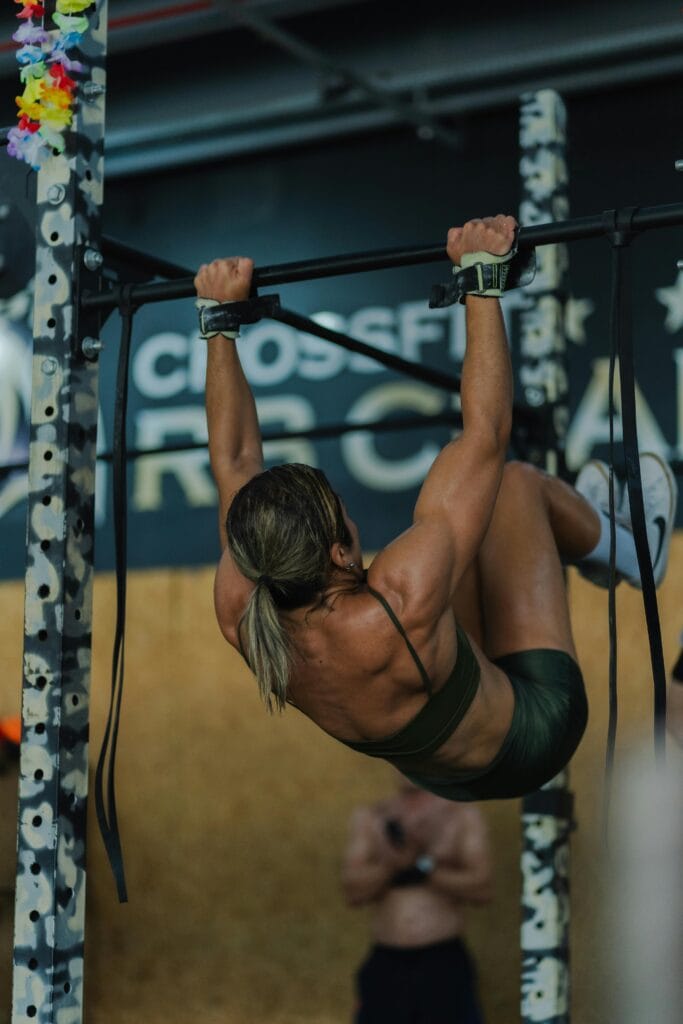
2. Hanging Leg Raises (Spinal & Pelvic Flexion)
Most people do leg raises incorrectly by simply swinging their legs up using their hip flexors. To target your abs, you must focus on curling your pelvis upward toward your chest at the top of the rep.
- How to do it: Hang from a pull-up bar with an overhand grip. Instead of lifting your feet toward the ceiling, focus on pulling your knees toward your chest while rolling your pelvis upward. Pause for a second at the peak contraction before lowering down slowly.
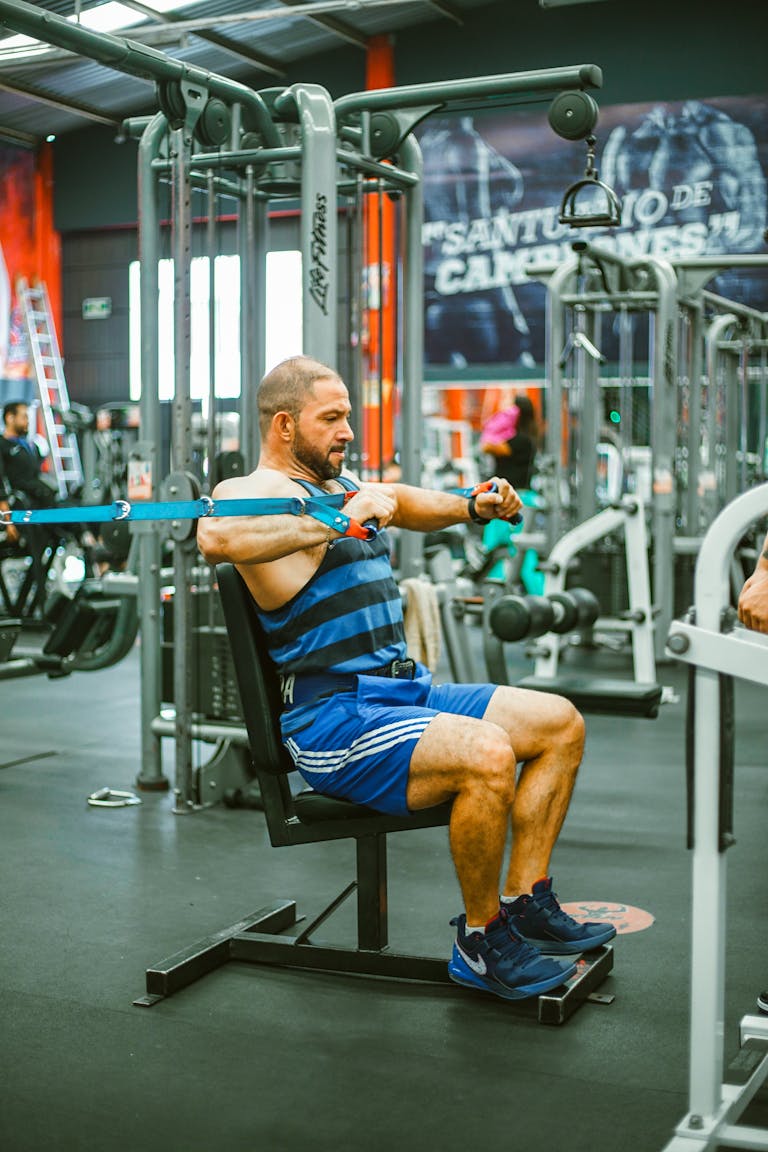
3. The Pallof Press (Anti-Rotation)
The Pallof press teaches your core to resist rotational forces, building incredible oblique density and lateral stability that carries over directly to heavy deadlifts and overhead presses.
- How to do it: Attach a resistance band or cable handle at chest height. Stand perpendicular to the anchor point, pull the handle to the center of your chest, and press it straight out in front of you. Resist the urge to turn toward the anchor point as your arms extend.
4. Weighted Cable Crunches (Progressive Overload)
Just like your biceps or chest, your abdominal muscles respond best to progressive resistance. Weighted cable crunches allow you to load spinal flexion safely without placing unnecessary stress on your lower back.
- How to do it: Kneel in front of a high cable pulley with a rope attachment. Hold the rope behind your head, tuck your chin, and pull your elbows down toward your knees by flexing your abs. Focus on crunching your ribcage downward rather than simply hinging at the hips.
How to Program Direct Core Work Without Burning Out
You do not need to spend forty-five minutes on abs every single day. In fact, training your core too heavily right before heavy squats or deadlifts can compromise your spinal stability and increase your risk of injury.
To get the best results without sabotaging your main workouts, follow these simple programming rules:
- Train Core at the End of Your Session: Always save direct ab work for the end of your workout after your primary compound lifts are completed.
- Keep the Frequency Moderate: Train your core two to three times per week with high intensity rather than doing light daily volume.
- Focus on Quality over Quantity: Treat your core exercises like heavy strength work. Perform 3 to 4 sets of 8 to 12 controlled repetitions with progressive resistance rather than sets of 50 fast, sloppy reps.
Related Articles
- The Simple Plank Test: If You Can’t Hit This Number, Your Core Is Weaker Than 90% of Fit Adults
- Build Stronger Legs at Home with These Trainer-Approved Dumbbell Exercises
- Strengthen Every Muscle In Your Body with This 5-Move Resistance Band Workout
- Want Strong, Toned Arms? Try This Trainer’s 8-Exercise Routine Today
- 5 Low-Impact Exercises to Strengthen Your Whole Body—No Jumping Needed