FREE SHIPPING OVER $50

Forget Ozempic: 7 Gut-Healing Foods That Fire Up Your Body’s Own GLP-1, Say Top RDs

While blockbuster prescription weight-loss injections dominate current health headlines, your gastrointestinal tract actually possesses a built-in mechanism to produce the exact same appetite-regulating hormone naturally. Every time you eat specific nutrient-dense whole foods, specialized cells lining your lower intestine release glucagon-like peptide-1 (GLP-1), sending powerful satiety signals straight to your brain. Rather than relying solely on synthetic medications to quiet persistent food cravings, registered dietitians emphasize that you can optimize your metabolic health by feeding your microbiome the raw materials it needs to trigger your internal GLP-1 pathways naturally.
How Your Gut Secretes Its Own Satiety Hormone
To understand how food turns into a natural appetite suppressant, you need to look at the lining of your lower digestive tract. Embedded within your intestinal walls are specialized enteroendocrine cells known as L-cells. These L-cells act as delicate sensors, constantly monitoring the nutrient content of the food passing through your system.
When you consume specific types of complex carbohydrates, healthy fats, and prebiotic fibers, your L-cells immediately respond by secreting GLP-1 directly into your bloodstream. Once released, natural GLP-1 performs three primary jobs that keep you feeling full and satisfied:
- It signals your brain’s satiety center to reduce hunger signals and quiet constant thoughts about food.
- It slows down the rate at which your stomach empties after a meal, keeping physical fullness elevated for hours.
- It prompts your pancreas to release insulin efficiently, keeping your post-meal blood sugar levels steady and preventing sudden energy crashes.
Unlike pharmaceutical semaglutide injections, which deliver a continuous, high-dose synthetic hormone flood, your body produces natural GLP-1 in balanced pulses. This natural release works alongside complementary gut hormones like peptide YY and cholecystokinin, delivering a smooth, comfortable feeling of fullness without causing persistent nausea or digestive distress.
The Microbiome Engine: Turning Fiber into Fullness Signals
Your gut microbiome plays the most important role in activating these L-cells. Human digestive enzymes cannot break down prebiotic fiber and resistant starch in your stomach or small intestine. Consequently, these nutrients travel intact directly into your colon, where trillions of beneficial gut bacteria feed on them.
As your microbes ferment these complex plant fibers, they produce powerful metabolic byproducts called short-chain fatty acids, specifically acetate, propionate, and butyrate. These short-chain fatty acids act as direct chemical keys. They bind to specific protein receptors on the surface of your L-cells, turning on the molecular switch that floods your bloodstream with natural GLP-1.
Because your gut bacteria require a steady supply of fermentable plant matter to keep this process running, your daily grocery choices determine how much natural satiety hormone your body can generate.
7 Gut-Healing Foods That Fire Up Natural GLP-1
Dietitians point to seven specific whole foods that deliver high concentrations of the exact fibers, fats, and plant compounds needed to maximize your body’s GLP-1 output.
1. Rolled Oats and Whole Barley
Oats and barley represent two of the richest sources of beta-glucan, a uniquely viscous soluble fiber. When beta-glucan mixes with fluid in your stomach, it expands into a thick, gel-like substance that significantly slows down digestion. As this gel moves into your large intestine, your gut microbes ferment it into high amounts of propionate, driving robust GLP-1 production that keeps afternoon sugar cravings at bay.
2. Black Beans and Lentils
Legumes like black beans, lentils, and chickpeas contain high levels of resistant starch along with soluble fiber. Resistant starch literally resists early digestion, arriving in your colon where it fuels Bifidobacteria and other helpful species. This fermentation process creates massive surges of butyrate, one of the most potent triggers for L-cell GLP-1 secretion.
3. Kefir and Fermented Kimchi
Fermented foods deliver a two-fold benefit for your metabolic health. Unsweetened kefir, kimchi, sauerkraut, and kombucha supply live beneficial bacteria directly to your digestive tract while simultaneously delivering pre-formed postbiotic compounds. By reducing low-grade intestinal inflammation, fermented foods help repair your mucosal barrier, allowing your L-cells to operate at peak hormonal efficiency.
4. Chia Seeds and Ground Flaxseeds
Chia seeds and ground flaxseeds contain high amounts of mucilaginous fiber and plant-based alpha-linolenic acid (ALA) omega-3 fatty acids. When soaked, chia seeds absorb up to twelve times their weight in water, creating a physical mass that gently delays gastric emptying. Furthermore, the healthy fats in flaxseeds interact with gut receptors to trigger an immediate, acute release of GLP-1 during digestion.
5. Extra Virgin Olive Oil and Dark Berries
Polyphenols are vibrant plant antioxidants found abundantly in dark berries, green tea, and cold-pressed extra virgin olive oil. When you pair healthy monounsaturated fats from olive oil with the polyphenol anthocyanin found in blueberries and blackberries, you create a powerful synergy. These compounds bind to free fatty acid receptors in your gut lining, triggering rapid GLP-1 release before the meal even leaves your stomach.
6. Broccoli and Brussels Sprouts
Cruciferous vegetables like broccoli, Brussels sprouts, and kale contain glucosinolates alongside rough prebiotic fiber. These compounds nourish a specific gut microbe called Akkermansia muciniphila. Research shows that higher levels of Akkermansia in your gut mucus layer directly correlate with improved glucose tolerance, a stronger intestinal wall, and elevated baseline GLP-1 levels.
7. Green Tea and Yerba Mate
Green tea and yerba mate contain high concentrations of epigallocatechin gallate (EGCG), a specialized polyphenol compound. Clinical studies demonstrate that EGCG stimulates gut hormone secretion while simultaneously inhibiting enzymes that normally break down GLP-1 in your bloodstream. Drinking brewed green tea throughout the morning helps extend the lifespan of the natural GLP-1 your body produces after meals.
At a Glance: How These Foods Work in Your Gut
| Food Group | Active Compound | Primary Gut Mechanism | Daily Target |
| Oats & Barley | Beta-Glucan Soluble Fiber | Forms viscous gel; produces propionate to stimulate L-cells | 1/2 cup cooked daily |
| Black Beans & Lentils | Resistant Starch | Ferment into high butyrate levels in the lower colon | 1/2 cup to 1 cup daily |
| Kefir & Kimchi | Probiotics & Postbiotics | Reduces gut inflammation to restore L-cell sensitivity | 1/2 cup kefir or 2 tbsp kimchi |
| Chia & Flaxseeds | Mucilaginous Fiber & Omega-3s | Expands stomach volume and triggers fatty acid receptors | 1 to 2 tablespoons daily |
| Extra Virgin Olive Oil | Oleic Acid & Polyphenols | Directly activates mucosal fatty acid receptors | 1 to 2 tablespoons daily |
| Broccoli & Sprouts | Prebiotic Fiber & Glucosinolates | Nourishes Akkermansia bacteria to boost baseline hormone levels | 1 to 2 cups cooked daily |
| Green Tea | EGCG Polyphenols | Inhibits enzymes that break down active GLP-1 | 2 to 3 cups brewed daily |
Practical Meal Blueprint for Maximum Natural GLP-1
Building a meal plan that maximizes your natural fullness hormones does not require complicated recipes or restrictive dieting. Instead, focus on combining multiple GLP-1 triggers onto a single plate.
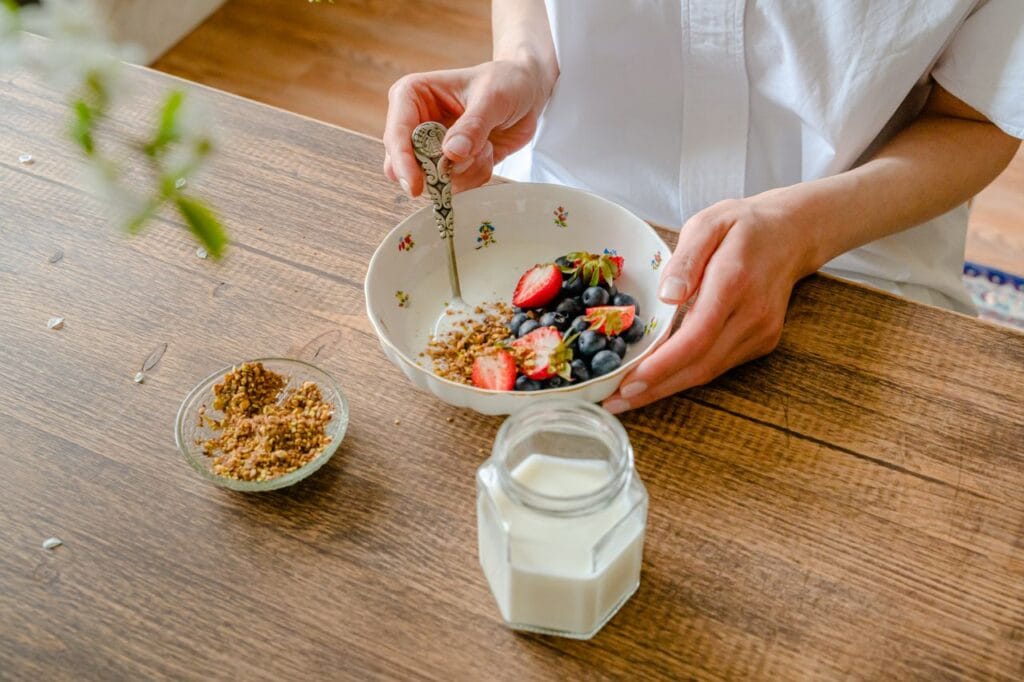
- Satiating Morning Bowl: Cook 1/2 cup of rolled oats in water or milk, then stir in 1 tablespoon of ground flaxseed, a handful of blueberries, and a sprinkle of walnuts. Pair it with a hot mug of steeped green tea.
- Metabolic Power Salad: Toss 2 cups of chopped kale and spinach with 1/2 cup of rinsed black beans, roasted broccoli florets, and a half cup of cooked quinoa. Drizzle generously with cold-pressed extra virgin olive oil and lemon juice.
- Gut-Restorative Dinner: Roast a piece of wild salmon alongside Brussels sprouts and a side of warm cooked barley. Add a spoonful of unpasteurized raw sauerkraut on the side for a beneficial probiotic kick.
3 Daily Habits That Keep Natural GLP-1 High
Beyond your food choices, three simple lifestyle adjustments can further amplify your body’s natural hormone output.
- Hydrate Consistently Throughout the Day: Viscous soluble fibers like beta-glucan and chia mucilage require adequate water to swell properly in your digestive tract. Drink at least eight glasses of water daily to help these fibers form the slow-digesting gels that drive fullness.
- Chew Your Food Thoroughly: Mechanical digestion begins in your mouth. Chewing thoroughly breaks down tough plant cell walls, making it far easier for your digestive enzymes and gut bacteria to access prebiotic fibers later on.
- Minimize Ultra-Processed Artificial Sweeteners: Frequent consumption of artificial additives can alter your gut flora composition, reducing the population of beneficial Akkermansia bacteria and blunting your L-cells’ responsiveness over time.
Related Articles
- Forget Probiotic Pills—RDs Say These 10 Foods Naturally Fix Your Gut Health Fast
- Sleepless Nights? This Late-Night Snack is Loaded with Melatonin and Magnesium
- Magnesium Magic: Top Picks for Women Over 40 and Their Health Benefits
- 7 Anti-Aging Foods That Experts Say You Should Eat Daily for Youthful Skin
- The 5 Surprising Nutrients You Need to Boost Collagen Production Naturally—#1 You Already Have in Your Kitchen