FREE SHIPPING OVER $50

The Squat Count Test That Puts You in the Top 10% of Leg Strength After 60, According to New Research

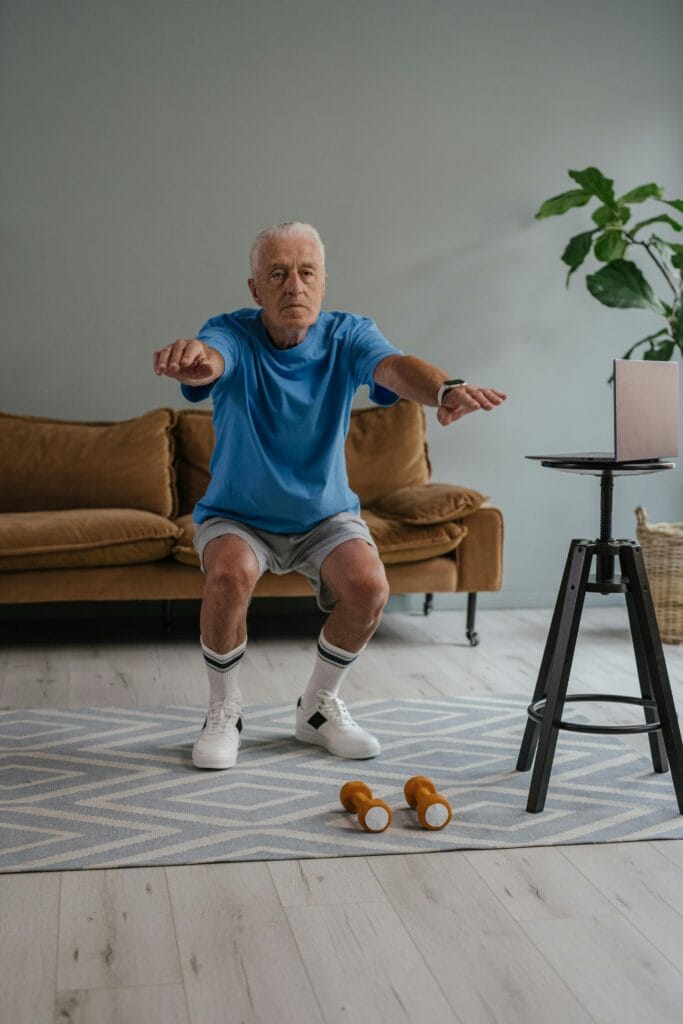
If you want to know how well your body is actually aging, forget about the number on your bathroom scale and look down at your legs instead. While most people spend their sixties tracking cholesterol numbers or worrying about heart health, longevity researchers are increasingly focused on a much simpler metric: your lower body power. New exercise physiology research shows that your ability to stand up from a chair repeatedly without using your hands serves as a massive crystal ball for your physical autonomy, metabolic resilience, and overall lifespan.
What Is the 30-Second Chair Stand Test?
Medical researchers call this assessment the 30-Second Chair Stand Test. Developed originally as part of the Senior Fitness Test protocol at California State University, this simple movement measures your dynamic leg strength, endurance, and power output.
Unlike heavy barbell back squats in a gym, this test relies entirely on your body weight and a standard dining chair. You sit on the edge of the seat, cross your arms over your chest, and stand up to a fully erect position before sitting back down as many times as possible in 30 seconds.
Because the test forces your quadriceps, glutes, hamstrings, and core muscles to move your full body weight against gravity without help from your upper body, it provides an unvarnished look at your true neuromuscular condition.
The Squat Count Benchmarks: Where Do You Stand?
Most adults over age 60 can manage somewhere between 10 and 15 repetitions during the 30-second window. However, hitting the top 10% tier requires significantly more output.
Research normative data categorized across thousands of healthy older adults reveals distinct performance tiers based on age and gender. Reaching the top 10% means you possess leg power that rivals individuals decades younger than you.
| Age Bracket | Gender | Below Average | Average Range | Top 10% Elite Target |
| 60 to 64 | Men | Under 14 reps | 14 to 19 reps | 22 or more reps |
| 60 to 64 | Women | Under 12 reps | 12 to 17 reps | 20 or more reps |
| 65 to 69 | Men | Under 12 reps | 12 to 18 reps | 21 or more reps |
| 65 to 69 | Women | Under 11 reps | 11 to 16 reps | 19 or more reps |
| 70 to 74 | Men | Under 11 reps | 11 to 17 reps | 19 or more reps |
| 70 to 74 | Women | Under 10 reps | 10 to 15 reps | 18 or more reps |
| 75 to 79 | Men | Under 10 reps | 10 to 15 reps | 18 or more reps |
| 75 to 79 | Women | Under 9 reps | 9 to 14 reps | 16 or more reps |
| 80 to 84 | Men | Under 8 reps | 8 to 13 reps | 16 or more reps |
| 80 to 84 | Women | Under 7 reps | 7 to 12 reps | 15 or more reps |
If you hit or exceed the elite benchmark for your age category, your lower body strength sits comfortably in the top decile of population norms.
Why Leg Strength Is the Ultimate Predictor of Longevity
Your leg muscles represent the largest muscle group in your entire body. When you maintain strong glutes and quadriceps as you age, you protect yourself against far more than just awkward stumbles.
First, skeletal muscle acts as your body’s primary metabolic sink. Every time you perform a squatting movement, your thigh muscles absorb excess glucose directly out of your bloodstream without requiring massive surges of insulin. As a result, maintaining strong legs keeps your blood sugar stable and significantly lowers your risk of developing metabolic conditions.
Second, lower body power directly correlates with cognitive brain health. When you drive power through your leg muscles, your nervous system releases growth factors like Brain-Derived Neurotrophic Factor (BDNF). This protein stimulates the growth of new neural connections and helps shield your brain against age-related memory decline.
Third, lower body strength provides a physical buffer against accidental falls. Falling remains one of the leading threats to independent living for older adults. Strong leg muscles give you the quick reaction speed and physical power needed to catch yourself if you lose your balance.
“Leg strength isn’t just about athletic performance in older age—it is the literal currency of your physical freedom and everyday independence.”
How to Take the 30-Second Squat Test at Home
You do not need fancy lab equipment or expensive gym memberships to test your leg strength today. You can safely perform this assessment right in your living room in less than a minute.
Step 1: Set Up Your Equipment
Find a sturdy, armless chair with a seat height of approximately 17 inches. Place the back of the chair flat against a wall so it cannot slide backward while you move.
Step 2: Get into Position
Sit comfortably on the front edge of the seat with your feet flat on the floor, spaced about shoulder-width apart. Cross your arms over your chest so your wrists rest on opposite shoulders. Keep your arms folded throughout the entire test.
Step 3: Start the Timer
Set a timer on your smartphone or clock for 30 seconds. The moment you start the timer, rise up to a complete standing position with your knees and hips fully extended.
Step 4: Count Your Repetitions
Immediately lower yourself back down until your glutes touch the seat, then instantly stand back up. Count every single full stand you complete before the 30-second timer alarms. If you are halfway up when time expires, count it as a half rep.
How to Build Top 10% Leg Power After 60
If your initial test score fell short of the top 10% target, do not panic. The human body retains a remarkable ability to build muscle tissue and strengthen nerve-to-muscle connections at any age. By incorporating targeted movement strategies into your weekly routine, you can quickly move your score into the upper ranks.
- Master the Tempo Chair Squat: Practice sitting down into your chair slowly over a 3-second count before standing up powerfully. This eccentric focus builds connective tissue strength around your knees and hips.
- Add Unilateral Split Squats: Place one foot forward and one foot back while holding onto a kitchen counter for support. Lower your back knee down toward the ground to correct strength imbalances between your right and left legs.
- Increase Resistance Gradually: Once bodyweight chair squats feel easy, hold a light dumbbell or kettlebell against your chest while performing your sets.
- Prioritize Daily Protein Intake: To rebuild muscle tissue efficiently after working out, aim to consume between 25 and 35 grams of high-quality protein with every meal.
Progressive consistency matters far more than intensity. Training your lower body just two to three times per week gives your muscles plenty of stimulus to grow while allowing adequate time for joint recovery.
Related Articles
- This Odd 10‑Minute Walk (That Even Beginners Can Do) Cuts Dementia Risk by 50% in a Landmark Trial
- Retired Men Who Pick Up a Paintbrush, Pen, or Guitar Live Almost a Decade Longer, According to New Research
- Most People Cold Plunge for the Wrong Reason—Here’s the Only One That Matters, According to a Neuroscientist
- The #1 Fear That Ages Seniors Faster Than Time—and the 5-Minute Daily Fix That Ends It
- Science Says Muscle Is a Longevity Organ—Here’s the One Beginner Lift That Activates It Instantly