FREE SHIPPING OVER $50
The Super-Ager Protocol: 10 Lost Movements That Flip the Biological Switch for Strength After 60

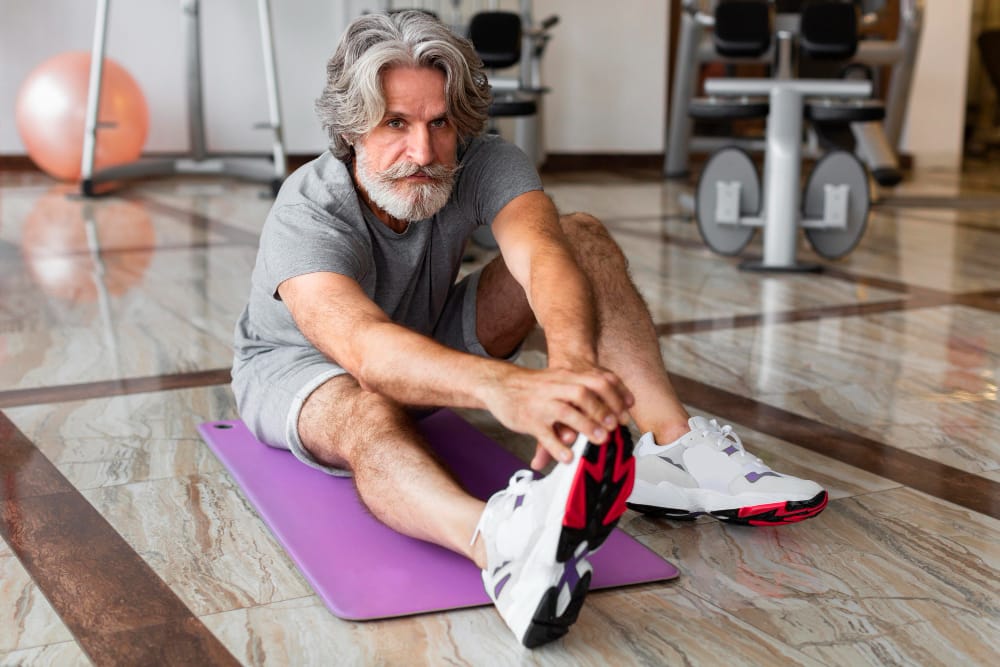
If you look at the most vibrant individuals in their 70s and 80s—the ones who move with a fluid, feline grace while others struggle to get out of a car—you are seeing the result of a specific physiological “software” that most of us have accidentally deleted. We tend to blame aging for our loss of strength, but the reality is often “Neurological Density” loss rather than just muscle loss. Our modern world has stripped away the complex, multi-planar movements our ancestors performed daily, leaving our nervous systems “dimmed” and our muscles uncoordinated. The Super-Ager Protocol isn’t about lifting heavy barbells or running marathons; it is about reclaiming 10 “lost” movements that re-map your brain-to-muscle connection.
The Science of Neurological Density: Why “Traditional” Workouts Fail
Most people over 60 focus on “toning” or light cardio, but this approach ignores the Motor Unit Recruitment problem. As we age, our brains become less efficient at “talking” to our muscle fibers. You might have the muscle tissue available, but if the signal from your brain is weak, you will feel frail. This is why a “Super-Ager” can often out-lift a younger person; they haven’t just built muscle, they have built a high-bandwidth neural connection to that muscle.
The movements in this protocol are “lost” because they focus on areas usually ignored in standard fitness. When you challenge your body to move in ways it hasn’t since childhood, you trigger “Neuroplasticity.” This process literally rewires your brain to control your body better, which is the ultimate insurance policy against falls and mobility loss.
The 10 Lost Movements of the Super-Ager
These movements should be performed with precision and control. They aren’t about speed; they are about “owning” every inch of the motion.
1. The Cross-Body Contralateral Reach
Stand on one leg and reach your opposite hand toward your standing foot while the other leg extends behind you. This forces the brain to communicate across the left and right hemispheres. Consequently, you improve your balance and core “Cross-Tension,” which is vital for preventing the “stiff-legged” walk common in older age.
2. The Deep “Resting” Squat (Assisted)
Our ancestors spent hours in a deep squat. Most modern 60-year-olds can’t get their hips below their knees. By using a doorframe for support and breathing into a deep squat for 60 seconds, you decompress the lumbar spine and restore ankle mobility.
3. The Ground-to-Standing Transition
Perhaps the most important metric for longevity is the ability to get off the floor without using your hands. This “lost” movement builds “Functional Power” in the hips and glutes. If you can’t do it yet, use one hand, but work toward zero-hand transitions to build elite pelvic stability.
4. The Hanging Scapular Retraction
Simply hanging from a pull-up bar (or a sturdy tree branch) decompresses the shoulder joints. While hanging, pull your shoulder blades down and back without bending your elbows. This “Scapular Pull” fixes the rounded-shoulder posture that often makes people look and feel older than they are.
5. The Backward Walk (The “Retrowalk”)
Walking backward on a flat surface (or a slow treadmill) reverses the typical shear force on the knees. It activates the vastus medialis—the “teardrop” muscle above the knee—which is the primary protector of the ACL and meniscus.
6. The Foot-Intrinsic “Towel Scrunch”
We lose strength in the 29 muscles of the foot because of supportive shoes. Using your toes to scrunch a towel toward you rebuilds the “Arch Support” from the inside out. This improves your “Ground Feel,” significantly reducing trip-and-fall risks.
7. The Thoracic Rotation “Windmill”
Lie on your side and open your top arm like a book. Most spinal stiffness comes from the mid-back (thoracic), not the lower back. By “unlocking” your mid-back, you allow your shoulders and neck to move freely, erasing chronic tension.
8. The Wall-Supported Pelvic Tilt
Stand with your back against a wall and try to “smash” your lower back into the wall using only your abs. This trains the “Transverse Abdominis,” the deep core muscle that acts as a natural back brace.
9. The Lateral “Gate” Walk
We spend 99% of our lives moving forward. The lateral walk (moving sideways) engages the gluteus medius. This muscle is the “Stabilizer-in-Chief” of the hip. Without it, your walk becomes wobbly and your hips become vulnerable to fractures.
10. The Eye-Level Horizon Scan
This isn’t a “muscle” move, but a neurological one. While walking, practice looking at the horizon rather than at your feet. This engages the Vestibular System (inner ear balance). Super-Agers have a highly tuned vestibular system that allows them to navigate uneven terrain effortlessly.
Super-Ager Movement Impact Table
| Movement | Primary System | Longevity Benefit |
| Contralateral Reach | Neurological | Brain-body coordination; fall prevention. |
| Ground-to-Standing | Muscular Power | High correlation with all-cause mortality reduction. |
| Scapular Hanging | Structural | Spinal decompression and “Open” posture. |
| Retrowalking | Joint Health | Knee preservation and quad activation. |
| Towel Scrunches | Sensory | Improved balance and “Ground Feel.” |
Flipping the “Biological Switch”
When you perform these 10 movements, you are doing more than just moving; you are inducing Hormetic Stress. This is a type of “good stress” that triggers the Sirtuin pathways—the genes responsible for cellular repair and longevity.
Firstly, the complexity of these moves requires “Focus.” This mental engagement lowers cortisol. Consequently, your body moves from a “Defense” state into a “Repair” state. In this repair state, your body is more likely to synthesize new collagen and rebuild bone density. This is the “Switch” the title refers to—moving from the passive decay of a sedentary life to the active reconstruction of a Super-Ager lifestyle.
Transitioning from “Gym Strength” to “Life Strength”
Many people spend hours on weight machines that isolate muscles in a way that never happens in real life. You might be able to do a heavy leg press, but if you can’t stabilize your weight on one leg while reaching for a grocery bag, that strength isn’t “functional.”
The Super-Ager Protocol prioritizes Eccentric Control—the ability to slow down a movement. Research shows that older adults who focus on the “lowering” phase of a movement have higher bone density and better muscle quality. Transitioning your focus to the “slow and controlled” aspect of these 10 moves will yield far better results than trying to lift the heaviest weight possible.
Related Articles
- He’s 63, Ripped, and Defying Aging. What He Told Me About Muscles Blew My Mind—You Need to Hear This
- The “Nostalgia Test”: If You Can Still Remember These 9 Memories, Your Brain is Functioning 10 Years Younger
- Live Longer, Smarter: The Age-By-Age Rules You Need in Your 20s, 30s, 40s, 50s and Beyond
- The Specific Gut Bacteria Found in Nearly Every Person Who Lives Past 100 — and How to Get More of It
- Cardiologists Have Known About This Heart Attack Risk Reducer for Years — Most Patients Never Hear About It