FREE SHIPPING OVER $50

A Personal Trainer’s Way to Return to Exercise in Your 40s and 50s — That Has Nothing to Do With How You Trained Before

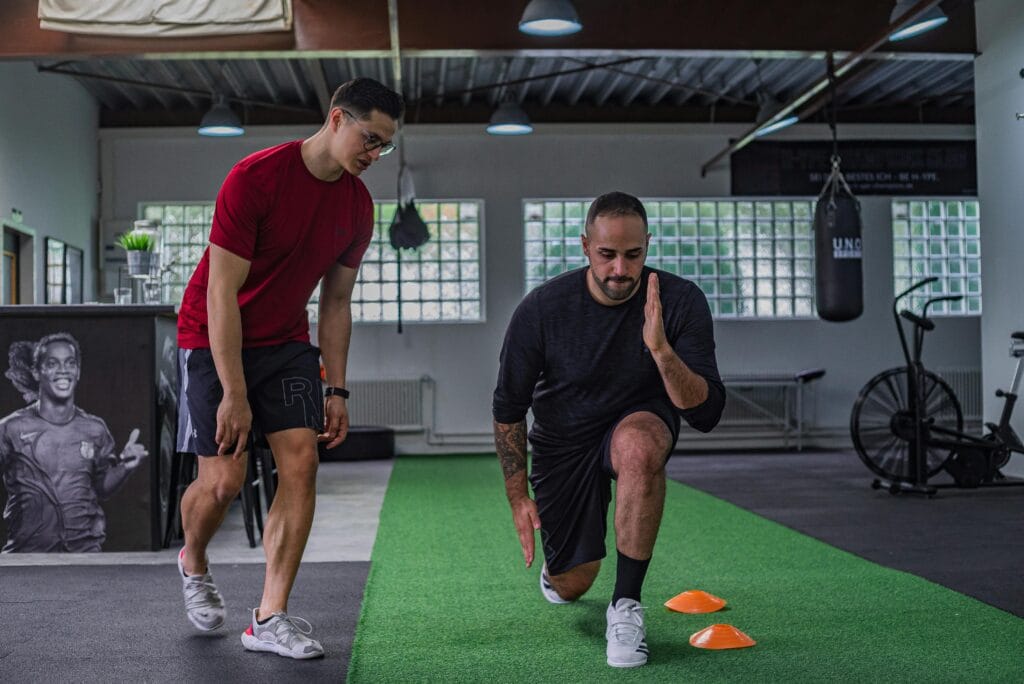
If you are stepping back into the gym after a decade-long hiatus and trying to replicate the high-impact, “no pain, no gain” routine of your twenty-something self, you are likely on a fast track to the physical therapist’s office. Your body at 45 or 55 has a different hormonal profile, lower joint collagen density, and a metabolic rate that prioritizes stability over explosive speed. A top-tier personal trainer won’t tell you to “push through the pain”; they will tell you to “work around the architecture” of your current body. Returning to exercise at this stage of life requires a complete psychological and physical pivot—one that focuses on eccentric control, mobility, and functional strength rather than just seeing how much weight you can move or how fast you can run.
Why the “Old Rules” Don’t Apply Anymore
When you were 22, your body was essentially a “high-recoil” machine. You could skip a warmup, lift with questionable form, and wake up feeling fine the next day because your systemic inflammation was low and your growth hormone was high. By the time you hit your 40s, your “margin for error” has shrunk. Your tendons have become less elastic, and your recovery window has widened.
Training in midlife isn’t about doing “less”; it is about doing “different.” Modern sports science emphasizes that the biggest threat to fitness progress after 40 isn’t a lack of effort—it is injury. If a workout puts you on the couch for three days with an aching lower back, it was a failed workout. The new goal is Consistency over Intensity.
Training at 25 vs. Training at 50
| Feature | Focus at Age 25 | Focus at Age 50 |
| Primary Goal | Hypertrophy & Max Power | Stability & Joint Longevity |
| Warmup Style | Optional/Static Stretching | Essential Dynamic Mobility |
| Recovery Time | 24 Hours | 48-72 Hours |
| Cardio Type | High-Impact (Running) | Low-Impact (Zone 2 Walking/Cycling) |
| Core Training | Crunches/Abs | Spinal Bracing/Anti-Rotation |
How to Return to Exercise in Your 40s and 50s
Step 1: The “Joint-First” Warmup
In your 50s, the warmup is no longer an optional prelude; it is the most important part of the session. We call this “lubricating the hinges.” Synovial fluid—the “oil” in your joints—takes longer to circulate as you age. If you start lifting weights with “cold” joints, you are essentially sandpapering your cartilage.
Instead of a five-minute jog on the treadmill, try Dynamic Joint Circles. Focus on your ankles, hips, and thoracic spine (upper back). These are the three areas that “lock up” the most from desk-bound lifestyles. By spending ten minutes opening these kinetic checkpoints, you ensure that when you eventually lift a weight, the load is distributed across your muscles rather than crunching into your joints.
Step 2: Prioritize “Eccentric” Strength
One of the best-kept secrets of personal trainers working with the 40+ demographic is the power of the Eccentric Phase—the lowering part of an exercise. Research shows that as we age, we maintain our eccentric strength much longer than our concentric (lifting) strength.
Focusing on a slow, controlled descent (think 3-4 seconds down) does three things:
- It strengthens the tendons and ligaments, which are often the “weakest link” in midlife.
- It builds muscle with less total weight, reducing the “compression load” on your spine.
- It improves your mind-muscle connection, which often dulls if you haven’t exercised in years.
Instead of trying to bench press a heavy barbell, try slow, tempo pushups. Instead of fast squats, try “Box Squats” where you take three seconds to sit down. This “Slow-Mo” approach builds a dense, resilient frame without the “crunchy” feeling in your knees and shoulders.
Step 3: Master the “Anti-Movement” Core
Most people returning to the gym after 40 want to “lose the gut,” so they head straight for the sit-up bench. This is often the worst thing you can do. Midlife spines are more prone to disc issues, and repetitive “crunching” can aggravate the lower back.
The modern way to train the core is through Anti-Extension and Anti-Rotation. Your core’s real job isn’t to bend you in half; it is to keep your spine perfectly still while your arms and legs move. Exercises like the Bird-Dog, Dead Bug, and Plank are the gold standard. They build “Internal Bracing,” which makes you feel tighter in your midsection and taller in your posture, all while protecting your back from the common injuries associated with picking up groceries or playing golf.
Step 4: The Zone 2 Cardio Revolution
In your 20s, you might have done “HIIT” (High-Intensity Interval Training) until you felt like throwing up. While HIIT has its place, it puts a massive amount of stress on the central nervous system—stress that can be harder to recover from in your 50s.
Enter Zone 2 Training. This is “conversational” cardio—exercise where you can still speak in full sentences but your heart rate is elevated. This could be a brisk walk, a light cycle, or a steady swim. Zone 2 training stimulates Mitochondrial Biogenesis, essentially creating more “power plants” in your cells. It improves your metabolic health and burns fat without the massive “cortisol spike” that leaves you feeling exhausted and hungry for the rest of the day.
Step 5: The “Anabolic Resistance” Factor
As we age, our bodies become slightly “deaf” to the signals that tell us to build muscle. This is known as Anabolic Resistance. To overcome this, you cannot just “wing it” with your nutrition. You need to prioritize protein more than you ever did in your youth.
Aim for 25-30 grams of high-quality protein at every meal. This provides the “Leucine” trigger necessary to flip the switch on muscle protein synthesis. When you combine this with resistance training twice a week, you aren’t just “working out”—you are actively fighting Sarcopenia (age-related muscle loss), which is the primary driver of metabolic slowdown after 45.
The 14-Day “Ease-In” Protocol
Don’t try to go from zero to six days a week. Your nervous system needs time to adapt to the new “input.” Use this structure to restart safely:
- Days 1-4: Focus entirely on mobility and walking. No weights. Just “re-acquaint” your brain with your joints.
- Days 5-9: Introduce bodyweight movements. Focus on form and the “Slow-Mo” eccentric lowering.
- Days 10-14: Add light external resistance (bands or light dumbbells). Keep your “Rate of Perceived Exertion” (RPE) at a 6 out of 10. You should finish feeling like you could have done more.
Related Articles
- My 78-Year-Old Yoga Instructor Moves Better Than Most 40-Year-Olds — She Credits These 5 Daily Moves for Everything
- Stop Feeling “Rusty”: The 5-Minute Mobility Routine That Keeps Your Hips and Back Fluid After 50
- Scientists Just Identified the One Exercise That Protects Your Brain Better Than Swimming or Cycling — and Most People Are Already Ignoring It
- Stop Shin Splints Now: Simple Fixes Every Runner Needs
- How to Warm Up Before a Walking Workout: The Expert 3-Move Routine That Prevents Pain