FREE SHIPPING OVER $50

Your Butt Stays Flat Because You’re Doing Too Much — Trainers Say These 2 Exercises Are the Only Ones That Actually Fix It

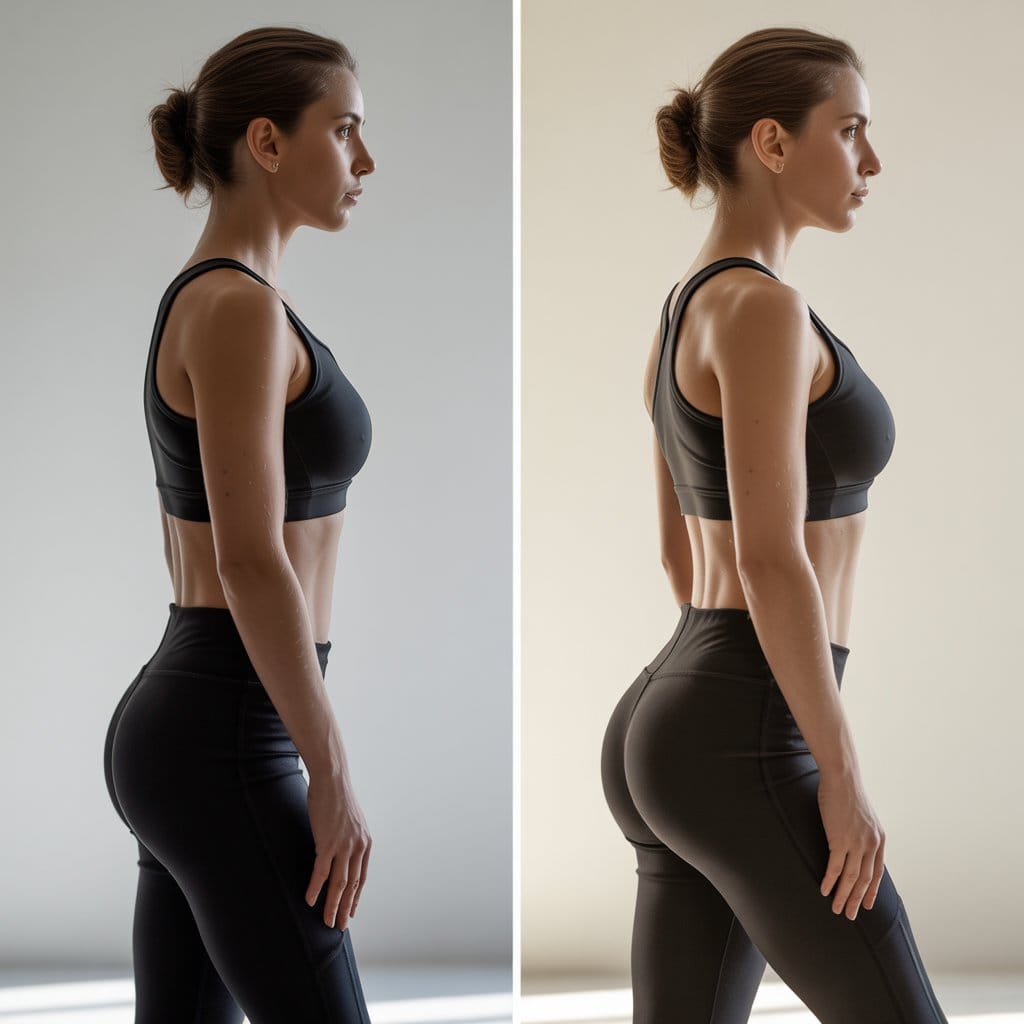
If you have been spending forty-five minutes on the stair climber and doing endless sets of air squats only to see zero change in the mirror, you are likely a victim of “junk volume.” Most people assume that building a better backside requires a high-frequency, “burn-it-to-the-ground” approach, but the reality is that the gluteus maximus is a massive, powerful muscle that responds far better to heavy mechanical tension than it does to aerobic fatigue. When you do “too much,” your body often compensates by letting your hamstrings and lower back take over the movement, leaving your glutes dormant and “flat.” To actually trigger hypertrophy and see a visible lift, you need to strip away the fluff and focus on the only two movements that maximize glute fiber recruitment while allowing for the heavy loading necessary for real growth.
The Problem with “Glute Burn” Workouts
Many fitness influencers promote high-rep “burn” workouts involving kickbacks and side-lying leg raises. While these might make your muscles feel like they are on fire, that sensation is often just metabolic stress—not the mechanical tension required for muscle building. Furthermore, the “pancake effect” occurs when people do too much cardio or high-rep work without enough recovery, leading to a flat appearance caused by chronic muscle depletion and high cortisol levels.
Your glutes are designed for explosive movements and heavy lifting. If you are doing twenty different exercises in one session, you are likely not pushing any of them hard enough to create a growth stimulus. By narrowing your focus to two primary “heavy hitters,” you can dedicate all your neural energy to perfect form and progressive overload, which is the only way to physically change the shape of the muscle.
The Anatomy of a Lift: Why Squats Aren’t the Answer
It sounds like heresy in the fitness world, but the traditional barbell back squat is actually a mediocre glute exercise for many people. Depending on your femur length and ankle mobility, a squat can be very “quad-dominant.” If you have a flat butt despite squatting three times a week, your quads are likely doing 80% of the work.
To fix a flat shape, you need movements where the “peak tension” occurs when the glutes are in a shortened or mid-range position. In a squat, the hardest part is at the bottom, where the glutes are stretched; however, many people lose their “mind-muscle connection” at that depth and rely on their lower back to get the weight back up.
Exercise 1: The Barbell Hip Thrust (The “King” of Glute Exercises)
If you only did one exercise for the rest of your life to improve your posterior profile, it should be the hip thrust. Unlike the squat or lunge, the hip thrust places the weight directly over the hips, providing maximum horizontal force. This specifically targets the gluteus maximus in its fully contracted position at the top of the movement.
Because the knees stay bent, the hamstrings are placed in a state of “active insufficiency,” meaning they cannot help as much as they do during a deadlift. This forces the glutes to do nearly all the work. Research consistently shows that the hip thrust creates higher EMG activation in the glutes than almost any other lower-body movement.
How to Master the Hip Thrust
- Bench Height: Use a bench that hits just below your shoulder blades.
- Foot Placement: Your shins should be vertical at the top of the rep. If your feet are too far out, you’ll feel it in your hamstrings; too close, and you’ll feel it in your quads.
- The “Chin Tuck”: Keep your chin tucked toward your chest and your ribs down to prevent your lower back from arching.
- The Squeeze: Pause for two seconds at the top of every rep to ensure full fiber recruitment.
Exercise 2: The Romanian Deadlift (RDL)
While the hip thrust handles the “squeeze” at the top, the Romanian Deadlift (RDL) handles the “stretch.” The RDL is a hinge movement that targets the glutes and hamstrings in a lengthened position. This creates the “shelf” look by building the muscles where they attach near the lower back and upper thigh.
The key to the RDL is “pushing the car door shut” with your hips. You aren’t reaching for the floor; you are pushing your pelvis as far back as possible until you feel a deep stretch. This mechanical tension is what signals the muscle cells to repair themselves and grow thicker and stronger.
RDL Form Essentials
- Soft Knees: Keep a slight bend in the knees, but do not let them travel forward.
- Bar Path: Keep the barbell (or dumbbells) “shaving” your legs the entire time.
- Neutral Spine: Never round your back to get more depth. Stop the movement once your hips stop moving backward.
Training Frequency: Why Less is More
One of the biggest reasons for a flat butt is lack of recovery. If you train your glutes every single day with “mini-band” workouts, you never allow the muscle fibers to actually repair. Muscle grows during rest, not during the workout.
The “Minimalist” Glute Schedule
| Day | Activity | Focus |
| Monday | Hip Thrusts + RDLs | Heavy Weight (6-10 Reps) |
| Tuesday | Active Recovery | Walking or Light Stretching |
| Wednesday | Rest | Full Muscle Repair |
| Thursday | Hip Thrusts + RDLs | Moderate Weight (12-15 Reps) |
| Friday | Rest | Recovery |
| Saturday | Optional | Full Body or Weak Point Training |
| Sunday | Rest | Preparation for Next Week |
The Mind-Muscle Connection: Waking Up “Sleepy” Glutes
If you have a desk job, you likely suffer from “Gluteal Amnesia.” Your brain has literally forgotten how to efficiently fire these muscles because they spend eight hours a day being compressed and deactivated. This is why people “squat with their backs.”
Before jumping into your heavy sets of hip thrusts, perform two minutes of “activation” work. This isn’t meant to be a workout; it is a neurological warm-up. Simple glute bridges (bodyweight) or “clamshells” help the brain re-establish a connection with the tissue. Once you feel that “pump” in the muscle, move directly to your heavy barbell work. You will find that you can lift more weight and feel the glutes working much more intensely.
Nutrition: You Cannot Sculpt a Masterpiece Without Clay
You can do the best exercises in the world, but if you are in a massive calorie deficit, your body will not build muscle. To turn a flat shape into a round one, you need a slight calorie surplus and adequate protein.
Aim for roughly 0.8 to 1 gram of protein per pound of body weight. This provides the amino acids necessary to repair the micro-tears created by your heavy RDLs and hip thrusts. Furthermore, don’t be afraid of carbohydrates. Carbs replenish muscle glycogen, which gives your muscles that “full” and hydrated look. A “flat” butt is often just a dehydrated and glycogen-depleted muscle.
Related Articles
- Scientists Just Identified the One Exercise That Protects Your Brain Better Than Swimming or Cycling — and Most People Are Already Ignoring It
- Stop Shin Splints Now: Simple Fixes Every Runner Needs
- How to Warm Up Before a Walking Workout: The Expert 3-Move Routine That Prevents Pain
- I Tried 5 Stretches Recommended by Yoga Teachers, PTs and Trainers — These Actually Fixed My Pain
- The V-Taper Illusion: 6 Moves That Sculpt a Narrow Waist and Broad Shoulders Fast