FREE SHIPPING OVER $50

8 Senior Exercises That Made My 70-Year-Old Dad Stronger Than Most 30-Year-Olds


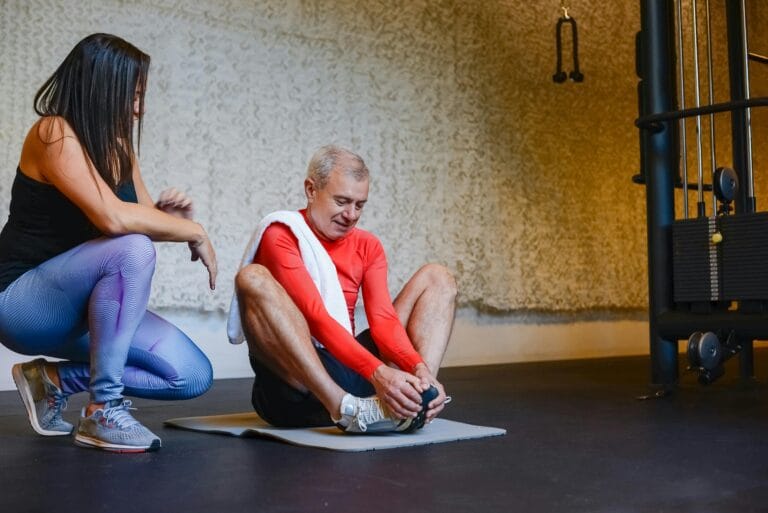
Most people assume that once you hit 70, your “strength training” should consist of nothing more than slow walks and seated bicep curls with light resistance bands. We’ve been conditioned to believe that aging is a one-way street toward fragility, where the goal is simply to “maintain” rather than improve. But my 70-year-old dad recently flipped that script. By ignoring the traditional “senior fitness” tropes and focusing on functional, high-tension movements, he developed a level of raw, usable strength that leaves most 30-year-old gym-goers in the dust.
The secret isn’t found in fancy machines or high-intensity cardio. Instead, it lies in addressing the “biological gaps” that modern life creates. While younger generations often focus on “show muscles” like the chest and biceps, my dad focused on the “go muscles”—the grip, the posterior chain, and the deep stabilizers. This shift in focus allowed him to bypass the usual aches of aging and build a body that is functionally “younger” than its chronological age. Here are the eight specific exercises that bridged that gap.
The Science of “Old School” Strength
To understand why these moves work, we have to look at Motor Unit Recruitment. As we age, we naturally lose muscle fibers (sarcopenia), but we lose the neural connection to those fibers even faster. Many 30-year-olds are “weak” not because they lack muscle, but because their brain has forgotten how to fire all the muscle fibers at once.
By performing complex, compound movements, you re-train the nervous system to “recruit” more of the muscle you already have. This leads to what we call “wiry strength”—the kind of power that doesn’t necessarily look bulky but is incredibly effective for lifting heavy objects, maintaining balance, and preventing falls.
| Physical Attribute | The “30-Year-Old” Problem | The “70-Year-Old” Solution |
| Grip Strength | Weakened by phone/keyboard use | Heavy carries and hanging |
| Posture | “Tech Neck” and rounded shoulders | Face pulls and rows |
| Hip Stability | Tight from constant sitting | Box squats and lunges |
| Core Power | Hidden by “abs” workouts | Functional bracing and carries |
Senior Exercises That Make You Stronger Than Most 30-Year-Olds
1. The Farmer’s Carry (The Grip-to-Core Bridge)
If you want to know how strong someone truly is, look at their hands. Grip strength is one of the most accurate predictors of longevity and heart health. The Farmer’s Carry is simple: pick up the heaviest weights you can safely hold and walk for distance.
For my dad, this move was the game-changer. It forces the traps, forearms, and core to work as a single unit. While younger guys are sitting on a bench pressing, this move builds the “real world” strength required to carry four bags of groceries or a heavy suitcase without breaking a sweat. It “seals” the core and protects the spine better than any crunch ever could.
2. The Box Squat (Protecting the Hinges)
Standard squats can be intimidating for older knees, but the Box Squat removes the guesswork. By sitting back onto a chair or bench and then standing up, you emphasize the Posterior Chain (glutes and hamstrings) rather than putting all the pressure on the knee caps.
This move fixes the “quad-dominant” walk that many seniors develop. It teaches the hips to drive the movement, which is essential for getting out of cars or low chairs. My dad worked up to doing these with a kettlebell held at his chest, which also improved his upper-back posture.
3. The Dead Hang (The Shoulder Decompressor)
Most 30-year-olds can’t hang from a bar for more than 30 seconds. My dad made it a daily habit. Hanging from a pull-up bar decompresses the spine and opens up the shoulder joints that get “stuck” from decades of gravity.
This isn’t just about strength; it’s about Structural Integrity. The hang stretches the fascia in the chest and lats, allowing for better breathing and a more upright silhouette. It also builds the kind of forearm endurance that makes every other lift feel significantly easier.
4. The Goblet Squat (The Posture Fixer)
Holding a weight in front of the body (anterior loading) acts as a natural counterbalance. It allows you to squat deeper while keeping your spine perfectly vertical. This specific move “forces” the core to engage and the mid-back to stay strong.
While younger men often struggle with back pain from barbell squats, the Goblet Squat actually heals the back by teaching the body how to brace properly. It’s the ultimate move for building legs that don’t quit and a back that doesn’t ache.
5. Single-Arm Rows (The Anti-Hunch Secret)
As we age, we tend to “collapse” forward. The Single-Arm Row pulls the shoulders back and strengthens the muscles between the shoulder blades. By using only one arm at a time, you also force the obliques to stabilize the torso, preventing rotation.
This build-up of the mid-back is what gives my dad that “broad-shouldered” look that most men lose by age 50. It counteracts “Desk Neck” and ensures that the shoulders stay mobile and pain-free.
6. The Glute Bridge (The Lower Back Insurance)
Weak glutes are the primary cause of lower back pain in the US. If the glutes aren’t doing their job, the lower back (lumbar spine) has to pick up the slack. The Glute Bridge is a “low-impact, high-reward” move that wakes up the largest muscle group in the body.
My dad progressed from basic bridges on the floor to “weighted bridges” with a dumbbell on his hips. This created a “bulletproof” lower back that allowed him to garden, lift boxes, and play with grandkids without the typical “next-day” soreness.
7. The Step-Up (Balance and Power)
Balance is often the first thing to go as we age because we stop challenging our “single-leg” stability. The Step-Up forces one leg to carry the entire load of the body. This mimics climbing stairs or stepping over obstacles in the real world.
Unlike a leg press machine, which is stable, the step-up requires the tiny “stabilizer” muscles in the ankles and hips to fire. This is what prevents trips and falls. My dad’s ability to step up onto a high bench with weights in hand is a feat that many 30-year-olds would find surprisingly difficult.
8. The Bird-Dog (The Neural Connector)
Strength isn’t just about muscle; it’s about coordination. The Bird-Dog involves being on all fours and extending the opposite arm and leg. It looks easy, but it requires a massive amount of “cross-body” stabilization.
This exercise “knits” the two halves of the body together. It improves the communication between the left and right hemispheres of the brain and ensures that the core stays “braced” while the limbs are moving. It’s the ultimate “longevity” move for spinal health and neurological sharpness.
Why “Functional” Beats “Gym” Strength
The reason my 70-year-old dad is stronger than many 30-year-olds is that he stopped chasing “vanity” metrics. He didn’t care about his bench press max; he cared about his work capacity.
Younger lifters often have “fragmented” strength—they are strong in a very specific range of motion on a specific machine. But when you ask them to carry a 50-pound bag of salt or move a couch, they struggle because their stabilizers are weak. By focusing on these eight moves, you build “integrated” strength. Every muscle learns to work in harmony with the others.
Related Articles
- Sleeve-Busting Gains: The 6 Science-Backed Exercises for Massive Arms
- She Was Exhausted, Stuck on the Couch—90 Days Later This Mom Looked Unrecognizable
- Biological Age of 45 at 82? The Muscle Secret That Keeps Him Defying Frailty (It’s Not What You Think)
- Too Tired to Exercise? These 3 Chair Yoga Poses Restore Strength & Calm (Perfect for Seniors)
- He’s 63, Ripped, and Defying Aging. What He Told Me About Muscles Blew My Mind—You Need to Hear This