FREE SHIPPING OVER $50
3-Minute Gentle Floor Routine That Actually Ignites Your Core — Beginner Friendly

Most people hear the words “core workout” and immediately picture themselves suffering through endless sets of neck-straining crunches or soul-crushing planks. We have been conditioned to believe that if your abs aren’t screaming in agony, the workout isn’t working. However, the fitness world is shifting toward a more sustainable and scientifically sound approach.
You do not need to spend an hour at the gym or perform high-impact movements to build a functional, strong midsection. In fact, some of the most effective core exercises happen right on the floor, in a slow and controlled manner. This 3-minute gentle floor routine is designed to wake up the deep stabilizing muscles that traditional crunches often miss. It is beginner-friendly, requires zero equipment, and is shockingly effective for improving posture and reducing back pain.
Why “Gentle” Often Beats “Intense”
When it comes to the core, intensity doesn’t always equal results. The core isn’t just the “six-pack” muscles (the rectus abdominis) that you see in the mirror. It is a complex system of muscles that includes your obliques, the erector spinae in your back, and the transversus abdominis—the deep “corset” muscle that holds everything together.
High-intensity ab workouts often cause beginners to “cheat” by using their hip flexors or neck to power through the movement. This leads to injury and very little core engagement. By slowing down and performing gentle floor moves, you force these deep muscles to stabilize your spine. This is known as “time under tension,” and it is the secret to building a core that is strong from the inside out.
The 3-Minute Routine Breakdown
This routine consists of three specific movements performed for 60 seconds each. There are no breaks between the moves, which keeps the muscles engaged for the full three minutes. Because these are low-impact, you can perform this routine daily—even right after you wake up or before you go to bed.
1. The Dead Bug (60 Seconds)
The Dead Bug is a staple in physical therapy for a reason. It teaches you how to keep your spine neutral while moving your limbs—a skill that is essential for every daily activity from lifting groceries to running.
How to do it:
- Lie flat on your back with your arms reaching toward the ceiling.
- Lift your legs so your knees are bent at a 90-degree angle (the “tabletop” position).
- Slowly lower your right arm behind your head while simultaneously straightening and lowering your left leg toward the floor.
- Only go as low as you can without your lower back arching off the mat.
- Bring them back to the center and switch sides.
Why it works: It targets the transversus abdominis. If you keep your lower back pressed firmly into the floor, you will feel a “deep” burn that crunches can’t replicate.
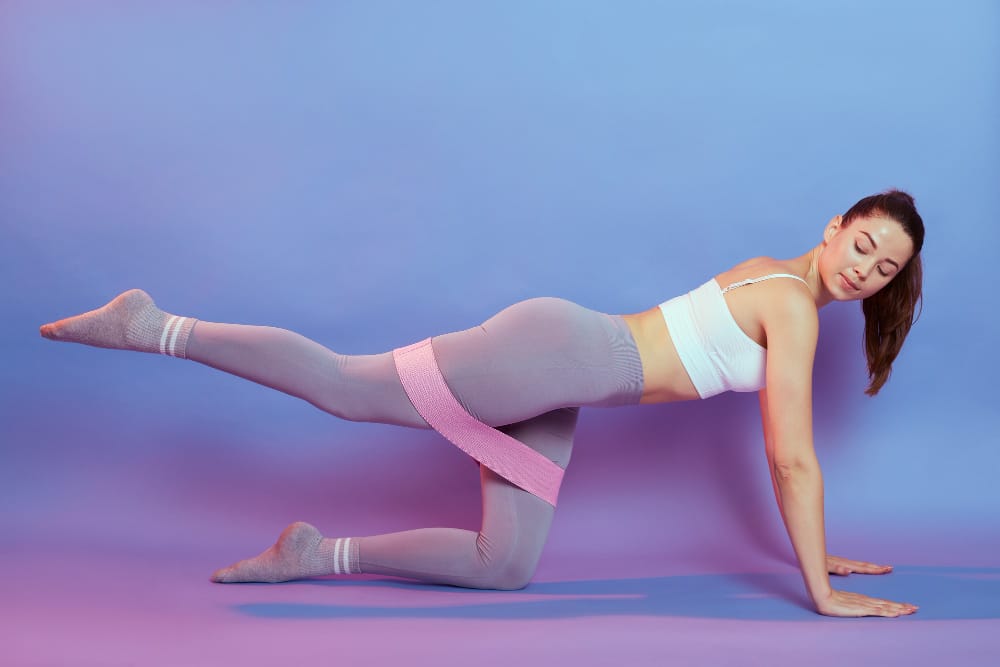
2. The Bird-Dog (60 Seconds)
Transitioning from your back to your hands and knees, the Bird-Dog focuses on posterior chain strength and cross-lateral stability.
How to do it:
- Start in a tabletop position on your hands and knees.
- Keep your gaze down at the floor to maintain a long, neutral neck.
- Reach your right arm forward while kicking your left leg back.
- Imagine there is a glass of water on your lower back that you cannot spill. Keep your hips perfectly level.
- Hold for a second at the top, then return to the start and switch sides.
Why it works: This move engages the multifidus (tiny muscles along the spine) and the glutes, ensuring your core is supported from the back as well as the front.
3. The Glute Bridge (60 Seconds)
A strong core is impossible without strong glutes. The Glute Bridge connects the lower abs to the hips, creating a solid foundation for the entire torso.
How to do it:
- Lie on your back with your knees bent and feet flat on the floor, hip-width apart.
- Place your arms by your sides.
- Press through your heels to lift your hips toward the ceiling.
- At the top, squeeze your glutes and pull your belly button toward your spine.
- Slowly lower back down, barely touching the floor before lifting again.
Why it works: This move eliminates “anterior pelvic tilt,” a common posture issue where the pelvis bowls forward. It forces the lower abdominals to work in tandem with the lower body.
Crunches vs. Gentle Floor Routines
If you are still wondering why you should trade your sit-ups for this routine, consider the following comparison. Most traditional ab exercises focus on “flexion” (bending), which can be hard on the spinal discs over time.
| Feature | Traditional Crunches | Gentle Floor Routine |
| Primary Muscle | Rectus Abdominis (Surface) | Transversus Abdominis (Deep) |
| Back Impact | High (Potential for strain) | Low (Protective of the spine) |
| Neck Strain | Common | None |
| Functional Use | Low | High (Improves balance and gait) |
| Time Required | High Reps Needed | 3 Minutes |
Keys to Success: Quality Over Quantity
To make this 3-minute routine actually “ignite” your core, you must focus on your form. Since there are no heavy weights involved, the resistance comes from your own body weight and how you control it.
- The “Pelvic Tilt” Secret: Before you start any move, imagine you are trying to close the gap between your lower back and the floor. This “tilting” of the pelvis immediately engages the lower abs.
- Controlled Breathing: Never hold your breath. Exhale during the “effort” part of the move (e.g., when lowering your leg in the Dead Bug). This increases intra-abdominal pressure and protects your spine.
- Slow it Down: The faster you go, the more you rely on momentum. If you move slowly, your muscles have to do 100% of the work.
Why Consistency Matters for Beginners
Fitness is often marketed as a series of “transformations” that happen over months, but the neurological benefits of a core routine happen almost instantly. When you perform these moves, you are essentially “waking up” the nerves that connect your brain to your midsection.
By doing this 3-minute routine consistently, you will notice that you sit taller at your desk. You might find that your back doesn’t ache as much after a long walk. These small wins are the real goal of core training. A strong core acts as a shock absorber for the rest of your body, protecting your joints and making every other type of exercise feel easier.
Related Articles
- One Simple Exercise That Eases Knee Arthritis Pain Better Than Rest, Backed by Science
- No Time? 10 Genius Ways to Squeeze Workouts Into Your Busy Day
- Unwrap The Holiday Gift of Strength: How Training Adds Years to Your Life
- Doctors Said He’d Never Be Strong Again at 65—This Navy SEAL Proved Them Wrong with 5 Simple Exercises
- Longevity Experts Reveal: 10 Powerful Workouts That Stop Frailty and Keep You Agile for Life